

VinaCapital CEO: Vietnam does not lack capital, but an efficient capital-channeling system
The CEO of VinaCapital argues that the greatest challenge is not finding additional financial resources, but improving the efficiency of long-term capital allocation for the economy.
The CEO of VinaCapital argues that the greatest challenge is not finding additional financial resources, but improving the efficiency of long-term capital allocation for the economy.
Vietnam is entering a new growth cycle with enormous capital needs for infrastructure investment, private-sector development and new growth drivers. However, the challenge today is not only about mobilizing more capital, but also about enhancing the ability to convert domestic financial resources into medium- and long-term capital for growth.
Speaking with_TheLEADER,_ Mr. Brook Taylor, CEO of VinaCapital Fund Management, reflected on Vietnam's gradual process of building a "capital circulation system" strong enough to nurture sustainable growth and realize the goal of "self-generating blood" from the economy's own internal strength.
With more than two decades of observing and investing in Vietnam, in your view, what are the most important drivers for domestic capital to become a pillar of the economy's long-term growth?
Mr. Brook Taylor: I believe the most important driver lies in the transition from an economy that relies mainly on bank credit to one with a more balanced and diversified capital-market ecosystem.
Vietnam currently has a relatively high domestic savings rate, a rapidly growing middle class, and an ever-larger scale of household financial assets. These are very substantial resources to support growth over the coming decades.
The key is to create effective mechanisms so that this cash flow is allocated into long-term investment assets, rather than remaining in short-term deposits or speculative investment channels.
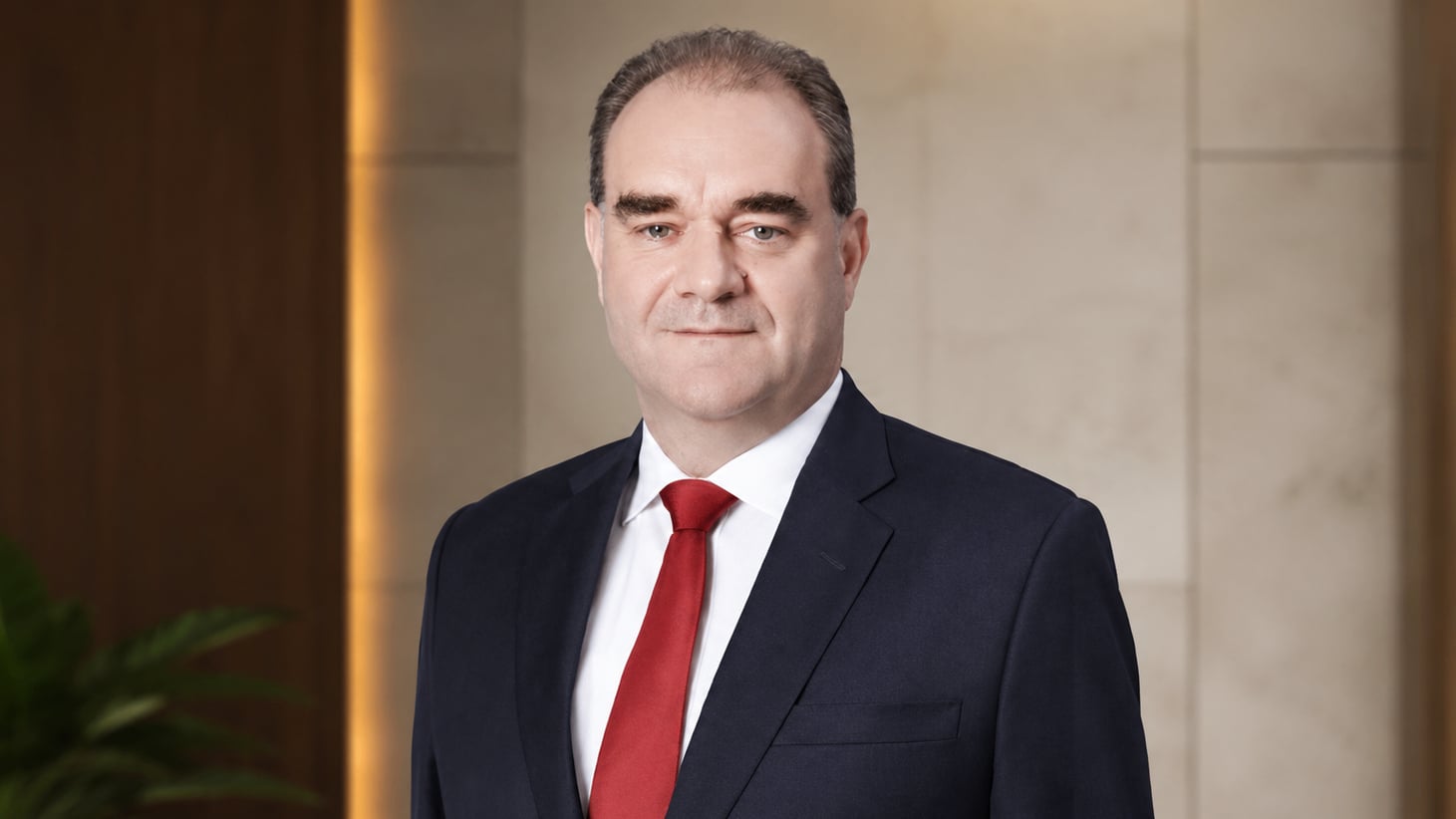
According to Mr. Brook Taylor, Vietnam can both attract international resources and form sufficiently large long-term capital flows from its own internal strength. Photo: DNCC
In addition, the development of institutional investors such as investment funds, insurers, pension funds and professional investment products will play an increasingly important role.
International experience shows that economies capable of sustaining high growth rates over long periods usually possess a class of institutional investors large enough to create a stable source of capital for businesses and infrastructure projects.
As the private sector is identified as the leading growth driver and investment needs for infrastructure, digital transformation and the energy transition grow ever larger, the presence of domestic long-term capital will become an important foundation for Vietnam's next development phase.
From the perspective of a long-term investor, do you think Vietnam is really short of capital, or is what is missing a sufficiently efficient system to turn domestic financial resources into long-term capital for the economy?
Mr. Brook Taylor: Vietnam does not exactly lack capital. What we still lack is a capital-channeling system deep and efficient enough to convert the economy's savings into long-term investment capital for growth.
For many years, most of the economy's capital needs have been met through the banking system. This model has contributed greatly to the development process, but it also has certain limits as the economy enters a new phase with larger-scale investment needs and longer payback periods.
Projects such as transport infrastructure, energy, logistics or high technology need not only large amounts of capital but also long-tenor, stable funding.
From that perspective, the problem does not lie in the scale of financial resources but in the ability to channel those resources to where capital is needed.
If the stock market develops more deeply, the corporate bond market operates more transparently, and domestic institutional investors grow stronger, then a significant portion of current savings can be converted into long-term capital for businesses and the economy.
Vietnam's challenge today is to improve the efficiency of capital allocation rather than merely to seek more capital.
In your view, what are the missing "pieces of the puzzle" for Vietnam to form a sufficiently large layer of long-term capital for the economy, from institutional investors and investment funds to household cash flows?
Mr. Brook Taylor: In my view, there are three important pieces.
First is to continue perfecting the legal framework and enhancing the transparency of the financial market. Long-term investors always set very high requirements regarding policy predictability, the quality of information disclosure, and mechanisms to protect investor interests.
These are also factors that credit rating agencies and international financial institutions assess very carefully when considering a country's investment environment.
Second is to develop the domestic institutional-investor base more strongly. In many developed economies, pension funds, insurance companies and asset-management institutions are the largest source of long-term capital for the financial market.
In many developed countries, this is precisely the "patient" capital that helps finance infrastructure projects, innovation and long-term growth.
In particular, the development of supplementary pension funds will create a double benefit. On one hand, workers gain an additional tool to accumulate assets for the future; on the other hand, the economy forms a layer of stable capital with an investment horizon of decades. This is a type of capital very well suited to financing infrastructure, energy, technology and sectors with long investment cycles.
Third is to diversify investment products and improve financial literacy for individual investors. When people have many transparent, low-cost investment options aligned with long-term goals such as open-ended funds, ETFs or voluntary pension products, idle money in society will be mobilized more efficiently.
This not only supports the formation of long-term capital for the economy but also helps people participate directly in the country's growth process.
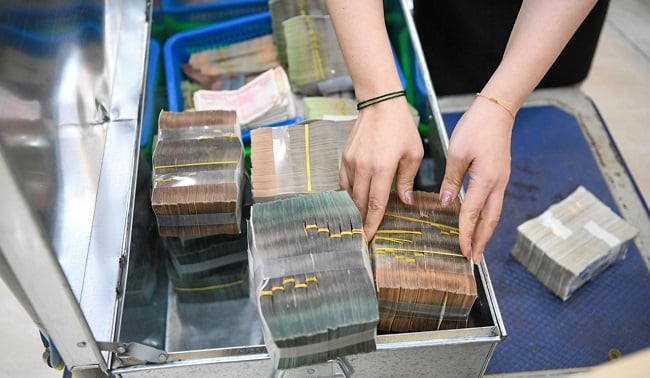
Vietnam currently has a rapidly growing middle class and an ever-larger scale of household financial assets. Photo: HA
If the ultimate goal is to build an economy capable of "self-generating blood" for growth, what would be the indicators showing that Vietnam has succeeded in mastering and efficiently allocating its own capital?
Mr. Brook Taylor: In my view, the clearest sign is when the economy can sustain a high growth rate based mainly on its ability to mobilize and efficiently allocate domestic resources, rather than depending too heavily on short-term credit or cyclical external capital.
We will see the scale of investment funds, pension funds, insurance companies and institutional investors growing ever larger; the stock and bond markets becoming truly efficient channels for medium- and long-term capital; and strategic infrastructure projects, the energy transition or innovation being able to access long-term capital at reasonable cost.
Successfully developing International Financial Centres, completing the stock market upgrade process and expanding the participation of global institutional investors will also be important milestones reflecting the maturity of Vietnam's financial system.
But in a broader sense, the ultimate goal is not merely to mobilize more capital. What matters is building national financial self-reliance, that is, the ability to create, accumulate and allocate capital efficiently to serve the country's long-term development priorities.
When Vietnam can both attract international resources and form sufficiently large long-term capital flows from its own internal strength, that will be the moment the economy truly possesses a healthy "capital circulation system" capable of "self-generating blood" for sustainable growth.
Source: TheLeader — theleader.vn. This article is republished for the purpose of sharing knowledge with the community of founders and investors within the HCM VIF ecosystem.
Category & tags
Related news
 Ecosystem
Venture capital will be a new asset class
Mr. Hoang Duc Trung believes that, with the State taking the lead and large organizations and enterprises joining forces to spread the momentum, venture capital will fulfil its role as an engine of growth and innovation
 Finance & Banking05/2026
The success of a public-private venture fund is not measured by the number of unicorns
With an initial size of VND 500 billion, how will the government's “seed capital” from the public-private venture fund catalyze the flow of financing into startups?
 Finance & Banking18/05/2026
Ho Chi Minh City sets up venture capital fund: 'Seed capital' for Vietnamese tech
For the first time, Ho Chi Minh City has a venture capital fund operating under a joint-stock company model with the participation of the State and major private corporations.