

Venture capital will be a new asset class
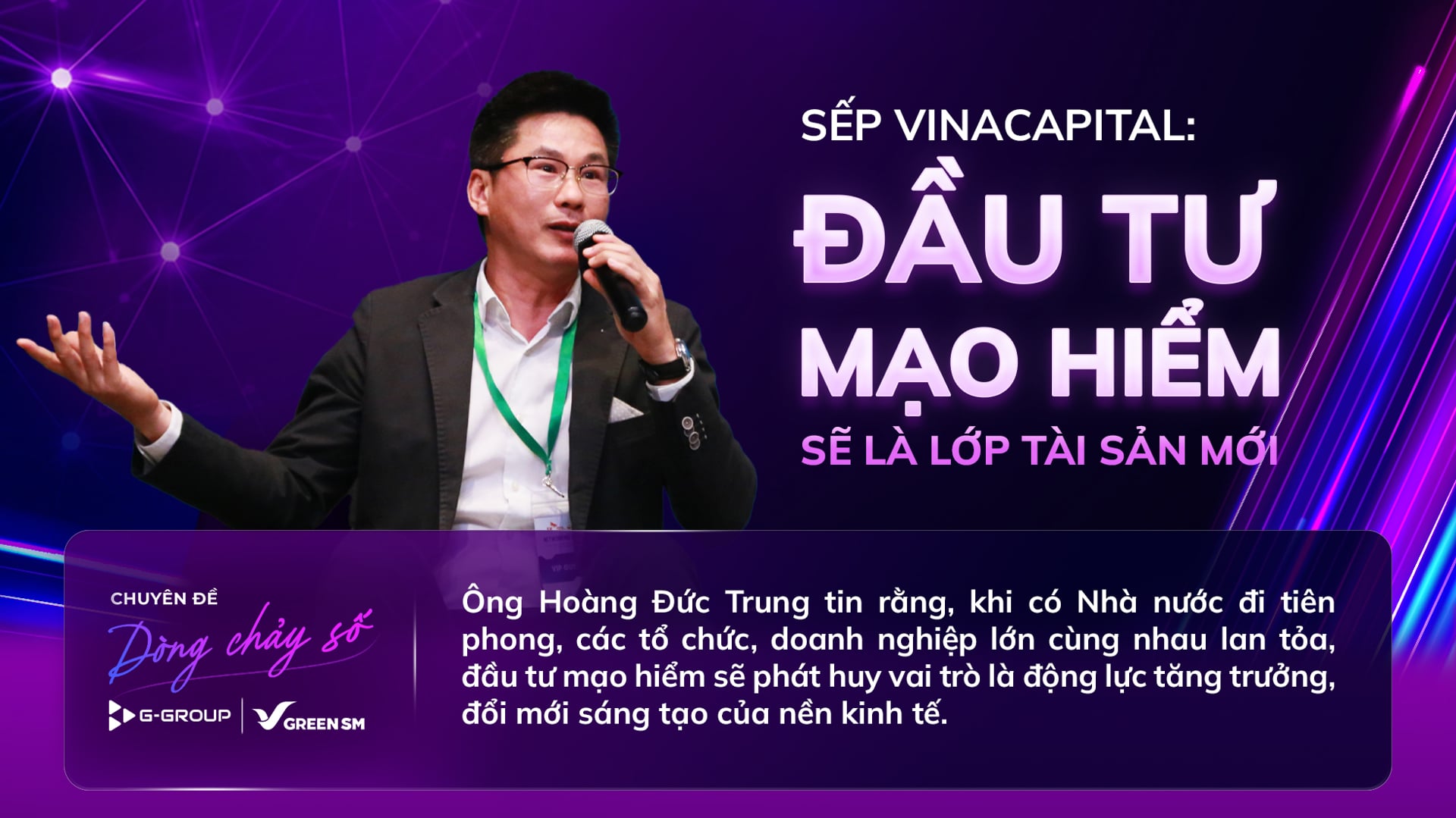
Mr. Hoang Duc Trung believes that, with the State taking the lead and large organizations and enterprises joining forces to spread the momentum, venture capital will fulfil its role as an engine of growth and innovation
Mr. Hoang Duc Trung believes that, with the State taking the lead and large organizations and enterprises joining forces to spread the momentum, venture capital will fulfil its role as an engine of growth and innovation for the economy.
Technology, data and artificial intelligence (AI) are the hot topics dominating every facet of the economy. This shift is not only capturing the attention of the public and the business community, but has also become the focal point in the strategies of regulators and, in particular, investment funds.
Within this current, VinaCapital Ventures is regarded as a pioneering institution since 2006. The fund has 20 years of experience in Vietnam, having weathered many market cycles and witnessed the birth, filtering and eventual maturing of several generations of startups.
The lessons distilled from VinaCapital's investment practice are valuable not only to the startup community, but also offer many insights into management thinking, people, and the ways in which venture capital can truly benefit the economy.
In a conversation with TheLEADER, Mr. Hoang Duc Trung, Deputy CEO of VinaCapital's venture capital fund (VinaCapital Ventures), was candid and enthusiastic when talking about "people". In particular, the expert also emphasized the trend of venture capital gradually becoming a new asset class in Vietnam.
Looking back over the 20-year journey in the Vietnamese market, having witnessed the ecosystem from its earliest, nascent days through to its explosive growth, how do you assess the overall picture of venture capital activity at this point?
Mr. Hoang Duc Trung: Over 20 years, Vietnam's startup ecosystem has, one could say, taken shape and drawn close to the regional level. Within it, we can clearly see five important pillars: the State, leading enterprises, the startup community, universities/research institutes, and capital.
Take the capital pillar as an example. Previously, startup capital came mainly from foreign players, whereas now we are seeing greater participation from large enterprises and corporations, domestic funds and, in particular, the entry of the State.
Among the leading enterprises, the emergence of the likes of Vingroup, Viettel, Masan and VNG is becoming a "launchpad" for startups. The growth of these enterprises creates major challenges to solve, helping the innovation ecosystem become ever more complete.
What is more, mid-level personnel working in large corporations, once they have accumulated enough experience, are entirely capable of confidently launching their own ventures. This is creating a new generation of elite founders who solve real-world problems arising from the struggling operations of businesses.
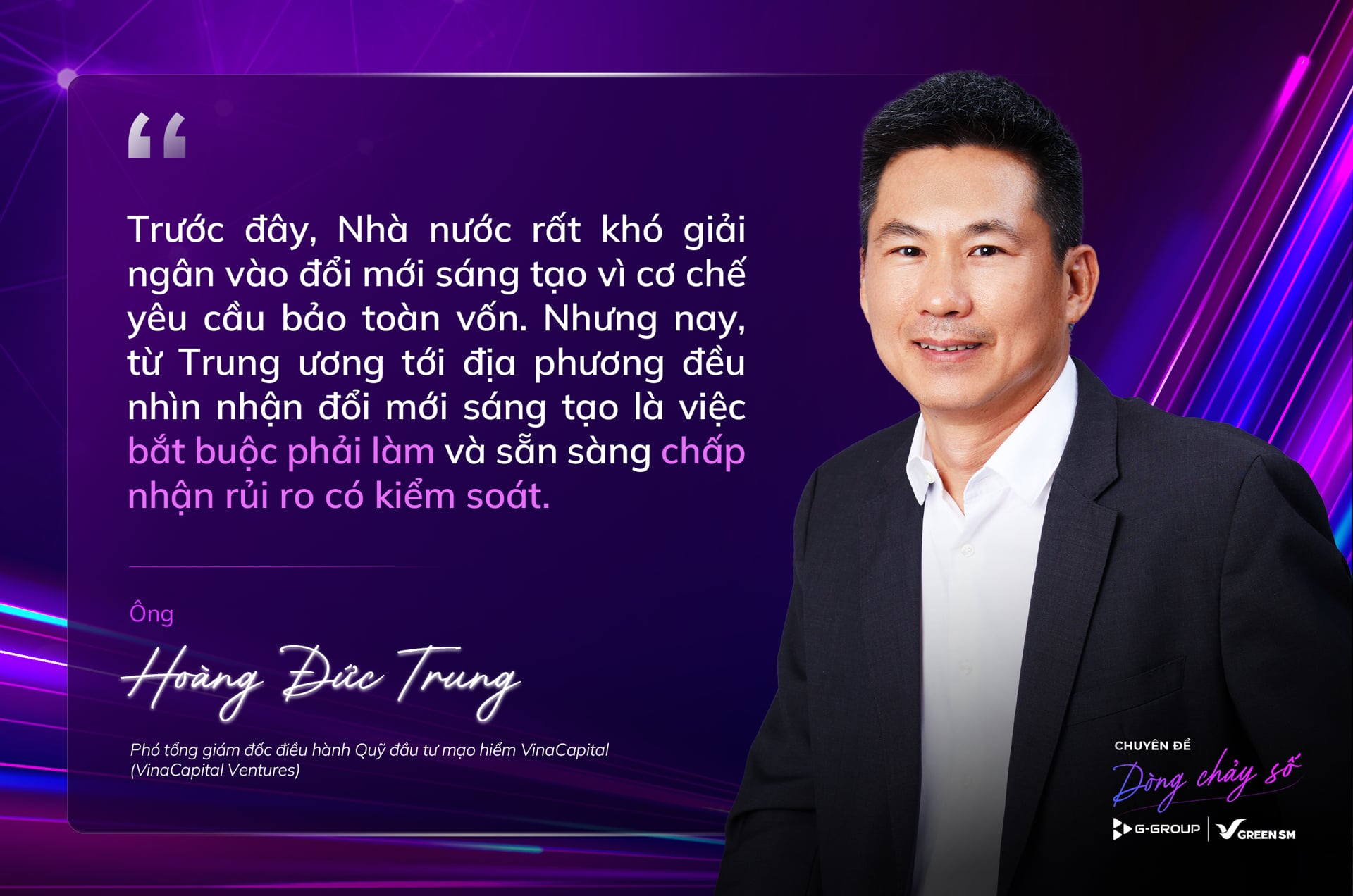
And most importantly is the "unshackling" of law and policy. In the past, it was very difficult for the State to disburse funds into innovation because the mechanism required capital preservation. But now, from the central to the local level, everyone recognizes innovation as something that must be done and is ready to accept controlled risk.
The convergence of all five of these pillars is proof that Vietnam's ecosystem is truly ready. Within Southeast Asia, we are by no means lagging behind Thailand, the Philippines or Indonesia.
Having gone through many market cycles and witnessed business models replace one another, which technology-related deal are you most proud of?
Mr. Hoang Duc Trung: What I am proud of does not stop at the success of a specific deal, but rather the transformation in the thinking and working methods of the generations of founders we have accompanied.
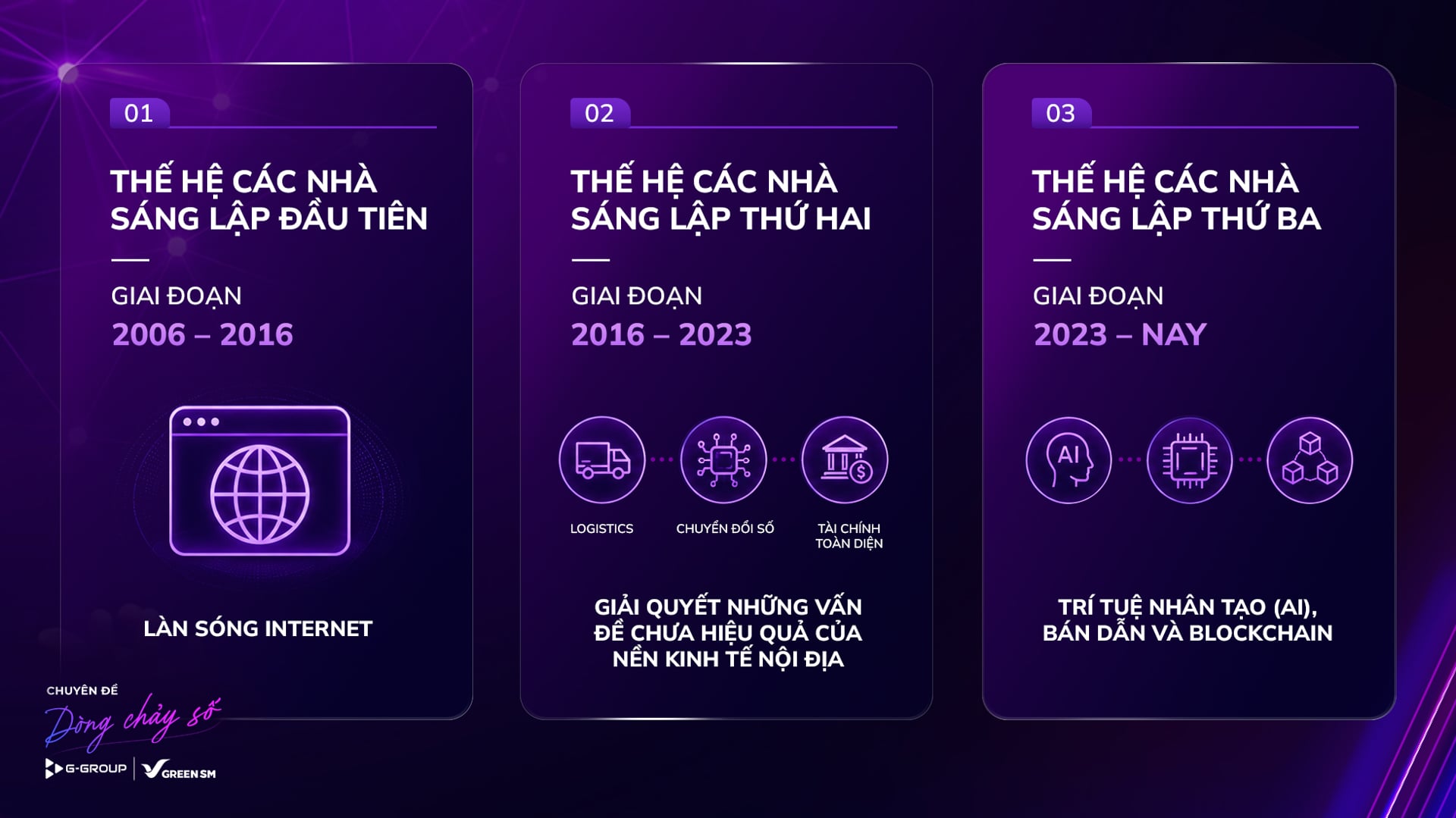
The first generation of founders is tied to the 2006-2016 period, when the Internet wave had just arrived in Vietnam. We approached investments in companies operating in the field of online services and content aimed at end users. Notable examples are YeaH1 and Chicilon Media.
The second generation was the 2016-2023 period. By then the market's challenges had changed; founders typically focused on solving the inefficiencies of the domestic economy. For instance, our logistics costs are among the highest in the world (19% of GDP), and the food spoilage rate reaches 4-5% of GDP. Capital in this period poured into logistics platforms, digital transformation, and financial inclusion, and so on.
Today, we are entering the third wave with the rise of advanced technologies such as artificial intelligence (AI), semiconductors and blockchain. Whereas in the past it took Vietnam up to 14 years to have a unicorn startup in VNG, with the third generation of founders, Sky Mavis took less than 2.5 years to reach that milestone.
What impresses me most is the flexible approach to technology and the speed of execution of this new generation of founders. They solve market problems faster and access the global economy better, thereby elevating Vietnam's ecosystem on the world technology map.
Each generation faces a different context as technology changes by the day. From the perspective of a venture capital fund, is there a common formula running throughout for evaluating founders?
Mr. Hoang Duc Trung: There is indeed. Personally, I have distilled a formula captured in six words: "People, people, people and execution, execution, execution". Six words, but they revolve around just two: people and execution.
We have sat with companies whose initial products were extraordinarily perfect. Weighed on the scales, those products left nothing to criticize. But when the market shifted, most recently the Covid-19 pandemic, if the founding team could not adapt and their execution was inflexible, that company could not survive either.
Starting up in Vietnam is already hard, and starting up in technology is harder still. Therefore, the most essential factor is always the founding team and how they face the "storms".
Personally, I am very taken with the human story. Having met many founders, I understand that they are all talented, but their personalities and ethics are also very complex. So what qualities converge in a founder who carries the "VinaCapital style" and catches the fund's eye?
Mr. Hoang Duc Trung: This is a really good question! And it is also the guiding principle of our operations. When we look at a company, we never evaluate a single individual; rather, we want to evaluate a team.
It is hard to find one outstanding individual who can build the product, sell it, directly support customers, and shoulder all the management as well. The ideal is a team of 2 to 4 people, and 3 is perfect. Those three people must be able to sit down, talk to each other straightforwardly and complement one another's shortcomings.
Within that team, however different their professional backgrounds, they must share one prerequisite in common: absolute transparency.
Many companies fail not because of the market, but because the founders fall into conflict. Therefore, before deciding to invest, we always have to check whether they truly understand their co-founders.
For example, do they know each other's homes, spouses, children and family circumstances (laughs loudly)? What is the reason they sit down together? Is it a hunger to make money, a passion for solving a big problem, or a moment of impulse, deferring to one another because this person or that person invited them along?
Next, we also cross-check within the community. We will not only listen to the founders' pitches, but will also look into their partners and acquaintances. This process usually takes a great deal of time. A deal may take 2 to 4 months, of which the step of getting to know the founders is usually the most time-consuming.
Many people think that startups are like "instant noodles". For us, however, accompanying a startup can last from 5 to 10 years, so focusing on due diligence of the people is a must. We want to know: supposing the company grows large tomorrow, are you still trustworthy? Or when the market is difficult, are you willing to be flexible? If a founder is very strong professionally but always complains, it is very hard to go the distance together.
As for issues such as finance and governance, we can perfectly well assign experts to provide support, as well as prepare for subsequent fundraising rounds.
And there is this one thing: failure is not a mark against you. If a founder comes to me and says, "Mr. Trung, I have failed 3 or 4 times already", I actually find it more interesting and am far keener to talk than with someone who beats their chest claiming they have never failed.
What matters is the lessons they draw and whether they dare to continue. In my view, a "fail fast, do fast" culture very much needs to be encouraged in Vietnam, instead of clinging to pride and thereby wasting society's resources.

Besides the human factor, what percentage does the role of technology currently account for in the investment decision?
Mr. Hoang Duc Trung: It needs to be made clear that a startup is not formed from technology alone. It is the result of three factors: execution capability, market demand and the efficient use of capital.
To us it does not matter whether it is core technology or applied technology, as long as the business has two of the three factors above. For example, a traditional retail business that previously had no technology element at all, but which, upon applying the SAP management system, comprehensively optimized its network and managed everything on the system to make business decisions and strategies, is something we rate very highly.
If a company focuses on researching core technology, then technology is the most important factor. But if the company uses that technology to create products and services to sell to consumers, then the questions to focus on are the business model and market size.
Speaking specifically of the high-tech group represented by the current generation of founders, we give priority to funding AI, semiconductors and biotechnology. However, investing in high technology requires large costs and time.
For example, Gene Solutions, a company in the healthcare field that we funded from the first round, is currently raising more than USD 50 million in its present funding round. They spent the first 7 to 8 years just researching the technology, consuming a great deal of resources before officially launching commercialized products and services to the market and achieving success.

Besides your role at VinaCapital, it is understood that you have recently also taken on the position of Director of the Ho Chi Minh City Venture Capital Fund, which operates under a public-private venture capital model. So how does this model differ from private funds?
Mr. Hoang Duc Trung: Before the City People's Committee approved the establishment of the Ho Chi Minh City Venture Capital Fund, we studied the three successful models of Israel, South Korea and China.
Although the context and structure of these three countries differ in many respects, they share one thing in common: the State accepts and genuinely regards venture capital as an important "asset class" of the economy.
In Vietnam, meanwhile, we have never viewed venture capital as an asset class. With idle money, the first thing people think of is putting it into savings. With more money to spare, they buy gold, buy land, or buy stocks. As for putting money into startups, people immediately think of the possibility of losing it, because it is tied to the word "risk". Hence, no one dares to regard it as a legitimate asset channel.
Therefore, the recent formation of the public-private fund is a symbolic step, affirming to the whole of society that: "Venture capital is now an official asset class, and the State accepts investing in it".
However, because Vietnam's current legal framework has no specific regulation on "venture capital funds", we introduced the concept of a "fund company". That is, establishing a company that operates within the framework of the Law on Enterprises, but which has the core functions, role and operations of an investment fund.
If venture capital is to be called an asset class, then who are the investors for this asset class? And what is the ultimate destination of this investment activity?
Mr. Hoang Duc Trung: I really like this question. It is also a question I have personally discussed many times with the leadership and departments of Ho Chi Minh City.
I say that in developed countries, entrepreneurs who become successful always want to come back and contribute to society. But for them to be able to contribute, we need a mechanism, and here that is the public-private fund model.
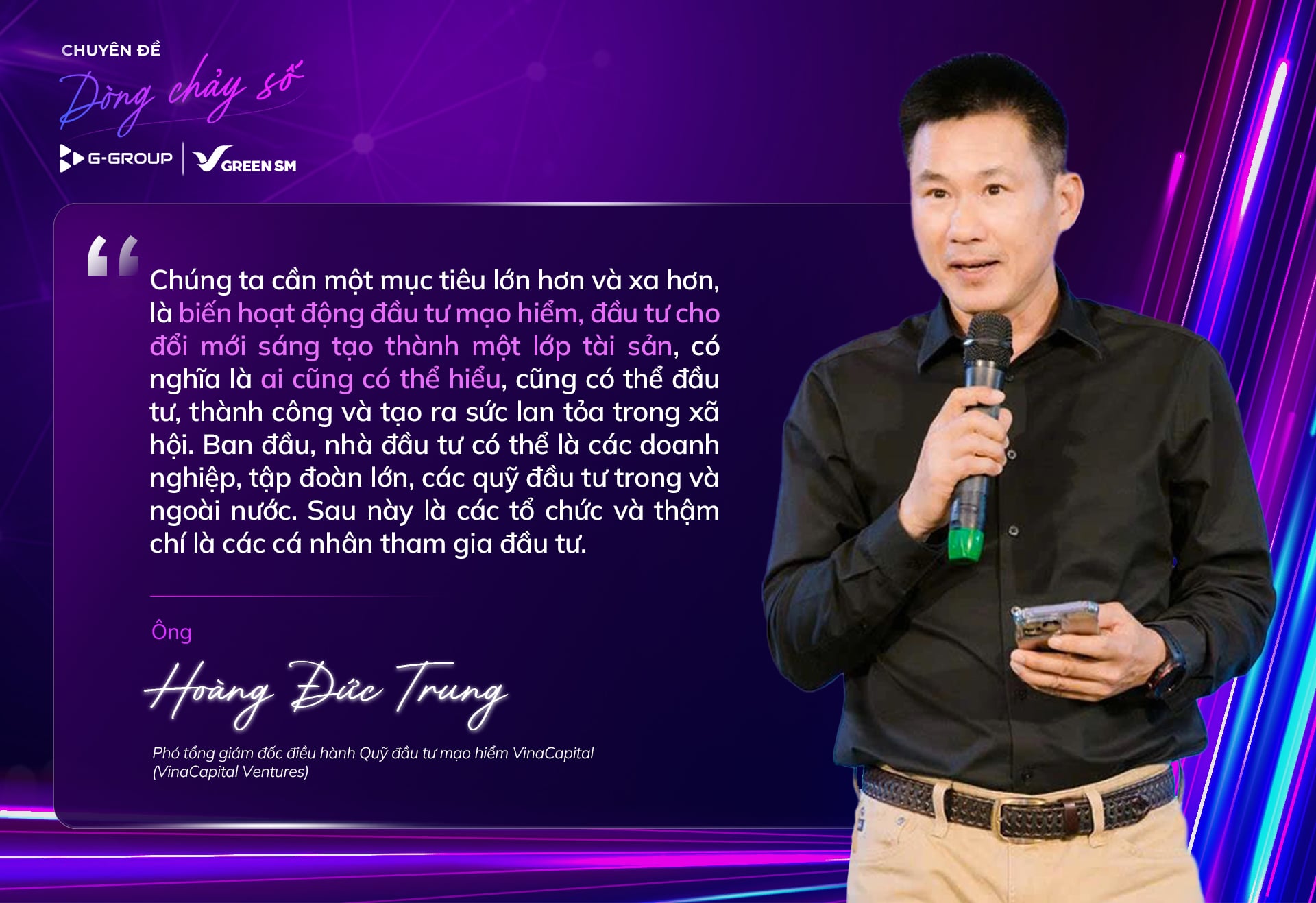
However, one fund alone is not enough. In essence, we need a bigger and farther-reaching goal, which is to turn venture capital and investment in innovation into an asset class, meaning that anyone can understand it, anyone can invest in it, succeed, and create a ripple effect in society.
Initially, the investors may be large enterprises and corporations, and domestic and foreign investment funds. Later they will be institutions and even individuals participating in the investment.
To achieve this, we must change from mindset to action: that venture capital is a good thing that contributes to the community and the locality, drives the shared development of businesses, and creates additional wealth for society while enriching oneself.
With the State taking the lead and large organizations and enterprises joining forces to spread the momentum, I believe this "new asset class" will fulfil its role as an engine of growth and innovation for the economy.
When the State formally participates in venture capital, what do you consider the most important change?
Mr. Hoang Duc Trung: For me, it is that the State is willing to accept risk within a certain framework, instead of a capital-preservation mindset.
For a long time, the State has owned a great deal of financial resources, but has been unable to disburse them into innovation, because the mechanism requires that there be no losses. To go into venture capital and lose money is to bear legal liability. Therefore, public capital has always stayed out of this game.
Now, through the public-private venture capital model, the State defines "risk" in line with the market mechanism. Put simply, previously an investment could not incur a loss. But now, if an investment puts out 10 dong and may lose 3 dong, but the remaining 7 dong win and generate a large profit margin, then that fund as a whole still delivers financial benefit and is considered a success. Risk here is managed on an overall probability basis, rather than being confined and rigidly measured at each individual project.
Moreover, the public-private venture capital fund will target fields in which the private sector is not yet keen, or is not yet strong enough to shoulder, such as chip research and manufacturing, or building artificial intelligence infrastructure. These sectors require patience over 10 to 20 years, and may not even yield a product.
In reality, calling on the private sector to invest at the early stage is unthinkable. In that case, the State will pioneer first, then call on the private sector to participate at a later stage. That is the true value of seed capital from the State.
In terms of structure, this fund is designed on the basis of the State providing 40% as seed capital. Seeing the State take the lead and share the risk, corporations and private investment funds will have the confidence to gather the remaining 60% of the capital.
The most breakthrough point lies in the management mechanism. Precisely because it contributes only 40%, the State will not take part in operations. The private sector, holding the larger share of capital, will hold governance and decision-making rights. All startup valuation follows the market mechanism, entirely free from mere imposition by administrative constraints.
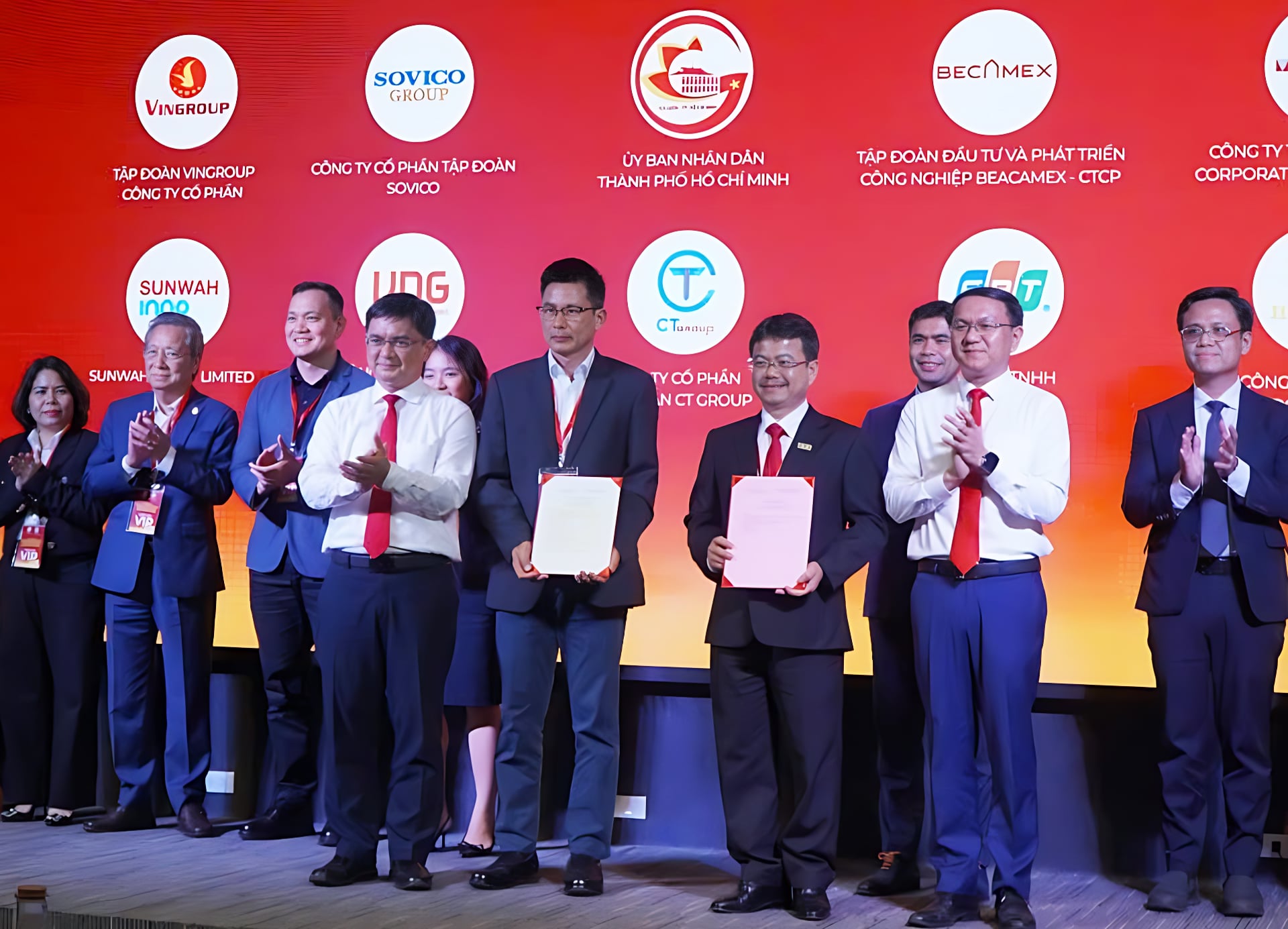
Since the Ho Chi Minh City Venture Capital Fund was established, have any entities signaled their participation, and have any startup applications been submitted for appraisal?
Mr. Hoang Duc Trung: (laughs) I think the fund was launched at just the right time. We have received interest not only from startups, but also from investors and large domestic corporations.
At present, although the fund is not expected to officially begin receiving applications until the third quarter, we have already been "signaled" by 4 startup incubators. They have drawn up their own lists of their most promising companies to send to the fund for consideration.
In addition, 2 large-scale startup accelerators have also expressed a desire to cooperate. They see Vietnam as an attractive destination and want to contribute to the startup ecosystem.
From the investor side, 3 foreign institutions are in contact to learn about the fund's mechanism. Of course, receiving foreign investment still requires some procedures to be resolved, but the signals are very positive.
On the startup side, 3 projects have proactively reached out and invited us to visit their businesses. One project is in high-tech healthcare, one specializes in manufacturing camera lines for unmanned aerial vehicles, and one works on educational technology in the aerospace field.
How do you feel now that the fund has received such great interest?
Mr. Hoang Duc Trung: Personally, I feel very grateful. On the startup side, they came to us and confided that, up to now, they had always heard about the State's investment funds but had never come knocking, for fear of administrative barriers.
Upon hearing that this fund has deep private-sector participation and is run under the market mechanism, they were very pleased and open. For some startups, this is the first time they have boldly brought their research projects out into the open.
From the perspective of the fund's operating representative, we are truly moved. Take the project on educational technology in the aerospace field: that is an extremely new and sophisticated technology that I personally never thought Vietnamese people could build with their own hands.
Many young people nowadays like to use the word "wow", but I think that does not quite capture it. Yet if we speak of joy, then I am extremely joyful. Joyful because there are signals showing that Vietnamese people are entirely capable of keeping pace with the world's high-tech industry.
With these changes in mindset and governance, we have every right to expect venture capital to become a new asset class in the coming decade. The presence of the public-private fund will be a driver of growth, while at the same time attracting large-scale foreign capital to participate in Vietnam's innovation ecosystem.
Thank you very much!
Source: TheLeader — theleader.vn. This article is republished to share knowledge with the community of founders and investors in the HCM VIF ecosystem.
Category & tags
Related news
 Ecosystem
Venture capital will be a new asset class
Mr. Hoang Duc Trung believes that, with the State taking the lead and large organizations and enterprises joining forces to spread the momentum, venture capital will fulfil its role as an engine of growth and innovation
 Finance & Banking05/2026
The success of a public-private venture fund is not measured by the number of unicorns
With an initial size of VND 500 billion, how will the government's “seed capital” from the public-private venture fund catalyze the flow of financing into startups?
 Finance & Banking18/05/2026
Ho Chi Minh City sets up venture capital fund: 'Seed capital' for Vietnamese tech
For the first time, Ho Chi Minh City has a venture capital fund operating under a joint-stock company model with the participation of the State and major private corporations.