
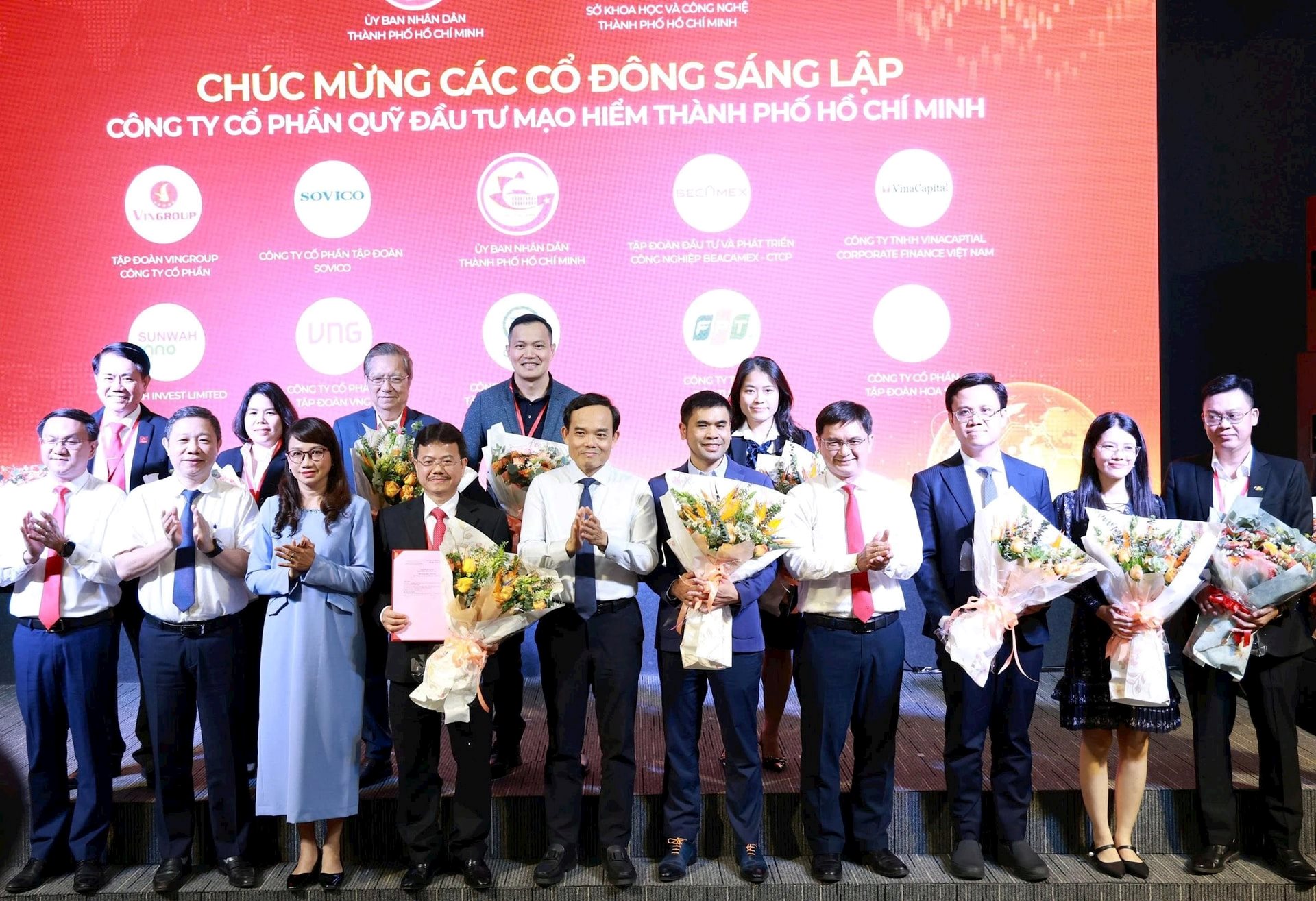
Ho Chi Minh City has just officially launched the Ho Chi Minh City Venture Capital Fund, with the operating legal entity being the Ho Chi Minh City Venture Capital Fund Joint Stock Company (HCM VIF JSC). Among them, nine major corporations and enterprises - Vingroup, Sovico Group, Becamex IDC, VinaCapital, Sunwah Group, VNG, CT Group, Hoa Sen Group and FPT - jointly contributed founding capital to the fund.
As Vietnam pursues its strategy of developing science and technology, innovation and national digital transformation, the emergence of a venture capital fund under a public-private model is expected to give a boost to the domestic technology startup ecosystem, especially in fields that require large amounts of capital and a high tolerance for risk, such as artificial intelligence, semiconductors and biotechnology.
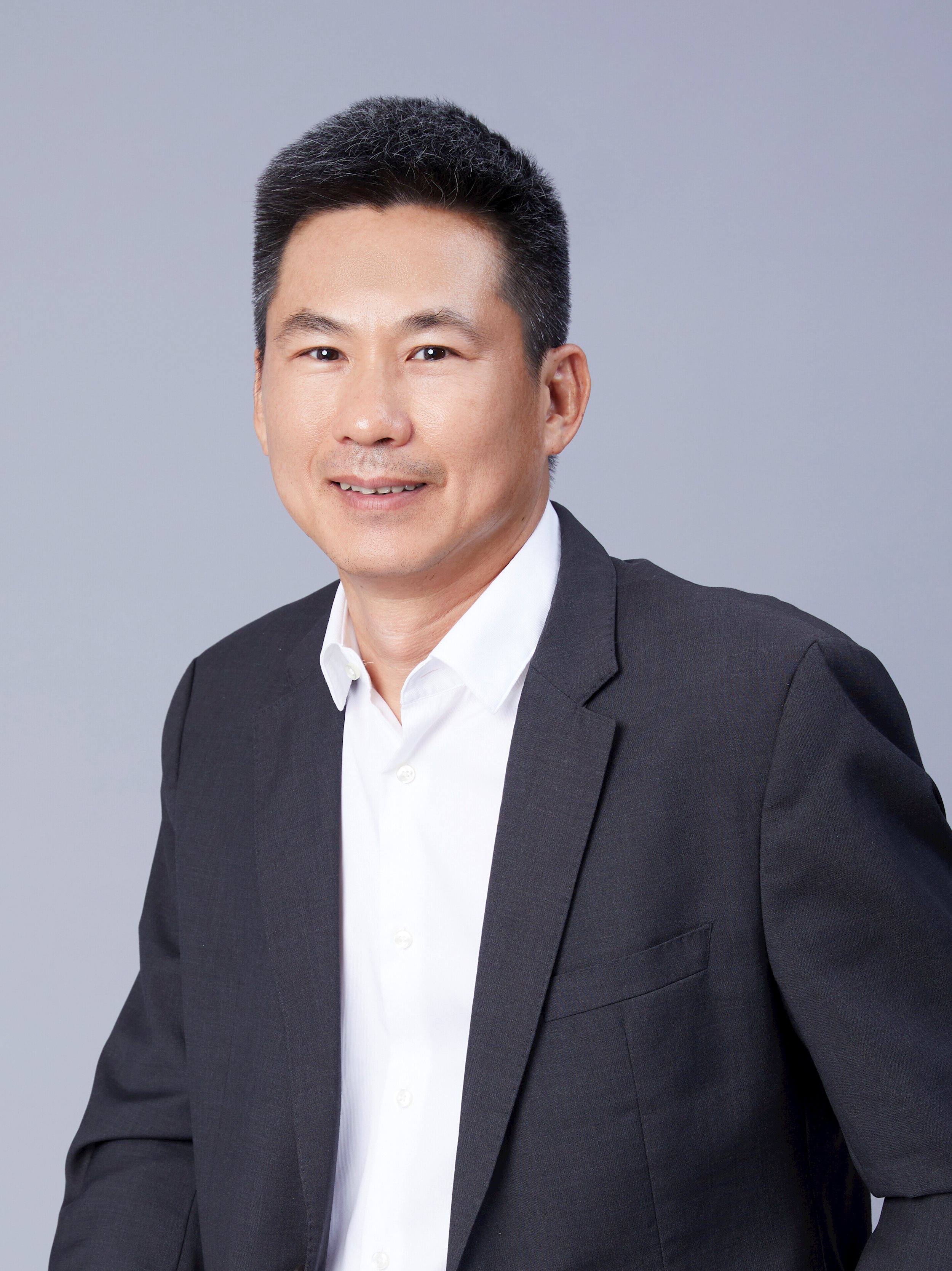
A reporter from Popular Science magazine sat down with Mr. Hoang Duc Trung - Director of VinaCapital Ventures, the person in charge of operating the Ho Chi Minh City Venture Capital Fund - to discuss the expectations for this new model and the future of the city's science and technology.
The State becomes a direct "co-investor"
For the first time, Ho Chi Minh City has a Venture Capital Fund whose operating legal entity is the Ho Chi Minh City Venture Capital Fund Joint Stock Company. In your view, what does this mean for the City's science and technology?
Mr. Hoang Duc Trung: The most important thing right now is to build an environment reliable enough for long-term capital to flow into innovation in a sustainable way. That depends not only on the scale of capital, but also on the policy framework, financial infrastructure and the level of market transparency. When legal and policy risks are reduced and the market has better liquidity, investors will be bolder about participating in highly uncertain fields such as technology and innovation.
Ho Chi Minh City's establishment of a venture capital fund under a public-private model is not simply a matter of adding another source of capital; it also marks a structural change in the way the State takes part in the innovation ecosystem. The difference lies in the fact that the State no longer merely plays the role of a policy architect, but becomes a direct "co-investor," accepting to share risk with the private sector on market principles.
"The fund's success should not be measured by a few standout investments, but by its ability to build a high-quality investment portfolio and to create enterprises that genuinely have sustainable value and can compete regionally or globally."
Mr. Hoang Duc Trung - Director of VinaCapital Ventures.
In a context where core technology fields always come with a high level of risk, this mechanism is especially important in building confidence for private and international capital. When the State participates in the role of "seed capital" together with a controlled risk-acceptance mechanism, the market will be bolder about investing earlier in fields that were previously seen as too risky or lacking a clear legal framework.
More importantly, the fund can help standardize the flow of capital into innovation, shifting from a bandwagon style of investing to a disciplined, methodical mechanism oriented toward long-term value. This will be the necessary foundation for science and technology to truly become a new growth driver for Ho Chi Minh City.
Which enterprises will the VND 500 billion fund prioritize?
The Ho Chi Minh City Venture Capital Fund has just been launched with a scale of VND 500 billion. What is the first thing the fund will do this year?
Mr. Hoang Duc Trung: In the first year, the fund's biggest priority will not be to "move quickly on disbursement," but to build an operating foundation that meets market standards. This includes establishing a rigorous investment appraisal process, a transparent decision-making mechanism and a risk management system suited to the specific nature of venture capital.
In parallel, the fund will build a foundational investment portfolio with an approach that balances enterprises that already have cash flow and the ability to scale against technology projects with long-term breakthrough potential. The goal is not only to seek profit, but also to establish a clear "risk appetite" and investment philosophy for the fund from the very outset.
Another focus is building an ecosystem around the fund by connecting with large corporations, private investors and international partners. In venture capital, money is only one part; the ability to help enterprises access markets, data, customers and partners is what really determines the speed of growth.
Which group of enterprises will the fund prioritize for capital? Which fields are considered the focus of investment in the early stage?
Mr. Hoang Duc Trung: The fund will prioritize technology enterprises that have moved past the pilot stage, entered the growth phase and begun to demonstrate product-market fit. This is a group of enterprises capable of absorbing large amounts of capital and converting that capital into real growth within a relatively short time.
In terms of fields, the focus is on core technology areas that create long-term value, such as artificial intelligence (AI), semiconductors, biotechnology, green energy, and digital transformation platforms with broad applicability and clear commercialization potential.
However, the fund will not invest across the board, but will selectively focus on segments where Vietnam already has a certain foundation or an opportunity to participate more deeply in the global value chain. This approach helps optimize the efficiency of capital use and increases the likelihood of forming technology enterprises with genuine competitive capacity.
Why did the fund choose to focus on Series A and B funding rounds instead of the seed stage like many other startup funds?
Mr. Hoang Duc Trung: This is currently the "gap" in Vietnam's startup ecosystem. While the seed stage still attracts interest from small funds and angel investors, and the later growth rounds involve international capital, the acceleration stage lacks funds with enough capacity to take the lead.
This is also a pivotal stage, when a startup needs large amounts of capital to scale up, refine its business model and prove its operational capacity. Without suitable capital, many promising enterprises get "stuck" at a small scale and find it hard to move on to subsequent funding rounds.
Therefore, the fund's participation in Series A and B not only helps address the capital gap, but also contributes to raising the quality of enterprises through higher standards of governance, finance and growth strategy, combined with support for connecting to domestic and international ecosystems.
Accepting controlled risk to step out of the comfort zone
A breakthrough often mentioned is the "controlled risk acceptance" mechanism, which even allows a risk threshold of up to 50% of state capital. Specifically, where will the fund "take risks," and how will it control that risk?
Mr. Hoang Duc Trung: Controlled risk acceptance is, first of all, a change in the way we look at risk in venture capital. The fund does not set out to avoid risk on each individual investment, but manages risk at the portfolio level. That means there will be investments that do not succeed, as long as the portfolio as a whole creates outstanding value over the medium and long term.
The "risk-taking" will focus on fields with breakthrough potential but a high degree of uncertainty, such as core technology, AI, semiconductors or new business models. However, risk will be controlled through strict investment discipline, a multi-dimensional appraisal process and a reasonable mechanism for allocating capital across different asset groups.
In addition, connecting startups with the enterprise ecosystem and strategic partners is also an effective way to reduce risk. When an enterprise is helped to access markets, customers and the right resources, its chances of commercializing products and scaling up are higher, thereby improving the probability of success of the investment.
Ho Chi Minh City has set a target of raising the fund's scale to VND 5,000 billion by 2035. Over the next 3-5 years, what results do you expect the fund to produce to prove this model is successful?
Mr. Hoang Duc Trung: In the early stage, the fund's success should not be measured by a few standout deals, but by its ability to build a high-quality investment portfolio and to form enterprises that genuinely have sustainable value and are capable of competing regionally or globally.
More importantly, the fund must prove its role as a "market leader," meaning that every dong of the fund's capital can attract many more dong from the private sector and from international investors. When that happens, the fund not only generates financial returns but also helps activate a larger flow of capital for the entire innovation ecosystem.
If the fund helps build market confidence, standardize the investment process and form a transparent operating mechanism, then those will be results that are far more foundational and sustainable than any short-term indicator.
If the fund operates as expected, how do you envision the startup ecosystem and the technological landscape of Ho Chi Minh City changing over the next 5-10 years?
Mr. Hoang Duc Trung: In the long run, the fund's greatest impact may lie not in the number of investment deals, but in changing the way the ecosystem operates. The fund will become a "launchpad" where bold ideas, ambitious technology enterprises and long-term capital meet within a framework that is transparent, disciplined and oriented toward sustainable value.
Startups will not only gain access to capital but will also be connected with enterprises, markets and partners to shorten the journey from idea to commercialization. At the city level, Ho Chi Minh City can form a new class of technology enterprises capable of competing regionally, while attracting international capital more strongly. When that happens, innovation will truly become a sustainable growth driver of the economy.
Thank you very much.
Creating the most favorable conditions for providing capital
Mr. Nguyen Manh Cuong - Alternate member of the Party Central Committee and Vice Chairman of the Ho Chi Minh City People's Committee - said that the participation of investment funds, corporations and large technology enterprises as founding shareholders will bring international-standard governance thinking, an extensive market network and a deep understanding of the innovative startup ecosystem.
According to Mr. Cuong, these enterprises have joined the City in pioneering the opening of the domestic venture capital market, sharing benefits and risks to nurture the technology enterprises of the future. Ho Chi Minh City's leaders committed to continue accompanying them, creating favorable conditions for providing capital, supporting the incubation of startup projects and connecting commercialization efforts in order to form more innovative enterprises with high growth potential.