

The success of a public-private venture fund is not measured by the number of unicorns
With an initial size of VND 500 billion, how will the government's “seed capital” from the public-private venture fund catalyze the flow of financing into startups?
(KTSG Online) – With an initial size of VND 500 billion, how will the government's "seed capital" from the public-private venture fund catalyze the flow of financing into startups?
In mid-April, Ho Chi Minh City launched a Venture Capital Fund with an initial size of VND 500 billion, comprising the city's capital contribution and the participation of private-sector corporations. As a new step in the effort to unlock capital for startups, this cooperation model raises expectations of a fundamental change in how investment risk is approached, as well as of “attracting” additional fresh capital. Saigon Economic Magazine sat down with Mr. Hoang Duc Trung, Director of VinaCapital Ventures and the fund's operating representative, to discuss building Vietnamese “unicorns” from this special seed capital.Accepting calculated risk, not investing indiscriminately
KTSG Online: Sir, with the participation of the public sector, are you concerned about the pressure to “preserve capital” – a barrier commonly seen in budget management when carrying out venture investment? - Mr. Hoang Duc Trung: In the venture fund model, especially a public-private fund, we do not view “capital preservation” in the sense of absolutely avoiding risk on each individual investment. Venture investment is by nature the acceptance of calculated risk managed at the portfolio level. What matters is not whether each deal wins or loses, but whether the entire portfolio creates superior value over the medium and long term. We maintain strict investment discipline and capital allocation, balancing enterprises that already have stable cash flow with core startups or deep-tech companies that have breakthrough potential over the long term. This approach gives the portfolio both resilience and the venturesome spirit needed to generate growth.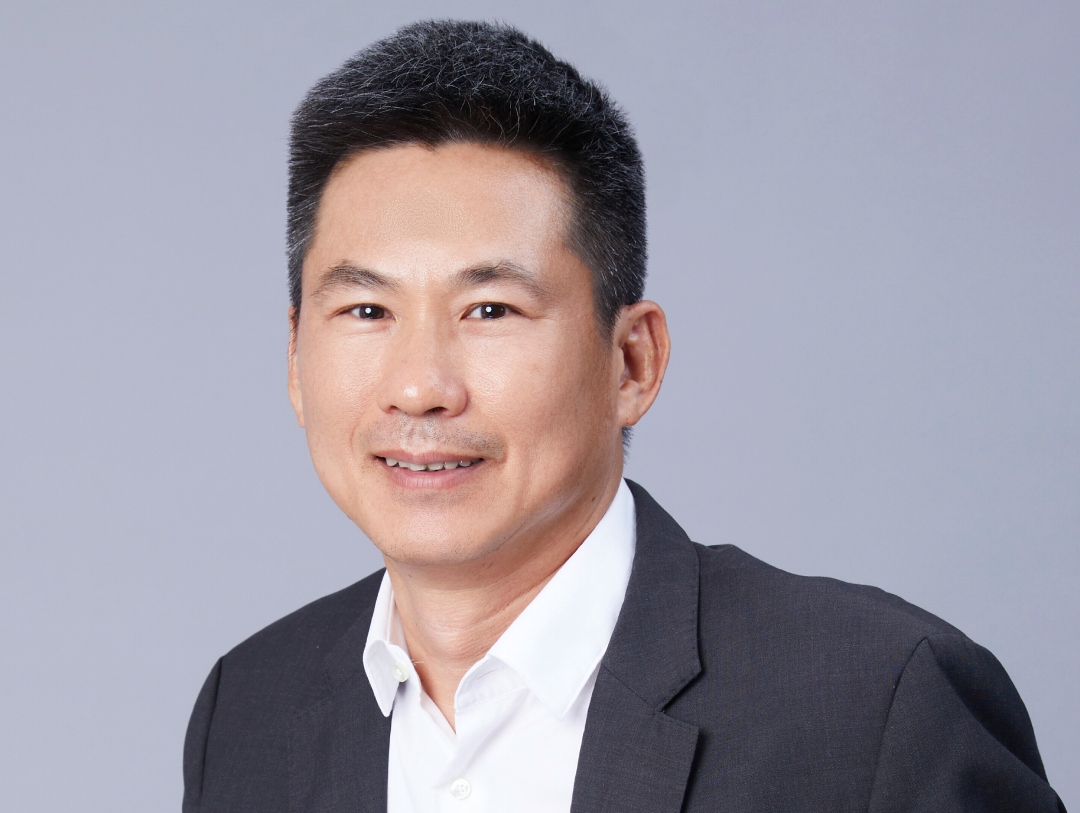
Solving the startup-quality problem and policy bottlenecks
Many argue that Vietnam's startup ecosystem lacks quality projects. How do you assess this issue? - In reality, not many startups have reached the “maturity” needed to absorb large capital. Factors such as a product that truly meets market needs (product-market fit) remain unproven; sustainable scalability has not been demonstrated; or the standards of governance and financial efficiency required by institutional investors have not been met. Therefore, the challenge is not simply to add capital, but to raise the quality of enterprises. Are there any other bottlenecks, sir, especially in today's demand to promote innovation? - One of the biggest bottlenecks of Vietnam's innovation ecosystem today is the commercialization of research results. We are lacking professional “intermediary links” such as intellectual-property valuation organizations, technology-transfer centers, and quality incubators, causing much research to stop at the laboratory stage instead of becoming a commercial product.The fund's success should not be measured by the number of unicorns within a fixed period. Unicorns may be an outcome, but they are not the only goal.In addition, the linkage between universities and businesses remains “out of sync,” and some obstacles related to the management of public finances and public assets still partly constrain the commercialization of research results. The formation of enterprises spun out of universities also faces certain legal obstacles, meaning that many promising ideas do not yet have favorable conditions to reach and develop in the market. Moreover, the startup ecosystem lacks “deep-tech” enterprises built on core technology, tending instead toward ready-made business models. Many people look to the number of “unicorns” (startups valued above US$1 billion) to measure success. Over the next five years, will this be the yardstick for the fund's success? - The fund's success should not be measured by the number of unicorns within a fixed period. Unicorns may be an outcome but not the only goal. A more important yardstick is whether the fund helps form technology enterprises of genuine value, capable of competing regionally or globally, and having a positive impact on the ecosystem. At the same time, whether the fund builds market confidence, attracts private and international capital to participate, and helps standardize how capital flows into innovation in a sustainable way. That is the truly foundational success. What message would you like to send to the startup community that is placing high expectations on this fund? - The fund will accompany startups on market principles, with a long-term and substantive approach. This is not “easy” capital or movement-style support. The fund is designed to share risk with the private sector while still setting high standards for product, governance, strategy, and scalability. For entrepreneurs and startups, the fund looks for truly serious teams with a long-term vision and readiness to build enterprises grounded in technology and genuine value for the market. Capital is only one part. What matters more is the ability to prove that a solution addresses a real problem, can be commercialized and scaled sustainably, and a readiness to embrace governance discipline and to work alongside investors. Thank you, sir!
Source: The Saigon Times — tuoitre.vn. This article is republished to share knowledge with the founder and investor community in the HCM VIF ecosystem.
Category & tags
Related news
 Ecosystem
Venture capital will be a new asset class
Mr. Hoang Duc Trung believes that, with the State taking the lead and large organizations and enterprises joining forces to spread the momentum, venture capital will fulfil its role as an engine of growth and innovation
 Finance & Banking05/2026
The success of a public-private venture fund is not measured by the number of unicorns
With an initial size of VND 500 billion, how will the government's “seed capital” from the public-private venture fund catalyze the flow of financing into startups?
 Finance & Banking18/05/2026
Ho Chi Minh City sets up venture capital fund: 'Seed capital' for Vietnamese tech
For the first time, Ho Chi Minh City has a venture capital fund operating under a joint-stock company model with the participation of the State and major private corporations.