

To borrow green capital,
According to State Bank statistics, total outstanding green credit reached VND828 trillion by the first quarter of this year, up 4.6 times compared with 2017 (when it was first rolled out).
According to State Bank statistics, total outstanding green credit reached VND828 trillion by the first quarter of this year, up 4.6 times compared with 2017 (when it was first rolled out). Although it has grown steadily, green credit still accounts for only 4.3% of the economy's total outstanding credit, showing that the potential for development remains very large.
Drivers of green finance growth
The sustainable finance market will continue to expand because Vietnamese businesses' transition needs are far from small.
There are many reasons pushing them toward "greening" their operations. First, climate change is leaving ever more direct impacts on their assets and cash flows, from storms and floods, inundation, prolonged heat and drought to saline intrusion.
In addition, amid today's sharp energy-price volatility, the goals of saving electricity and optimizing operations have become essential and strike directly at the bottom line, not merely a matter of responsibility.
Overall, greening usually goes hand in hand with the application of modern technology, reducing losses and increasing efficiency. Moreover, the expectations of investors, partners, employees and consumers are also a driver compelling businesses to go green. If they want to join supply chains and expand export markets, requirements for information transparency, traceability and emissions reduction become factors that cannot be taken lightly.
Notably, these factors do not affect just one group of businesses. From exporters and domestic manufacturers to service and logistics firms, everyone will encounter some version of the "green equation": whether to cut costs, retain markets, or manage risks, and even to bear greater responsibility toward society and the economy.

To access green capital, information transparency, traceability and emissions reduction become factors that cannot be taken lightly. Photo: Hoang Anh
Available financial instruments
The key point is that capital for the green transition is not just a long-term loan for a large project. Businesses need a diverse set of financial instruments suited both to working-capital needs and to investment in fixed assets such as equipment, production lines, energy infrastructure, water treatment, and so on. Viewed through the lens of such capital-use needs, sustainable finance becomes less remote and turns into part of the business plan.
With debt instruments, businesses generally have two approaches. If they have a specific investment item and can demonstrate its impact (for example, replacing machinery to save electricity, installing rooftop solar, or upgrading a water-treatment system), a green loan is a suitable choice because the capital is framed for a clear purpose.
If a business wants more flexibility, whereby the capital can be used for many needs while still committing to improve sustainability performance, then a sustainability-linked loan is the optimal choice, because loan conditions such as the interest rate can be tied to a few measurable KPIs, for instance reducing energy consumption per unit of product or increasing the proportion of standard-compliant raw materials. If reporting capacity meets market requirements, green bonds can be a complementary channel to diversify medium- and long-term capital sources.
However, for sustainable finance to truly reach the economy, we cannot talk only about investment capital. Many businesses are most constrained by working capital: buying raw materials, fulfilling orders, extending payment cycles, or needing capital to improve processes at customers' request. This is where trade finance becomes an important piece of the puzzle.
Instruments such as import-export financing, letters of credit/guarantees, receivables financing, or supply-chain financing track the flow of goods and cash, and are therefore suitable for businesses that have orders but lack revolving capital. When solutions are designed to encourage sustainability criteria (for example, prioritizing suppliers that meet standards, or tying conditions to data transparency), businesses can "green" their day-to-day operations without having to wait for a large project to access capital.
In short, debt instruments are usually the "lever" for investments that create structural change (equipment, technology, infrastructure), while trade finance is the "lubricant" that keeps the green transition running within the day-to-day machinery of business. When these two groups of instruments are used in the right place, businesses will have a seamless capital roadmap: investing to reduce consumption and risk, while having working capital to sustain orders and meet ever-higher market requirements.
What do businesses need to do?
To access sustainable finance, businesses do not necessarily have to start with a report hundreds of pages thick. What matters more is choosing the right entry point: transition items that both create environmental impact and have financial returns clear enough for banks and investors to "read."
Instead of spreading themselves thin, businesses should prioritize 2-3 items that can quickly demonstrate benefits, such as saving electricity/fuel, reducing raw-material losses, optimizing logistics, or improving processes to reduce errors and waste. This is how to turn the green transition from a slogan into a productivity equation.
The next step is to package those items into a transition plan over, say, 12-24 months, with measurable objectives and KPIs. A good plan need not be "grandiose," but it must answer three questions: what the business will do, how long it will take, and how the results will be measured.
In parallel, minimal data and a few core KPIs (for example, electricity consumption per unit of product, recycling rate, fuel reduction for internal transport, etc.) are already enough to create a clear framework for both internal use and the capital provider.
A factor often underestimated but which actually determines the chance of getting funding approved is minimal data. Businesses should start from what is available and easy to verify, such as electricity/fuel bills, monthly output, raw-material norms, water usage, waste generation and a description of operating processes. The crux is not perfect data but consistent data that can be reconciled over time.
When data is recorded regularly, businesses will find it easier to demonstrate an initial baseline for comparison and the level of improvement after investment. This is the information that funders need to assess risk and impact.
Statistics show that 82% of businesses in Vietnam have been and are collecting ESG data to measure KPIs and indicators. However, only about one-third of businesses use third-party certification for their ESG reports. This is a point businesses should consider, because third-party certification helps build trust for investors/lenders, ensures compliance, minimizes greenwashing risk, and thereby increases access to green capital.
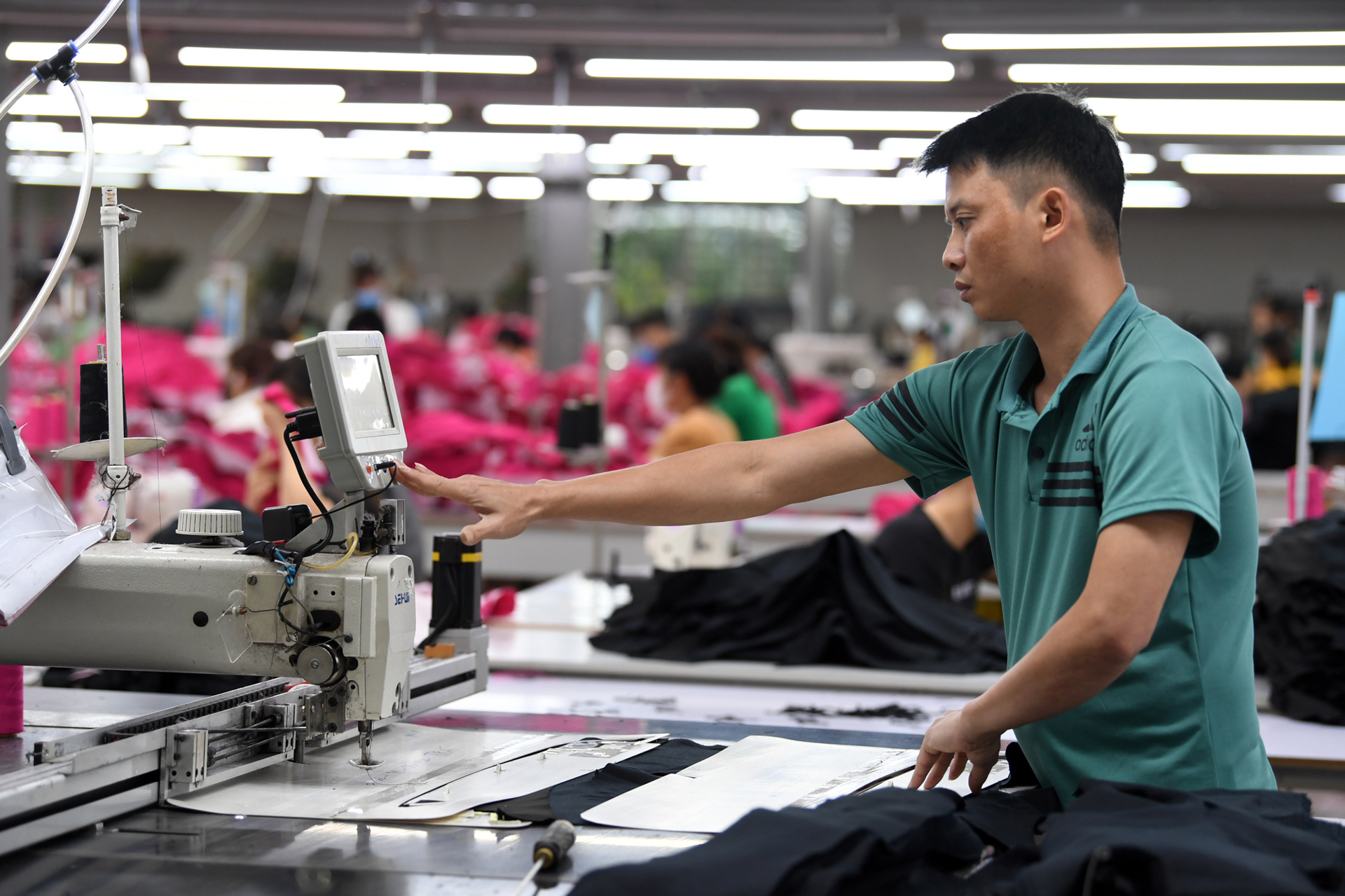
The crux of accessing green capital is not perfect data but consistent data that can be reconciled over time. Photo: Hoang Anh
Once they have a plan and data, businesses need to standardize the project dossier in financial language. A convincing dossier usually includes: total investment, cost components, projected savings/efficiency gains, cash flow, payback period, the main risks and control measures.
This is the step that helps banks see the project as not only green but also capable of repaying debt. With green loans, businesses should also clarify what the capital is used for, to avoid being assessed as vague or as posing greenwashing risk.
At the same time, businesses need to establish a level of internal governance sufficient to implement and report. In fact, many loans are delayed or rated high-risk not because the project is poor but because it is unclear who is responsible for tracking KPIs, who approves changes and who consolidates the data. Simply by clearly assigning a focal point, an internal approval process and a periodic KPI-updating schedule, businesses significantly increase their credibility in the eyes of capital providers.
Finally, businesses need to proactively manage greenwashing risk in a simple way: commit only to what is measurable, keep evidence (invoices, contracts, acceptance minutes, operating data) and be ready to reconcile. This approach is not only to meet standards but also to protect the business itself against reputational and legal risks as the market increasingly values transparency. When businesses do the above steps well, sustainable finance will no longer be a hard-to-open door but will become a reasonable capital option for long-term growth.
Support from regulators
The government plays a key role in promoting the development of sustainable finance. This role is reflected in clarity and consistency in regulations on governance, information disclosure and standards of conduct in the market.
Looking at neighboring ASEAN countries, markets where sustainable finance develops quickly and strongly usually share common features such as a clear taxonomy, sufficiently strong incentive mechanisms, and good data infrastructure. For instance, Singapore and Indonesia both have policies and mechanisms to help businesses implement recommendations on the types of information to include in reports, so that investors, lenders and appraisal units can assess climate-change-related risks.
In addition, Vietnam very much needs to develop a verification/assessment ecosystem for the market to run smoothly: training human resources, upgrading the capacity of independent assessment units, and building standards and inspection processes suited to Vietnam's context. Green standards and certification mechanisms are among the group of ESG policies that 56% of businesses in Vietnam wish the government to implement in the future, according to a PwC report.
A sufficiently strong verification ecosystem will help reduce greenwashing concerns, increase the credibility of sustainable finance products, and create a foundation for Vietnam to integrate better with regional practice.
When these pieces of the puzzle are implemented in a coordinated manner, sustainable finance will become a lever for the Vietnamese business community to upgrade, become more resilient and more competitive in a world that is greening very fast.
Source: TheLeader — theleader.vn. This article is republished for the purpose of sharing knowledge with the community of founders and investors within the HCM VIF ecosystem.
Category & tags
Related news
 Ecosystem
Venture capital will be a new asset class
Mr. Hoang Duc Trung believes that, with the State taking the lead and large organizations and enterprises joining forces to spread the momentum, venture capital will fulfil its role as an engine of growth and innovation
 Finance & Banking05/2026
The success of a public-private venture fund is not measured by the number of unicorns
With an initial size of VND 500 billion, how will the government's “seed capital” from the public-private venture fund catalyze the flow of financing into startups?
 Finance & Banking18/05/2026
Ho Chi Minh City sets up venture capital fund: 'Seed capital' for Vietnamese tech
For the first time, Ho Chi Minh City has a venture capital fund operating under a joint-stock company model with the participation of the State and major private corporations.