

The international financial center and the 'international' gap
The emergence of the Vietnam International Financial Center in Ho Chi Minh City (VIFC-HCMC) is expected to build the pontoon bridge to welcome hundreds of billions of USD in global capital flows.
The emergence of the Vietnam International Financial Center in Ho Chi Minh City (VIFC-HCMC) is expected to build the pontoon bridge to welcome hundreds of billions of USD in global capital flows.
On the banks of the Saigon River, a financial "megastructure" is gradually taking shape. But behind the sky-piercing glass towers, the unprecedented tax incentive packages and the ambition to build a regional-caliber financial center, what Vietnam is truly pursuing is not just a glittering symbol of prosperity. It is a race to capture global capital, the vital fuel for the entire economy's growth ambitions over the coming decades.
As Vietnam enters the race for double-digit growth with the aspiration to rise into the group of high-income countries, the biggest challenge no longer lies in development ideas, but in the capacity to mobilize money for development.
Indeed, by calculations from now to 2030, the economy needs about 280 billion USD to feed mega-projects in infrastructure, industry, digital transformation and green transition. This is an enormous capital "thirst," far exceeding the endurance of a banking system that has already been straining under the burden of carrying most of the economy's credit flows for many years.
In that context, the emergence of the Ho Chi Minh City International Financial Center (VIFC-HCMC) is not merely a symbolic project, but is expected to become a strategic "capital valve," relieving the hundreds-of-billions-of-USD "thirst" for the economy, restructuring the financial market and driving Vietnam's most sweeping institutional reform in many decades to come.
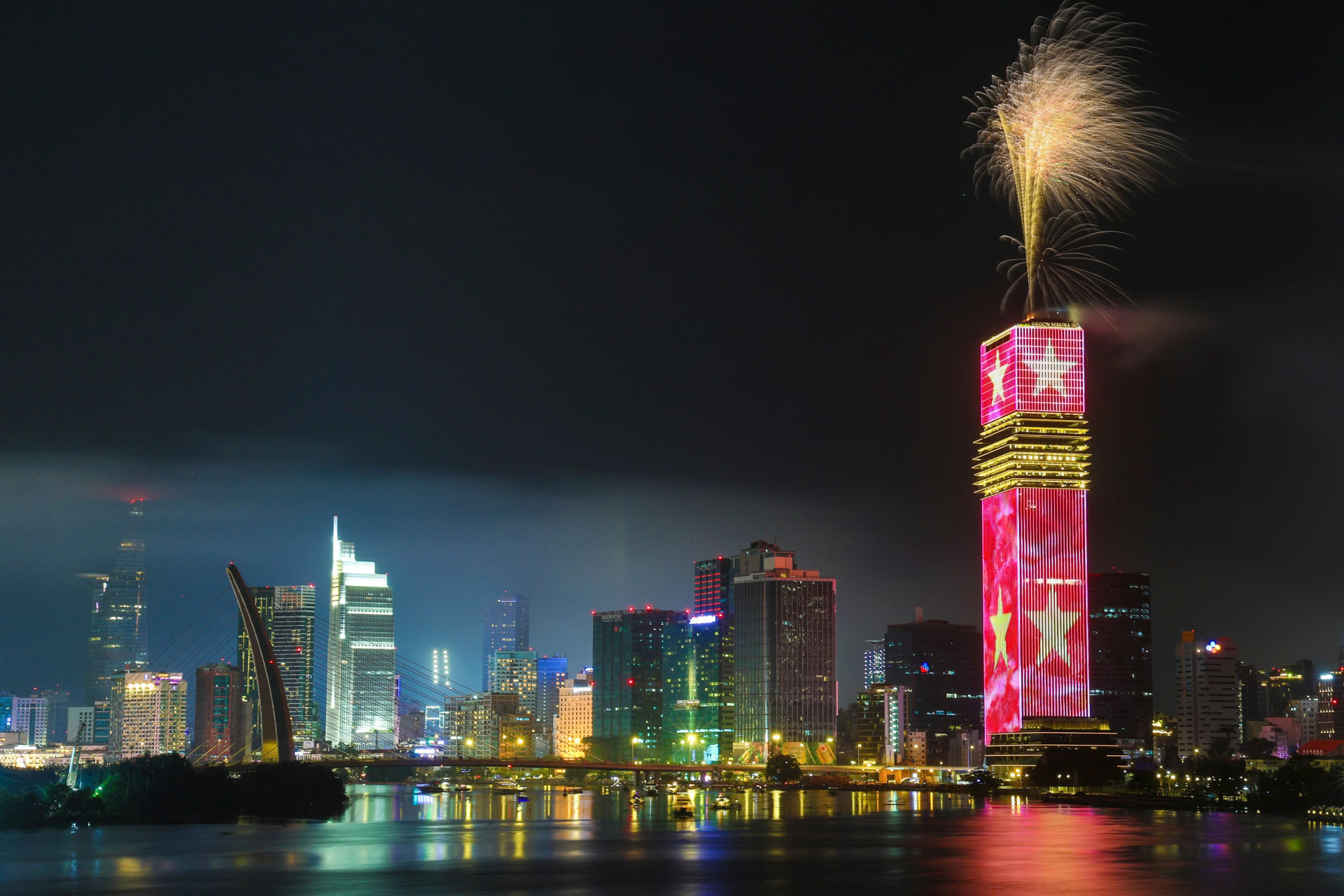
The shape of the Ho Chi Minh City International Financial Center is gradually taking form. Photo: Hoang Anh
When the economy still "lives hand to mouth" on bank capital
At the recent HUBA Entrepreneurs' Coffee program with the theme "Ho Chi Minh City International Financial Center - What opportunities for enterprises?", the hottest topic was not the future towers or tax incentives, but the enormous capital pressure that Vietnam's economy is about to face.
Dr. Can Van Luc, Chief Economist of BIDV, gave a striking figure: from now to 2030, Vietnam needs about 260-280 billion USD to serve socio-economic development. In other words, on average each year, the economy needs to absorb an additional 70-80 billion USD to feed mega-projects in infrastructure, industry, digital transformation and green transition.
"This is an enormous amount of capital even for many developed economies, while Vietnam's capital-channeling structure still reveals a prolonged imbalance over many years," Mr. Luc said.
Citing data from the BIDV Economic Research Institute in the first quarter of 2026, bank credit still accounted for as much as 57.3% of the total capital supplied to the economy. Meanwhile, FDI contributed 14.8%, public investment about 13.7%, and the corporate bond market only 3.1%. Notably, the equity market created almost no significant new capital in the first quarter. This means Vietnam's economy still depends mainly on the "milk supply" of bank credit.
According to this expert, such a structure may have suited the earlier small-scale growth period, but is becoming overloaded as Vietnam enters an era requiring extremely large amounts of medium- and long-term capital.
Sharing the same view, Assoc. Prof. Dr. Nguyen Huu Huan, Vice Chairman of the VIFC-HCMC executive body, frankly noted that Vietnam's credit-to-GDP ratio is now at a very high level and has repeatedly been flagged by international organizations over safety concerns. If the banking system continues to bear the role of providing long-term capital for the entire economy, systemic risk will grow ever larger.
That pressure is especially evident in Ho Chi Minh City, which is pursuing a series of mega infrastructure projects. For example, the plan to develop eight metro lines alone requires more than 30 billion USD. This is not to mention projects such as the Can Gio international transshipment port, the logistics system, anti-flooding, inter-regional expressways or digital infrastructure.
"These mega-works exceed the endurance of traditional domestic capital sources," he said, emphasizing that forming an international financial center is no longer a symbolic choice, but becomes a mandatory requirement if Vietnam wants to maintain high growth in the coming decade.
The greatest significance of a financial center lies not in the buildings or tax incentives, but in creating institutional reform pressure strong enough to pull Vietnam's entire legal, governance and capital market systems closer to global standards.
Dr. Can Van Luc
Chief Economist, BIDV
The Vice Chairman of the VIFC-HCMC executive body also said that, unlike many projects that stopped at the idea stage, VIFC-HCMC is entering the realization phase at a very fast pace. The center is planned over an area of about 989 hectares, spanning from the former District 1 area to the entire Thu Thiem peninsula. VIFC-HCMC's symbolic centerpiece is the 99-storey AFC Tower, expected to break ground within this year.
But, according to Mr. Huan, the reason the international financial community is paying more attention lies not in the tower's height, but in an incentive package regarded as unprecedentedly bold.
Specifically, under Resolution 222/2025/QH15 and a series of guiding decrees, financial institutions operating at VIFC-HCMC may enjoy a corporate income tax and personal income tax rate of 0% through 2030. After that point, the corporate tax rate is also maintained at just 10%.
In parallel is a special visa policy with a residence duration of up to 10 years for international experts, along with the goal of creating 100,000-200,000 high-quality jobs in the finance and financial technology fields.
"In essence, VIFC-HCMC is being designed as an 'institutional sandbox,' where Vietnam tests governance and operating standards approaching international norms faster than any other area in the country," Mr. Huan emphasized.
The "home players" have entered, the "foreign players" still stand outside
Notably, according to Mr. Huan, even before VIFC-HCMC is fully operational, domestic banks have quickly "lined up" to participate.
In fact, during this year's shareholder meeting season, Vietcombank, HDBank, SHB, MB, TPBank, LPBank and Nam A Bank all approved policies to establish subsidiary banks at VIFC-HCMC. Meanwhile, VietinBank also said it is studying a plan to be present here. Clearly, domestic capital does not want to miss this new playground.
However, the paradox lies in the fact that international institutions, the most important actors in creating the "international" character for VIFC-HCMC, are encountering major barriers.
According to Mr. Huan, during investment promotion trips to the United States, Japan and many major financial centers, a host of big names such as JPMorgan Chase, Bank of America, Bank of China and MUFG all expressed strong interest in VIFC-HCMC. But when set against the current licensing regulations, many institutions were forced to halt.
Explaining the reason, this expert said that under Decree 329/2025/ND-CP, to establish a 100% foreign-owned bank or a member bank branch at VIFC-HCMC, the parent institution must achieve a credit rating of AA- or higher according to Standard & Poor's or Fitch Ratings, or Aa3 according to Moody's. But the problem is that even in the United States, very few banks meet this standard.
"The US banks said frankly that currently only JPMorgan Chase reaches the AA credit rating, while many other large financial institutions also fall short," Mr. Huan shared.
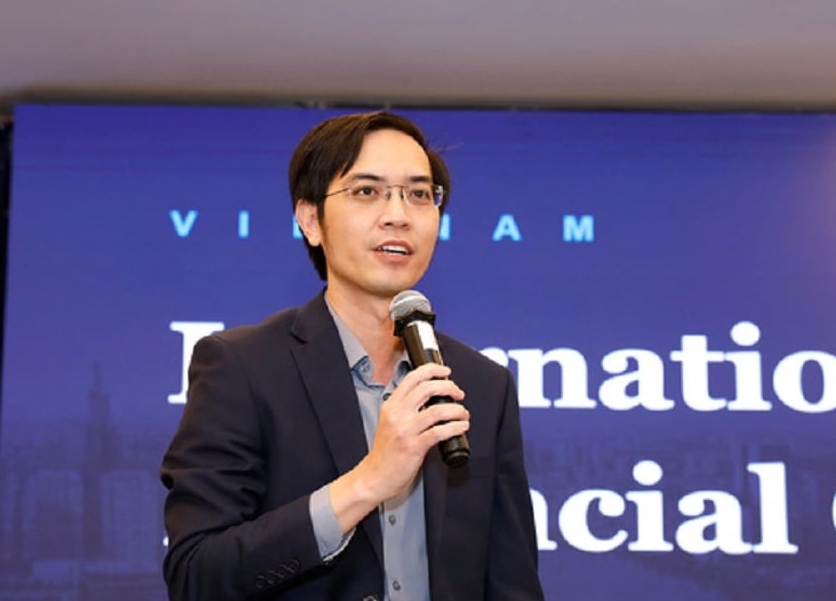
Assoc. Prof. Dr. Nguyen Huu Huan, Vice Chairman of the VIFC-HCMC executive body. Photo: Organizers
Mr. Luc further analyzed that, by international practice, a corporate credit rating is usually very hard to exceed the "sovereign credit ceiling." In Japan, many large banks such as MUFG also hover at only the A or A+ level. This makes the AA requirement a technical barrier that is too high in the initial phase.
"If not adjusted soon, a financial center bearing the 'international' name but in which mainly domestic banks participate with one another will struggle to achieve the liquidity depth and appeal to foreign capital as expected," Mr. Luc emphasized.
At present, the VIFC-HCMC executive body has proposed that the Government consider lowering the standard to the A or A+ level to widen the door to welcome global financial institutions.
Where will Vietnamese enterprises get their money?
For the business community, the most important question is not how beautiful the financial center is, but how money will flow into enterprises.
According to Mr. Huan, three major "pipelines" are being designed to connect international capital with Vietnamese enterprises.
First, an international stock exchange. An exchange independent of the current system is being planned, with an orientation toward technology cooperation with Nasdaq and the London Stock Exchange. If realized, this would be a major turning point for Vietnam's capital market. Indeed, from this exchange, large corporations could raise capital directly from international investors. FDI enterprises or Southeast Asian enterprises could also list in Ho Chi Minh City. At the same time, Vietnamese investors would have the opportunity to trade international stocks through cross-listing and dual-listing mechanisms.
This would help Vietnam's capital market truly connect with global financial flows for the first time, rather than operating only within a domestic scope.
Second, green bonds. As the world enters an era of green transition, global ESG investment funds are holding enormous amounts of capital but demand very high standards of transparency and environmental performance. VIFC-HCMC is expected to become the gateway helping Vietnamese enterprises issue international green bonds to raise capital for renewable energy, clean technology or carbon emission reduction projects. This could be an especially important "capital mine" in the coming decade as the green finance trend increasingly dominates global money flows.
Third, community capital for startups and small and medium-sized enterprises. Unlike the notion that a financial center is only for "big players," VIFC-HCMC also plans to build a crowdfunding platform for startups and small enterprises. According to VIFC-HCMC's calculations, each enterprise could raise about 700,000 USD per year, a figure not too large for corporations, but of vital significance for tech startups or SMEs lacking collateral.
If operated effectively, this would be the first time Vietnam has a formal, transparent capital-raising channel for the small business community rather than depending almost entirely on bank credit.
That said, great opportunity always comes with great risk. Mr. Huan believes that VIFC-HCMC's greatest advantage is opening up access to international capital with low cost and long tenor. As foreign capital pours in more strongly, competitive pressure could also pull domestic interest rate levels down accordingly. But in return, Vietnamese enterprises will have to step into a completely different "playground."
International borrowings are mainly in USD, EUR or JPY. This means enterprises will directly face exchange rate risk.
"Even if VIFC-HCMC provides derivative instruments to hedge risk such as hedging, using them effectively still requires enterprises to have a professional finance team and a modern governance system," he said.
Beyond the exchange rate, financial transparency requirements will also be much more stringent. International investment funds look not only at profits, but also scrutinize governance, audit, ESG standards, shareholder structure and legal compliance capacity. This means many Vietnamese enterprises will have to fundamentally change the way they operate if they want to step into global capital flows.
From a practical business perspective, Mr. Tran Viet Anh, Chairman of the Board and General Director of Nam Thai Son Import-Export JSC, believes that small and medium-sized enterprises should not feel inferior before VIFC-HCMC.
According to him, an international financial center serves not only the "eagles," but also creates an ecosystem that draws in hundreds of satellite enterprises.
"A large corporation placing its financial center at VIFC will draw in steel, logistics, power, rubber and service enterprises to develop together. Small enterprises can follow that supply chain to access capital and expand their scale," Mr. Viet Anh said.
In other words, small and medium-sized enterprises may not list directly on the international exchange, but still benefit indirectly by participating in the ecosystem of leading enterprises. This could be an opportunity for many private enterprises to escape from total dependence on bank collateral loans or risky informal capital sources.
It can be said that the opportunity is opening up right before our eyes. The remaining question is whether Vietnamese enterprises are fast enough to change, transparent enough to step onto the global playground and bold enough to seize the capital of the new era.
Nguồn: TheLeader — theleader.vn. Bài viết được đăng lại phục vụ mục đích chia sẻ kiến thức cho cộng đồng founder và nhà đầu tư trong hệ sinh thái HCM VIF.
Category & tags
Related news
 Ecosystem
Venture capital will be a new asset class
Mr. Hoang Duc Trung believes that, with the State taking the lead and large organizations and enterprises joining forces to spread the momentum, venture capital will fulfil its role as an engine of growth and innovation
 Finance & Banking05/2026
The success of a public-private venture fund is not measured by the number of unicorns
With an initial size of VND 500 billion, how will the government's “seed capital” from the public-private venture fund catalyze the flow of financing into startups?
 Finance & Banking18/05/2026
Ho Chi Minh City sets up venture capital fund: 'Seed capital' for Vietnamese tech
For the first time, Ho Chi Minh City has a venture capital fund operating under a joint-stock company model with the participation of the State and major private corporations.