
New startups are still being founded and investment funds are still hunting for opportunities, but raising capital today is far harder than it was a few years ago.
Enterprises that want to keep going no longer need just a good idea or an attractive growth story; they must demonstrate the ability to commercialize, operational efficiency and governance capacity.
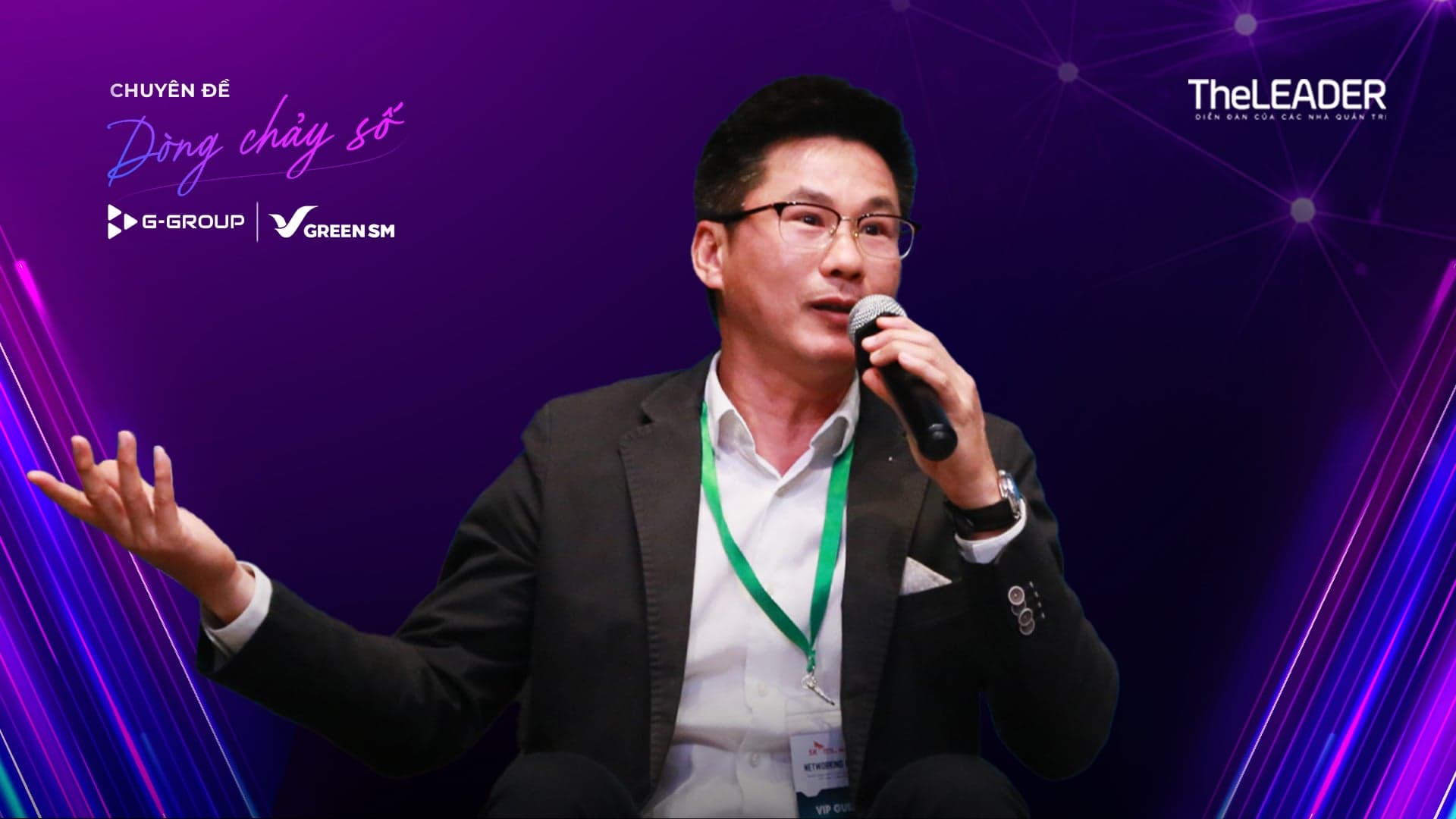
According to Mr. Hoang Duc Trung - Deputy Chief Executive Officer of VinaCapital Ventures - the shifts in capital flows, the growing maturity of enterprises and the increasingly clear role of policy show that Ho Chi Minh City's startup ecosystem has moved past its phase of expansion in breadth and is now entering a phase of quality improvement and standardization in line with international practice.
Looking at the recent milestone of Ho Chi Minh City entering the top 100 global startup ecosystems for the first time, Mr. Trung believes the greatest significance lies not in the ranking but in investor confidence.
In his view, investors do not look only at individual startups but assess the "underlying quality" of the ecosystem as a whole - from the policy framework, financial infrastructure and the ability to commercialize innovation, to the maturity of enterprises and the connection between the training system and the business sector.
International recognition significantly lowers the psychological barrier toward highly uncertain fields such as technology, thereby encouraging capital to participate earlier and more strongly.
For the startup community, this is also a sign that the ecosystem is shifting from a "formation" phase to a "validation" phase. Startups no longer compete only domestically but have begun to enter the regional and global arena, where standards for products, governance and scalability are much higher. This also means the ecosystem cannot simply grow in number but must aim for quality and long-term value.
Raising capital is no longer as easy as before
According to Mr. Hoang Duc Trung, over the past five years or so, Ho Chi Minh City's startup ecosystem has undergone foundational changes and become increasingly integrated into the region's technology map.
This change is reflected in three main aspects: the maturity of enterprises, the increasingly diverse participation of capital, and the increasingly clear role of policy.
Whereas in the past many startups focused on testing their models or chasing growth speed, the emphasis has now shifted to the ability to commercialize and scale. Factors such as product-market fit, operational efficiency and corporate governance capacity are increasingly placed front and center, rather than simply chasing rapid growth.
From the capital-market perspective, the resources available to startups have become more diverse, with the participation of both domestic and foreign investors and of both the public and private sectors.
However, according to Mr. Trung, a fairly clear "gap" is emerging in the market at the acceleration stage.
While seed-stage startups can still access capital and sufficiently large enterprises still have opportunities to raise capital in later rounds, enterprises at the Series A and Series B rounds - the stage that requires large resources to scale up - still face many constraints.
This "gap" shows that the market is becoming more demanding. Capital has not disappeared, but it is being more selective about enterprises capable of generating revenue, expanding markets and building sustainable business models.
According to Mr. Trung, this is also one of the signs that the ecosystem is entering a phase of filtering and quality improvement.
Another notable change is the role of the State in the startup ecosystem.
Whereas in the past the State mainly played the role of a policy architect, it is now gradually taking a more direct part as a "co-investor," sharing risk with the private sector on market principles.
This structural change helps reduce non-market risks and creates a foundation for long-term capital to take part in innovation in a more sustainable way.
The race is now about more than just capital
However, to go further after the top-100 global milestone, according to Mr. Trung, Ho Chi Minh City needs to focus more on strengthening the "soft infrastructure" of the ecosystem rather than merely expanding its scale.
The biggest priority is to continue improving the legal environment and reducing non-market risks, particularly with regard to controlled testing mechanisms (sandboxes), the trialing of new products and investor protection. Only when the policy framework is clear and stable will high-tech enterprises have enough confidence to deploy new models right here at the local level.
In addition, the City needs to more strongly develop intermediary links such as technology transfer centers, intellectual property valuation organizations and models connecting universities with enterprises. These remain bottlenecks that keep many research results from being effectively commercialized.
According to Mr. Trung, attracting high-quality technology startups depends not only on access to capital. What matters more is building an ecosystem with depth, where enterprises can access markets, data, customers and strategic partners.
In a context of increasingly fierce regional competition, an ecosystem's advantage often lies not in financial incentives but in its ability to support enterprise growth.
Even so, for startups, a successful launch is only the first step. To expand across the region, an enterprise must first prove the real value of its product - not only in technological terms but also in its ability to solve a specific market problem and commercialize successfully.
Only when the model has been validated and has clear product-market fit does expansion carry sustainable meaning. At the same time, startups must meet higher standards of transparency, finance and growth strategy. This remains a fairly large gap for many early-stage enterprises.
Finally, according to Mr. Trung, the ability to leverage the ecosystem is the decisive factor. Enterprises that can connect with large partners and tap into existing customer networks and resources will significantly shorten their expansion journey.
He believes that, in order to reach out across the region, startups need from the outset to shift from a domestic-growth mindset to building an enterprise platform that can operate to international standards in terms of product, governance and long-term strategy.