

SSC: Accelerating state-owned enterprise divestment through the stock market
SSC leaders believe that accelerating equitization and divestment is not only a legal requirement, but also a solution to enhance corporate governance as well as capital sources.
SSC leaders believe that accelerating equitization and divestment is not only a legal requirement, but also a solution to enhance corporate governance as well as capital sources.
Improving the quality of goods
The State Securities Commission (SSC) coordinated with the Department of State Enterprise Development, Ministry of Finance, to organize a conference to disseminate legal regulations on public companies, capital raising and divestment for equitized state-owned enterprises listed and registered for trading on the stock market.
At the event, SSC Chairwoman Vu Thi Chan Phuong said that in the context of Vietnam's economy entering a new development phase with requirements for fast, sustainable and higher-quality growth, developing the capital market in general, and the stock market in particular, has become one of the key tasks that the Party, National Assembly and Government pay special attention to directing.
In recent times, many major policies and orientations have been issued to synchronously develop the financial market and enhance the role of the state-owned enterprise sector in the economy.
In particular, Resolution No. 79-NQ/TW of the Politburo clearly affirmed the requirement to build state-owned enterprises that play the core role of the state economy, operate effectively under market mechanisms, have regional and international competitiveness, and implement modern, public and transparent governance.
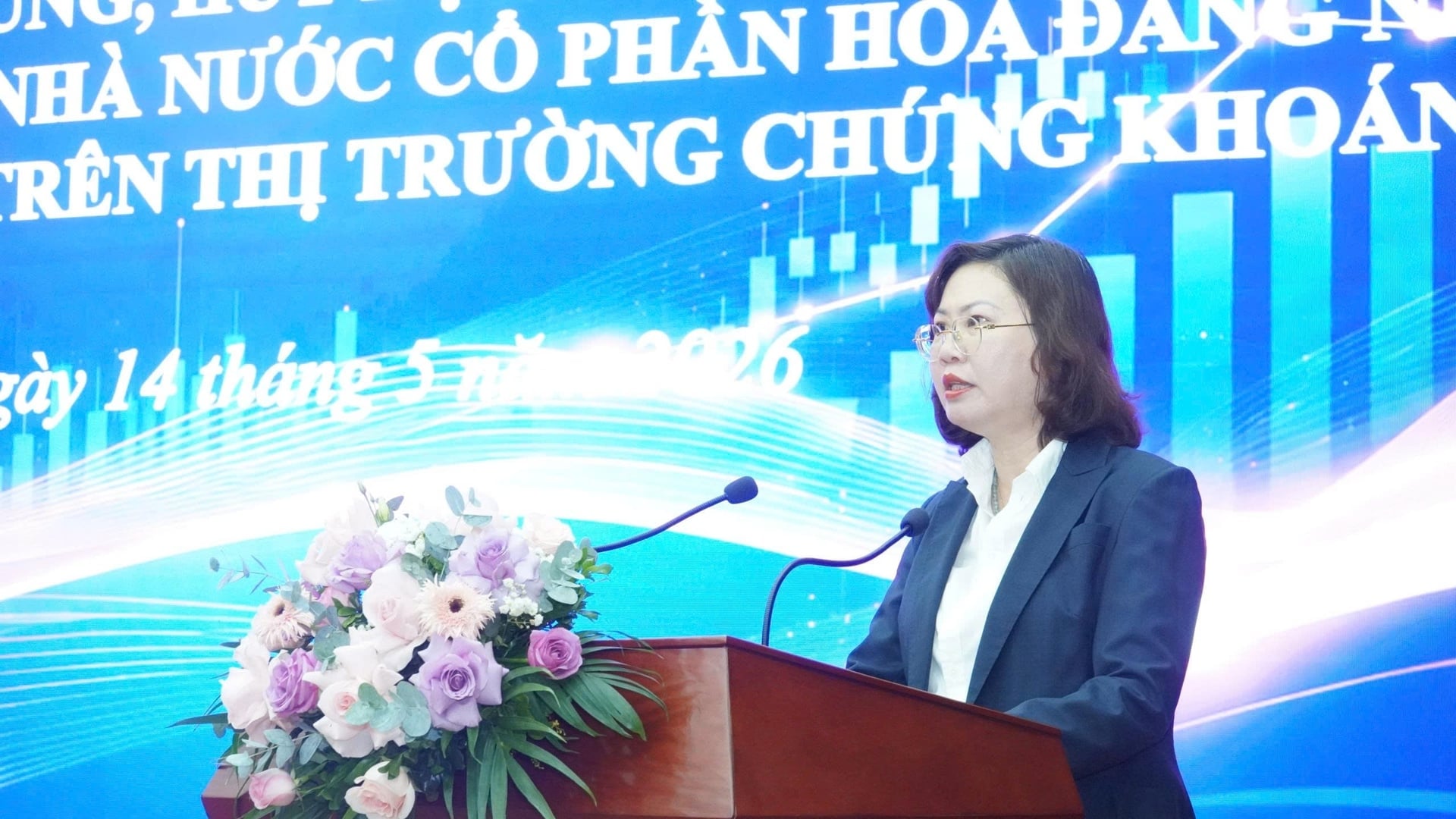
SSC Chairwoman Vu Thi Chan Phuong. Photo: SSC
"Accelerating equitization and divestment on the stock market is not only a requirement to comply with the law, but also a strategic solution to enhance the quality of corporate governance, expand access to social capital sources and increase enterprise value," the SSC Chairwoman emphasized.
Ms. Phuong assessed that Vietnam's stock market is currently facing a new development phase with many important opportunities. FTSE Russell's upgrade of the Vietnamese market to the secondary emerging market group is opening up a very large opportunity to attract large-scale international investment capital.
In that context, the role of listed and registered-for-trading state-owned enterprises is extremely important. This is precisely the group of enterprises with large capitalization, operating in key sectors of the economy and capable of creating a strong pull for domestic and foreign capital.
Under the Securities Law, a public company must simultaneously meet conditions on charter capital, equity and shareholder structure, in which at least 10% of voting shares must be held by at least 100 investors who are not major shareholders.
These regulations aim to improve the quality of goods on the market, increase transparency, improve liquidity and meet upgrade criteria.
However, upon review, most equitized state-owned enterprises that are public companies have yet to meet the new public-company conditions related to shareholder structure, because the ownership ratios of major shareholders and the state shareholder remain high, resulting in a low free-float ratio.
Therefore, SSC leaders requested these enterprises to urgently implement solutions to restructure shareholder ownership, charter capital and equity in order to meet and maintain public-company conditions as prescribed by law.
The double-digit growth target
To help enterprises maintain public-company status and improve the efficiency of capital raising, the SSC has been implementing many solutions such as completing policy mechanisms, simplifying securities offering procedures, promoting the application of online public services, and strengthening guidance and support for enterprises during the process of issuing shares, divesting and restructuring shareholders.
Mr. Vu Hong Phuong, of the Department of State Enterprise Development, said that the socio-economic development strategy for the 2026-2030 period has set an average growth target for the period at a high, "double-digit" level.
This target leads to high requirements for assigning production and business targets to state-owned enterprises. He assessed this as a challenging requirement for economic groups, corporations and state-owned enterprises.
"To achieve the double-digit growth target, we cannot rely solely on State capital but need to mobilize many other resources, in which raising capital through the stock market is an important channel, especially for state-owned enterprises that have been equitized, are public companies, and are listed or traded on the stock market," Director Vu Hong Phuong emphasized.
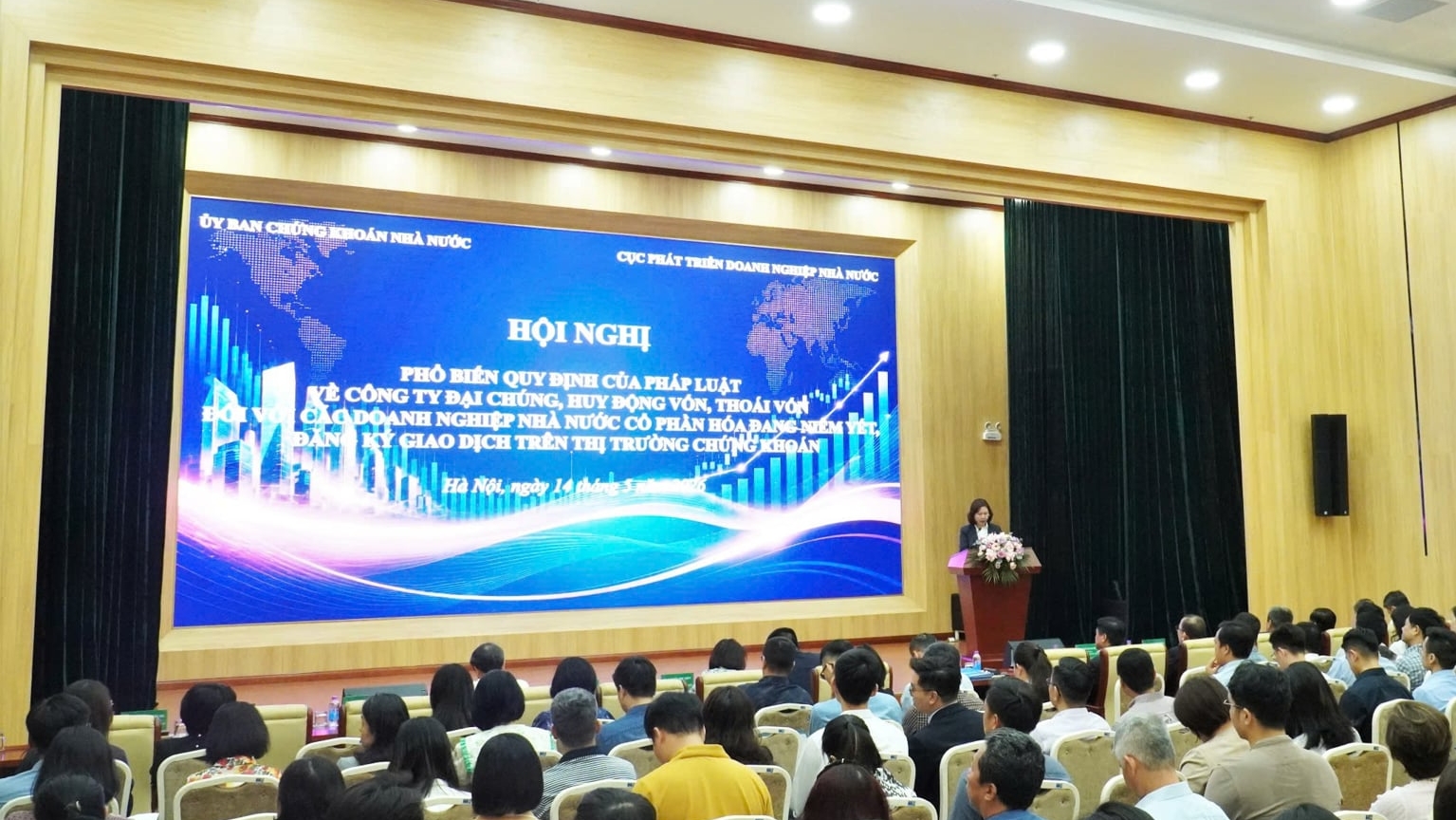
Resolution No. 79-NQ/TW on developing the state economy has oriented continued acceleration of the restructuring of state-owned enterprises. Photo: SSC
He said that Resolution No. 79-NQ/TW on developing the state economy has oriented continued acceleration of the restructuring of state-owned enterprises, improving operational efficiency, applying advanced technology and modern governance models in line with international standards.
According to the Director, in recent times, the legal system on the management and investment of state capital in enterprises has had many new regulations, contributing to removing difficulties and obstacles related to state capital investment in enterprises.
In addition to creating more resources for development investment, listing and registering for trading also encourages enterprises to apply international financial reporting standards and improve governance quality in a modern direction approaching international practice.
Mr. Vu Hong Phuong emphasized that, in the common effort to develop the stock market and improve the operational efficiency of state-owned enterprises, helping enterprises fully comply with securities law as well as the law on the management and investment of state capital is of particular importance.
This not only helps enterprises enhance openness and transparency, but also creates favorable conditions to seize opportunities to raise capital serving production, business and development investment in the coming period.
Source: TheLeader — theleader.vn. This article is republished to share knowledge with the community of founders and investors in the HCM VIF ecosystem.
Category & tags
Related news
 Ecosystem
Venture capital will be a new asset class
Mr. Hoang Duc Trung believes that, with the State taking the lead and large organizations and enterprises joining forces to spread the momentum, venture capital will fulfil its role as an engine of growth and innovation
 Finance & Banking05/2026
The success of a public-private venture fund is not measured by the number of unicorns
With an initial size of VND 500 billion, how will the government's “seed capital” from the public-private venture fund catalyze the flow of financing into startups?
 Finance & Banking18/05/2026
Ho Chi Minh City sets up venture capital fund: 'Seed capital' for Vietnamese tech
For the first time, Ho Chi Minh City has a venture capital fund operating under a joint-stock company model with the participation of the State and major private corporations.