

Short-term funding ceiling for medium- and long-term lending officially raised to 40%
Raising the limit from 30% to 40% gives banks more flexibility in allocating funds. The State Bank has just issued Circular No. 25/2026/TT-.
Raising the limit from 30% to 40% gives banks more flexibility in allocating funds
The State Bank has just issued Circular No. 25/2026/TT-NHNN amending and supplementing a number of provisions of Circular 22/2019/TT-NHNN concerning the prudential limits and ratios in the operations of banks and foreign bank branches.
This document will take effect from 1 July 2026. Under the new regulation, the maximum ratio of short-term funding that a bank is permitted to use for medium- and long-term lending will be raised to 40%, in place of the current level of 30%.
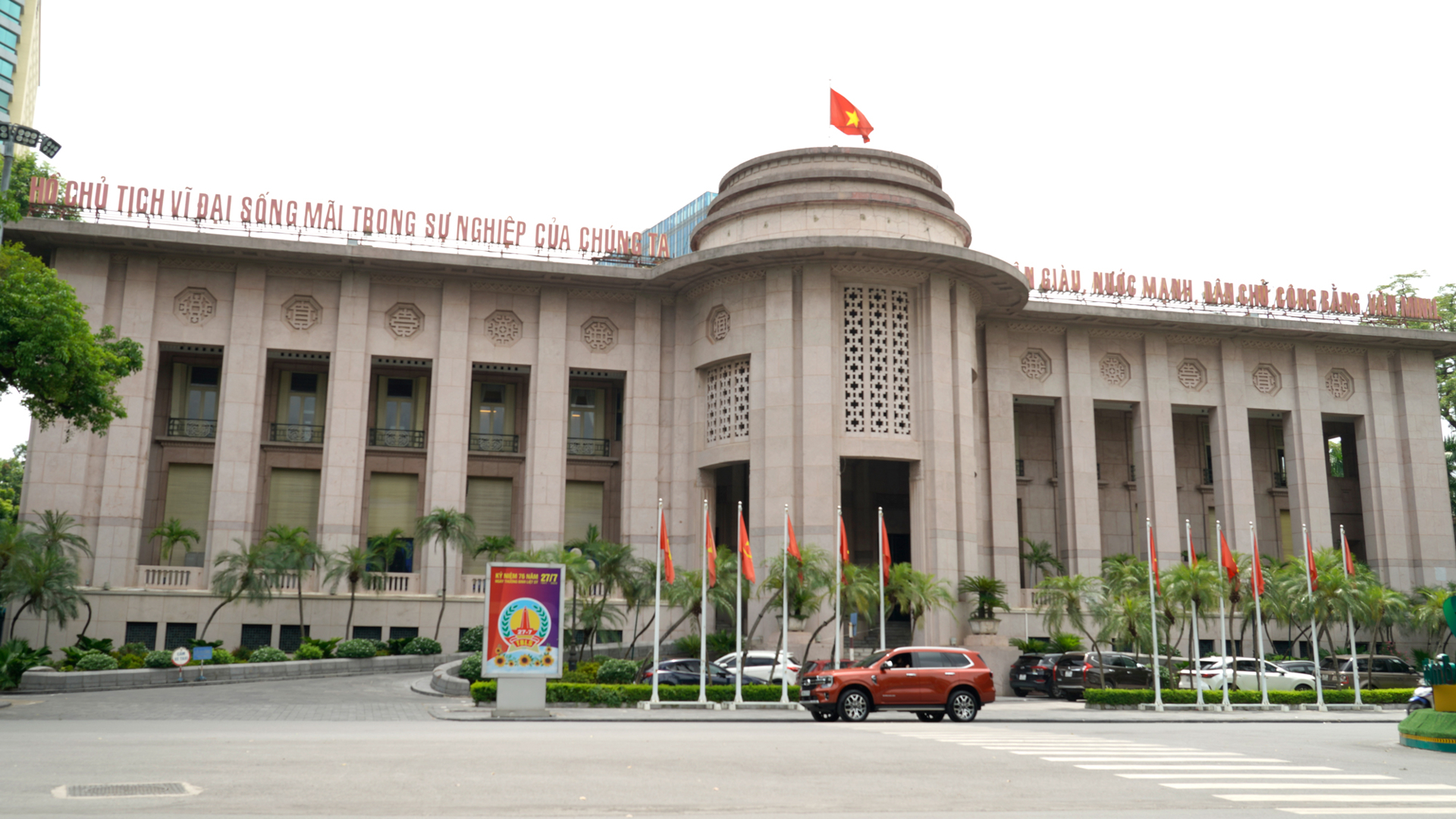
Raising the limit from 30% to 40% gives banks more flexibility in allocating funds.
Before this adjustment, the State Bank had implemented a roadmap to gradually reduce the ratio of short-term funding used for medium- and long-term lending in order to control the risk of maturity imbalance in the system.
From 40%, this ratio was successively reduced to 37%, 34% and officially to 30% from 1 October 2023. Raising it back to 40% under Circular 25/2026/TT-NHNN brings this limit to a level equivalent to the 2020-2021 period.
The ratio of short-term funding used for medium- and long-term lending is an important indicator reflecting the degree of mismatch between mobilized funding and a bank's demand for using capital. This indicator shows how much of a bank's short-term mobilized funding can be used to extend credit for loans with longer maturities.
Raising the limit from 30% to 40% gives banks more flexibility in allocating funds, especially in meeting medium- and long-term credit demand. This adjustment is made in a context where the economy continues to need large amounts of capital for investment, production and business activities, and projects with long payback periods.
In the earlier period, gradually reducing the ratio of short-term funding used for medium- and long-term lending was one of the measures to limit liquidity risk and reduce the maturity mismatch in the banking system.
This is because, in practice, customer deposits are mainly concentrated at short maturities, while the borrowing needs of businesses and the economy usually extend over many years.
Adjusting the way the LDR is calculated
Along with changing the limit on the use of short-term funding for medium- and long-term lending, Circular 25/2026/TT-NHNN also adjusts the regulation on the loan-to-deposit ratio (LDR).
Under the new regulation, some deposit items are still excluded from total deposits when calculating the LDR, including margin deposits, customers' special-purpose capital deposits and the State Treasury's demand deposits.
Specifically for the State Treasury's term deposits, banks are allowed to exclude 80% of the balance of these deposits from total deposits, or apply a different ratio if decided by the Governor of the State Bank from time to time. Thus, the remaining 20% may be included in the denominator when determining the LDR.
Including part of the State Treasury's term deposits in the calculation formula will increase the size of total deposits recognized in the LDR denominator. As a result, the LDR of banks with large State Treasury deposits may change.
In addition to the above content, Circular 25/2026/TT-NHNN also provides for the repeal of Circular No. 08/2020/TT-NHNN and Circular No. 08/2026/TT-NHNN from the effective date of the new document.
Previously, Circular 08/2026/TT-NHNN had allowed banks to count 20% of the State Treasury's term deposits into total deposits when determining the LDR, instead of fully excluding this item as under the previous regulation.
According to the explanatory note when soliciting comments on the draft amendment to Circular 22, the State Bank said that adjusting the regulations on prudential ratios aims to align with the new orientation of supporting the economic growth target in the coming period.
[

!VietinBank: An ROE bright spot among large-cap banks "VietinBank: An ROE bright spot among large-cap banks")
VietinBank: An ROE bright spot among large-cap banks
Finance - 1 month
VietinBank stands out among large-cap banks thanks to its leading ROE, a solid provisioning buffer, improved CASA and a P/E valuation significantly lower than that of many banks of the same size.
[
!VietinBank: An ROE bright spot among large-cap banks "VietinBank: An ROE bright spot among large-cap banks")
VietinBank: An ROE bright spot among large-cap banks
Finance - 1 month
VietinBank stands out among large-cap banks thanks to its leading ROE, a solid provisioning buffer, improved CASA and a P/E valuation significantly lower than that of many banks of the same size.
Source: TheLeader — theleader.vn. This article is republished for the purpose of sharing knowledge with the community of founders and investors in the HCM VIF ecosystem.
Category & tags
Related news
 Ecosystem
Venture capital will be a new asset class
Mr. Hoang Duc Trung believes that, with the State taking the lead and large organizations and enterprises joining forces to spread the momentum, venture capital will fulfil its role as an engine of growth and innovation
 Finance & Banking05/2026
The success of a public-private venture fund is not measured by the number of unicorns
With an initial size of VND 500 billion, how will the government's “seed capital” from the public-private venture fund catalyze the flow of financing into startups?
 Finance & Banking18/05/2026
Ho Chi Minh City sets up venture capital fund: 'Seed capital' for Vietnamese tech
For the first time, Ho Chi Minh City has a venture capital fund operating under a joint-stock company model with the participation of the State and major private corporations.