

Considering raising the cap on short-term funds for medium- and long-term lending to 40% for banks
The State Bank of Vietnam is proposing to raise the maximum ratio of short-term funds that can be used for medium- and long-term lending from 30% to 40%, thereby reversing a tightening roadmap that has lasted for many years.
The State Bank of Vietnam is proposing to raise the maximum ratio of short-term funds that can be used for medium- and long-term lending from 30% to 40%, thereby reversing a tightening roadmap that has lasted for many years.
The State Bank of Vietnam (SBV) has just published a Draft amending Circular 22/2019, which regulates the limits and prudential ratios in the operations of banks and foreign bank branches.
The most notable point in this draft is the proposal to raise the maximum ratio of short-term funds used for medium- and long-term lending from the current 30% to 40%.
Under current regulations, the ratio of short-term funds used for medium- and long-term lending has been gradually reduced by the SBV over successive phases, from 40% to 37%, then further to 34%, and officially applied at 30% from October 1, 2023.
With the new draft, the SBV proposes bringing this ratio back to 40%, equivalent to the threshold once applied during 2020 and 2021.
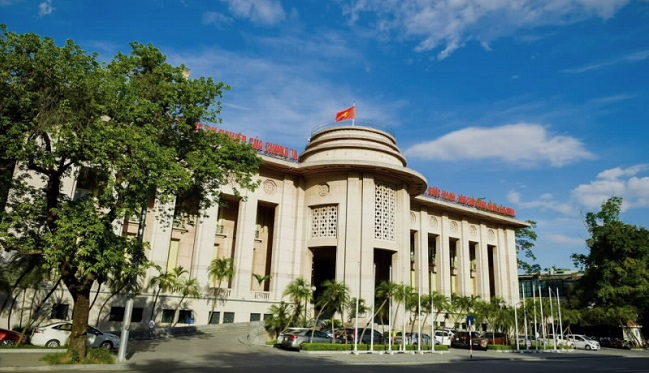
The State Bank of Vietnam wants to raise the cap on short-term funds for medium- and long-term lending to 40%.
This is one of the important indicators reflecting the degree of maturity mismatch between a bank's mobilized funds and its interest-earning assets.
When this limit is raised, banks will have more room to use short-term funds to finance longer-tenor loans, thereby expanding their capacity to supply medium- and long-term credit to the economy.
However, loosening the ratio of short-term funds used for medium- and long-term lending also poses higher requirements for liquidity risk management.
Over the past many years, the SBV has continuously lowered this ratio in order to gradually reduce the imbalance between the funding structure and the credit structure of the banking system.
The reason is that most deposits in the market are still concentrated in short tenors, while the economy's capital needs are mainly for medium- and long-term funds.
Therefore, raising the limit back to 40% is seen as a solution to support credit growth and increase the ability to meet the economy's capital needs.
Nevertheless, this move also requires credit institutions to further enhance their cash-flow management capacity and control liquidity risk in the process of expanding lending.
In addition to adjusting the ratio of short-term funds for medium- and long-term lending, the SBV also proposes amending several regulations related to the loan-to-deposit ratio (LDR).
Specifically, the draft proposes changing the way total deposits used to calculate the LDR are determined, continuing to exclude the State Treasury's demand deposits.
At the same time, for the State Treasury's term deposits, banks may only exclude 80% of the balance, or another ratio decided by the SBV Governor in each period.
This means that a portion of the State Treasury's term deposits will be included in mobilized funds when calculating banks' LDR.
Previously, the SBV had also issued Circular 08/2026, allowing banks to count 20% of the State Treasury's term deposits in the LDR denominator, instead of excluding them entirely as under the previous regulation.
Notably, in this draft, the SBV does not mention the option of replacing the LDR with the CDR indicator, as had been proposed on some previous occasions.
Instead, the regulator chose to adjust the parameters within the existing regulatory framework in order to support liquidity and increase the banking system's capacity to supply credit, amid a higher economic growth target.
According to the drafting agency's explanatory note, amending the above regulations aims to implement the new directions of the Government and the SBV in supporting the target of double-digit economic growth in the coming period.
Source: TheLeader — theleader.vn. This article is republished for the purpose of sharing knowledge with the community of founders and investors within the HCM VIF ecosystem.
Category & tags
Related news
 Ecosystem
Venture capital will be a new asset class
Mr. Hoang Duc Trung believes that, with the State taking the lead and large organizations and enterprises joining forces to spread the momentum, venture capital will fulfil its role as an engine of growth and innovation
 Finance & Banking05/2026
The success of a public-private venture fund is not measured by the number of unicorns
With an initial size of VND 500 billion, how will the government's “seed capital” from the public-private venture fund catalyze the flow of financing into startups?
 Finance & Banking18/05/2026
Ho Chi Minh City sets up venture capital fund: 'Seed capital' for Vietnamese tech
For the first time, Ho Chi Minh City has a venture capital fund operating under a joint-stock company model with the participation of the State and major private corporations.