

Public-private venture fund: What mechanism drives lead investment?
The Ho Chi Minh City Venture Capital Fund launches with charter capital of VND 500 billion, with the public budget contributing 40%. The fund aims to serve as “seed capital,” with each dong drawing in an additional 3–5 dong from the private and international sectors, operating under the “controlled risk” mechanism of Decree 264/2025/ND-CP.
Ho Chi Minh City's first public-private venture fund has just launched, marking a step forward for local venture funds.
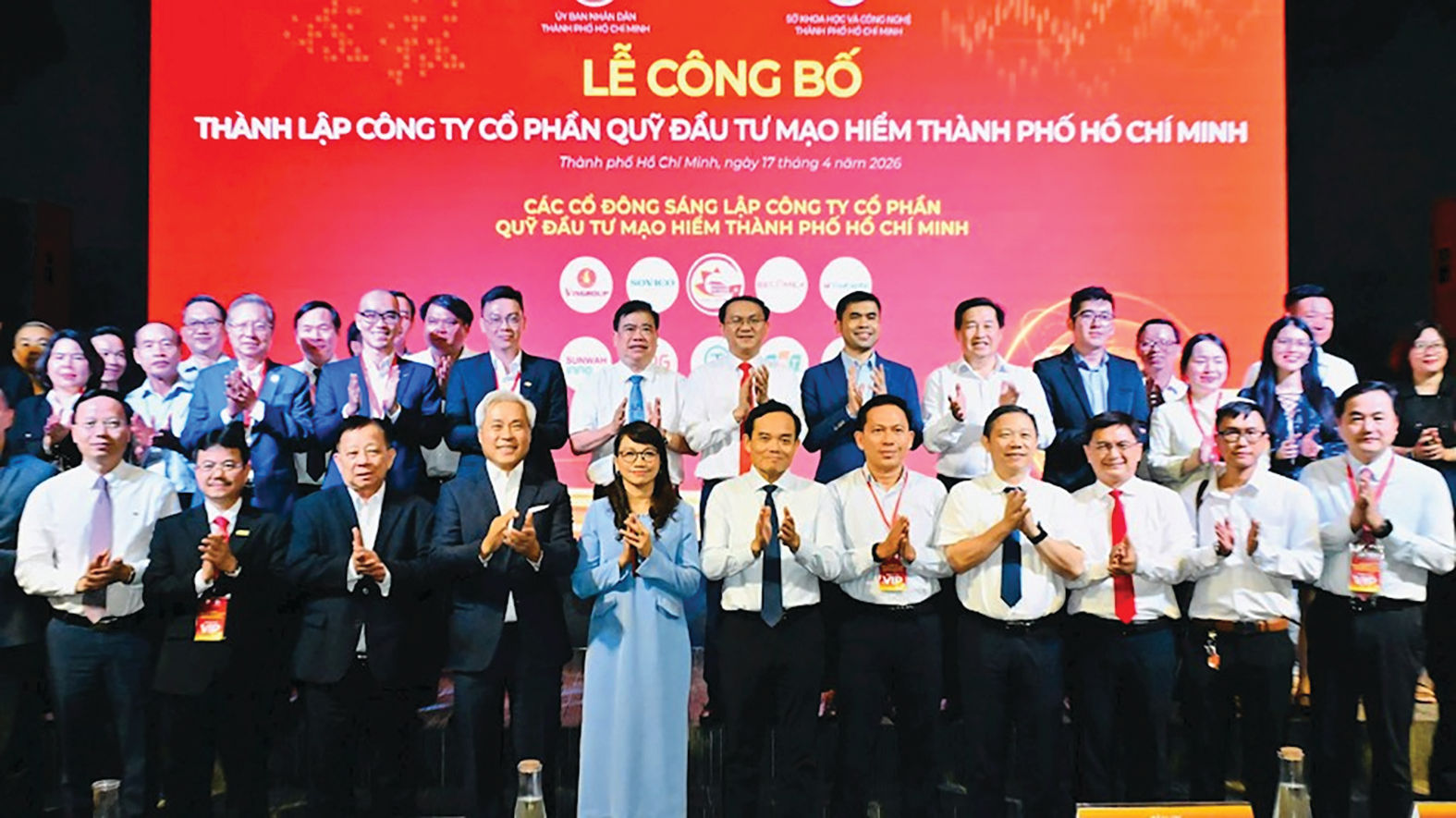
This fund carries high expectations from Ho Chi Minh City itself and from the participating private investors, especially the fund's prospective investees.
Public and private joining hands
This fund's legal entity is the Ho Chi Minh City Venture Capital Fund Joint Stock Company (HCM VIF JSC). Its initial charter capital is VND 500 billion, of which the budget contributes 40%, equivalent to VND 200 billion; the remainder is mobilized from private investors, enterprises, and financial institutions, including Vingroup (VND 60 billion), Sovico (VND 100 billion), Becamex (VND 50 billion), VinaCapital and Sunwah contributing VND 25 billion each, and corporations contributing VND 10 billion each, namely VNG, CT Group, FPT, and Hoa Sen. The fund has set a strategic vision with a clear capital-scale target of VND 5,000 billion by 2035. Its investment fields focus on core and strategic technologies, artificial intelligence (AI), microchips, semiconductors, biotechnology, renewable energy, and robotics and automation.
It can be seen that the fund launches and operates on the legal basis of Decree 264/2025/ND-CP. And although the fund is established locally, with a local capital contribution, its size starts at the minimum level prescribed for the national venture fund. Similarly, its vision reflects this scale (charter capital of VND 2,000 billion over five years for the national fund).
From the standpoint of the fund's operating representative, Mr. Hoang Duc Trung, Director of VinaCapital Ventures, who has been appointed CEO of HCM VIF JSC, said the fund aims to become “seed capital” that leads the market. From its VND 500 billion size, the fund sets a target that each dong of investment capital will act as a “magnet” attracting at least 3 to 5 additional dong from private and international investment funds. This fund will play a pioneering role, steering capital into key fields that the market is leaving open or is wary of due to risk.
In addition, the fund pursues a strategy of “investing in depth,” building a “governance system to international standards” with a mindset of accompanying the entities it funds.
“A VND 500 billion fund requires a professional and standardized operating apparatus, so we must be absolutely transparent; every investment decision is based on data, effectiveness, and real potential. Alongside that is the mindset of accompaniment. The fund not only provides capital but also supports startups with governance, connection networks, and shared experience, becoming a friend and a trustworthy partner,” Mr. Trung shared.
Risk and support mechanisms
The fund aims to address a major difficulty for innovative private enterprises in accessing early-stage capital, given the high risk and the lack of an appropriate support mechanism. Although the fund is funded by public capital and by “leading” corporations, and the fund manager is a fund-management joint-stock company with top market assets, operating the fund with a transparent mechanism, incentive policies, and strategic direction remains a challenge, and it will take time for this new model and legal entity to truly become an effective financial tool.
Dr. Dinh The Hien, a financial expert, argues that the problem of using public capital and the responsibility toward that public capital requires overcoming the psychology of “bearing responsibility” and the fear of losing capital. In addition, according to the World Bank, the challenge of allocating public capital into a public-private fund lies in reconciling social objectives (public) with profit objectives (private). Therefore, it is essential to build a clear legal framework with specific provisions on the roles, responsibilities, and interests of the participating parties, especially rules on access to files, due diligence, approval, and accompaniment responsibilities. Accordingly, an independent expert council with reputable specialists in investment, due diligence, and governance, together with a fund representative board, with transparency ensured through publicly disclosed quarterly reports and independent audits, will ensure the fund operates effectively.
In addition, Mr. Hien argues that it is necessary to coordinate with financial institutions to expand credit guarantees, increasing the “leverage” effectiveness of the fund's capital.
“Great resources come with great responsibility, and above all, with trust,” Mr. Hoang Duc Trung shared. The pressure on a pioneering fund can be said to be quite great. But viewed from another angle, the provisions of Decree 264/2025/ND-CP allow for “controlled risk,” accept capital losses not exceeding 50% of charter capital, and provide a “liability-exemption” mechanism for managers and executives; the seeds “incubated” from the birth of the fund and its broad, open mechanism may well be the first steps toward leading investment confidence and channeling capital into the region driving new growth momentum.
Source: Diễn đàn Doanh nghiệp — diendandoanhnghiep.vn. This article is republished to share knowledge with the founder and investor community in the HCM VIF ecosystem.
Category & tags
Related news
 Ecosystem
Venture capital will be a new asset class
Mr. Hoang Duc Trung believes that, with the State taking the lead and large organizations and enterprises joining forces to spread the momentum, venture capital will fulfil its role as an engine of growth and innovation
 Finance & Banking05/2026
The success of a public-private venture fund is not measured by the number of unicorns
With an initial size of VND 500 billion, how will the government's “seed capital” from the public-private venture fund catalyze the flow of financing into startups?
 Finance & Banking18/05/2026
Ho Chi Minh City sets up venture capital fund: 'Seed capital' for Vietnamese tech
For the first time, Ho Chi Minh City has a venture capital fund operating under a joint-stock company model with the participation of the State and major private corporations.