

New policies taking effect from August 2026
A range of new policies covering investor selection, duty-free retailing, land violation penalties, livestock farming and transport operations take effect in August 2026.
A range of new policies covering investor selection, duty-free retailing, land violation penalties, livestock farming and transport operations take effect in August 2026.

Numerous new policies take effect in August.
Incentives for investors using high and green technology
Decree 274/2026/ND-CP, which details a number of articles and implementing measures of the Bidding Law on selecting investors for business investment projects, takes effect on August 21, 2026.
One notable provision is the incentive policy applied when evaluating bids. Investors applying high technology or green technology receive a 5% incentive, while those committing to technology transfer receive a 2% incentive.
The decree also standardises costs in the investor selection process. The cost of preparing bidding documents is set at 0.05% of total investment capital but capped at 200 million dong, while bid evaluation costs are 0.03% of total investment capital, also capped at 200 million dong.
The cost of handling petitions is capped at 200 million dong. For international tenders, the price of electronic bidding documents must not exceed 30 million dong.
The new rules are expected to give a clearer advantage to projects using advanced technology, conserving resources and reducing environmental impact.
Duty-free purchases no longer require certain paper documents
Effective August 21, 2026, Decree 273/2026/ND-CP on duty-free retailing expands the use of electronic data to verify buyers.
Under the decree, if a buyer's information has been connected and shared from the national population database or specialised databases, the buyer no longer has to present paper copies of documents containing that information.
The provision applies to people departing, transiting or entering the country, passengers on international flights, people entitled to privileges and immunities, and crew members working on ships on international routes.
Compared with previous rules, drawing on electronic data simplifies duty-free purchase procedures while cutting the time spent checking and cross-referencing documents in stores.
Commune-level authorities get broader powers to penalise land violations
Decree 281/2026/ND-CP, which amends and supplements a number of provisions on administrative penalties in the land sector, takes effect on August 31, 2026.
The decree requires all illegal gains from unlawful land use to be paid into the state budget. Where multiple parties violate the rules on the same plot, the financial obligation is divided equally among them, and amounts already paid into the budget may be offset.
Notably, the penalty authority of the chairman of a commune, ward or special zone People's Committee has been raised to a maximum of 250 million dong, a sharp increase from the previous 5 million dong.
Commune-level chairmen may also suspend land-sector consultancy services for up to three months, a power previously held by district and provincial chairmen.
Greater devolution to the commune level is intended to shorten enforcement timelines, but it also raises the bar for implementation capacity, checks on power and consistency in applying the law locally.
Tighter penalties in the livestock sector
From August 5, 2026, Decree 211/2026/ND-CP on administrative penalties in the livestock sector officially takes effect.
The maximum fine is set at 100 million dong for individuals and 200 million dong for organisations.
For violations relating to the production, trading, import and export of breeding animals, animal feed and livestock waste treatment products, the statute of limitations for penalties can extend to two years.
In addition to fines, offending organisations may have licences revoked, operations suspended, or be required to recall, recycle or destroy substandard products. All illegal gains arising from the violation must also be surrendered.
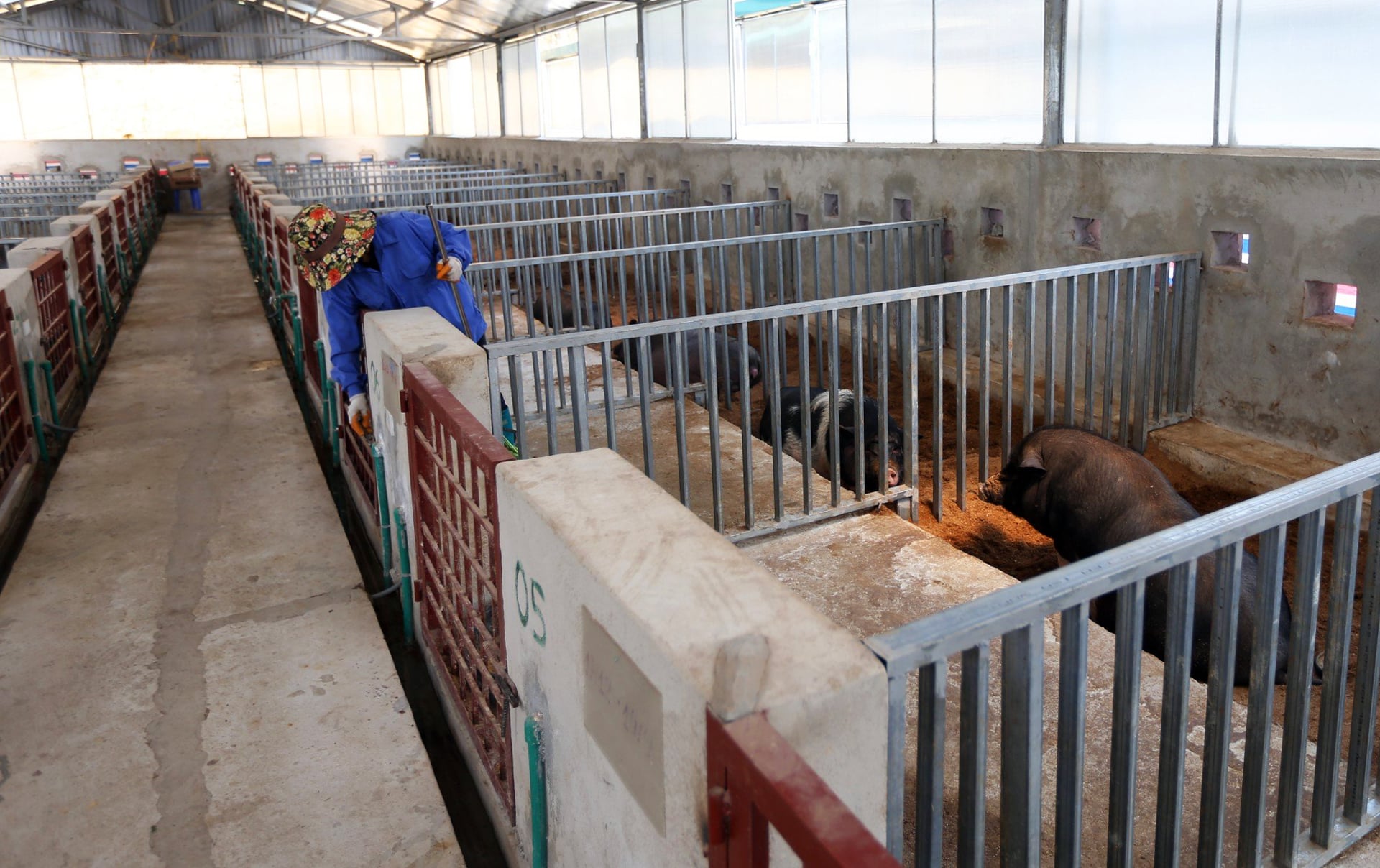
Decree 211/2026/ND-CP on administrative penalties in the livestock sector officially takes effect.
Broader legal framework for financial leasing
Circular 31/2026/TT-NHNN issued by the State Bank, effective August 15, 2026, adds provisions on the financial leasing operations of general finance companies and financial leasing companies.
The new framework brings "property rights" such as software, data, exploitation rights and intellectual property into the list of assets eligible for financial leasing.
The circular also defines a mechanism for financial leasing by electronic means and provides for small leasing packages worth under 400 million dong with a simplified appraisal process, making it easier for businesses to access medium and long-term capital to upgrade technology and machinery.
The policy promises to develop the financial leasing market and help companies optimise working capital and fixed assets in the digital economy.
Fee waivers and reductions to encourage digital citizens
To encourage public participation in digital transformation, the government has issued Resolution 66.22/2026/NQ-CP on developing digital citizens. The resolution is effective from August 15, 2026 to February 28, 2027.
Under Article 3, Vietnamese citizens holding a level-2 electronic identification account may be eligible for incentives such as waivers or reductions of fees and charges when completing certain administrative procedures.
The procedures covered include issuing driving licences, reissuing identity cards, registering ownership and use rights over assets, and certain registration fee obligations.
Holding a level-2 VNeID account is only one of the conditions for the incentives. Applicants must also have integrated five basic categories of information and documents into the VNeID app: birth certificate; bank or e-wallet information; social insurance account; mobile subscriber number; and electronic health record.
The provision is designed to optimise the use of electronic data, saving people time and money on common or high-value transactions.
The resolution also designates October 15 each year as Vietnam Digital Citizen Day, adding a further milestone to promote digital skills and habits across society.
Warning for failing to use child safety devices in cars
Decree 238/2026/ND-CP, which amends rules on administrative penalties for road traffic order and safety violations, takes effect on August 15, 2026.
Under the decree, drivers carrying children under 10 years old and shorter than 1.35m without appropriate safety devices will receive a warning. The rule does not apply to vehicles used for commercial passenger transport.
However, allowing such children to sit in the same row as the driver, except in cars with only one row of seats, still carries a fine of 800,000 dong to 1 million dong.
Child safety devices include child seat systems and booster seat systems meeting technical standards. Products must clearly display weight or height limits, installation orientation and safety warnings.
New data-sharing requirements for contract vehicles
Decree 218/2026/ND-CP, which amends rules on road transport operations, takes effect on August 10, 2026.
The decree adds an obligation for contract-based transport operators to connect and share passenger transport contract data.
However, the duty to share data with the Ministry of Public Security before each trip only begins on January 1, 2028. The data will be used for patrol and control work and shared with relevant state management agencies.
The decree therefore takes effect in August 2026, but transport companies still have time to prepare their technical systems before the data-sharing obligation is formally enforced.
Source: TheLeader — theleader.vn. Republished to share knowledge with founders and investors in the HCM VIF ecosystem.
Category & tags
Related news
 Ecosystem
Venture capital will be a new asset class
Mr. Hoang Duc Trung believes that, with the State taking the lead and large organizations and enterprises joining forces to spread the momentum, venture capital will fulfil its role as an engine of growth and innovation
 Finance & Banking05/2026
The success of a public-private venture fund is not measured by the number of unicorns
With an initial size of VND 500 billion, how will the government's “seed capital” from the public-private venture fund catalyze the flow of financing into startups?
 Finance & Banking18/05/2026
Ho Chi Minh City sets up venture capital fund: 'Seed capital' for Vietnamese tech
For the first time, Ho Chi Minh City has a venture capital fund operating under a joint-stock company model with the participation of the State and major private corporations.