

Gold prices today 28/7/2026: No breakout, despite strong China buying
Gold prices today 28/7/2026 fell VND1.5 million/tael for both SJC gold bars and gold rings. Meanwhile, international prices remain stuck around the 4,000-4,100 USD/oz zone, despite reports of China buying heavily.
Gold prices today 28/7/2026 fell VND1.5 million/tael for both SJC gold bars and SJC gold rings. Meanwhile, international prices remain stuck around the 4,000-4,100 USD/oz zone, despite reports of China buying heavily.
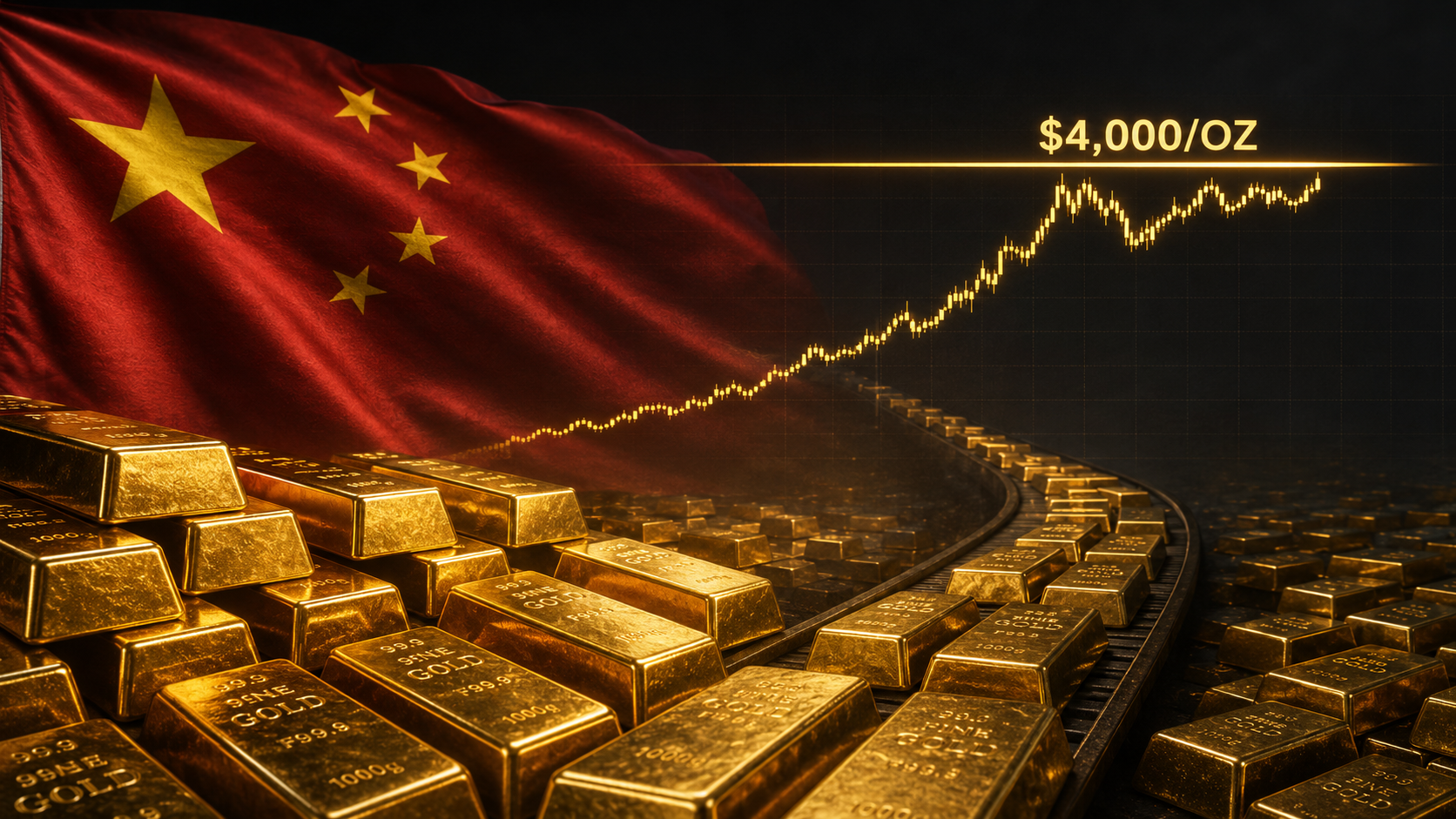
Gold prices today 28/7/2026
Gold prices today 28/7/2026 at Saigon Jewelry Company Limited (SJC), listed this morning, fell VND1.5 million/tael in both directions compared with yesterday afternoon. Accordingly, gold bar prices opened at VND137 - 141.5 million/tael (buy - sell) compared with yesterday.
The spread between the buying and selling prices widened to VND4.5 million/tael amid strong volatility in the global market.
In a development similar to gold bars, the price of SJC gold rings also fell VND150,000/mace to VND13.7 - 14.1 million/mace (buy - sell).
At other brands, the 9999 Hung Thinh Vuong round gold ring at DOJI this morning fell VND170,000/mace to VND13.85 - 14.25 million/mace (buy - sell) compared with the close of yesterday afternoon.
The gap between today's domestic and international gold prices on 28/7/2026 is widening to nearly VND11 million/tael.
World gold prices
Spot gold and silver prices rose in late afternoon trading on 27/7 in the US, as cooling oil prices eased inflationary pressure stemming from the US-Iran conflict. However, investors remained cautious ahead of the US Federal Reserve's (Fed) policy decision this week.
US interest rates remain the biggest macro risk for gold, as the Federal Open Market Committee (FOMC) is scheduled to announce its decision on 29/7. The market is pricing in a considerable probability of the Fed raising rates by another 25 basis points, though this is not the dominant view. This limits gold's upward momentum amid concerns that the Fed will continue to maintain a tight monetary policy and reject expectations of easing.
With the monetary policy outlook still unclear, gold is being pulled between the risk of inflation driven by energy prices and uncertain sentiment ahead of the Fed's key event.
The Strait of Hormuz continues to be the main macro risk source for the energy market and, through it, an influence on gold prices. Before the Iran conflict broke out, this waterway carried about 15 million barrels of oil per day from the Persian Gulf region. Recent disruptions have forced Gulf oil-producing countries to rely more heavily on alternative pipeline routes, which were not designed to fully replace the role of the Strait of Hormuz.
The pause in attacks between the US and Iran on 27/7 immediately eased pressure on the crude oil market. Brent crude closed the first session of the week at 85.87 USD/barrel, down 6.3%; while US crude closed at 82.61 USD/barrel, down 7.5%.
The decline in oil prices helped ease energy-driven inflationary pressure and pulled US Treasury bond yields lower. However, shipping through the Strait of Hormuz has yet to return to normal. Risks from news related to this region continue to support gold prices, while the risk of real interest rates remaining high limits follow-through buying.
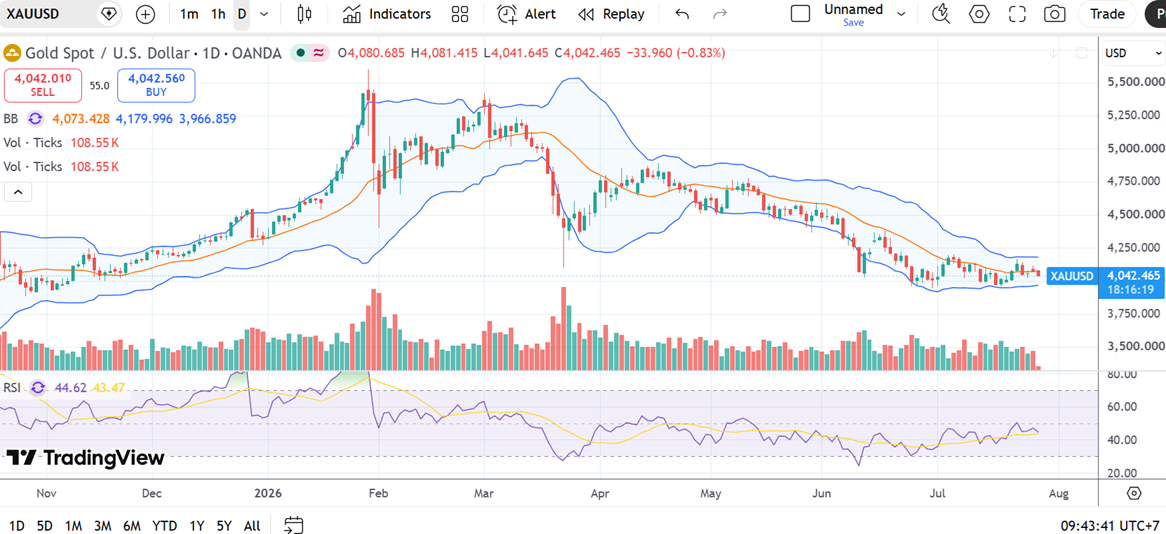
Chart of world gold prices on a daily timeframe.
China buys the most gold in two years
Sluggish gold demand in the West has held back the price of the precious metal over the past few months. However, one bank believes that demand in Asia, led by China, remains a key pillar of the global market. The volume of gold China has accumulated and its degree of influence may be far greater than previously assessed.
Although the gold market has undergone a correction lasting several months, prices have held above the key support level of 4,000 USD/ounce. In their latest report, commodity analysts at BMO Capital Markets believe that recovering demand in China is one of the main reasons gold has been able to defend this mark. At the same time, they assess China's influence on the gold market to be far greater than most investors think.
"Our new analysis shows that China has accumulated about 30,000 tonnes of above-ground gold, higher than official figures, and currently accounts for about one-third of total global gold demand," the analysts said.
BMO also forecasts that growing demand in China will be the most important factor driving gold prices higher in the second half of the year. According to the analysts, even with the enormous, undisclosed volume of gold it already holds, China's demand is unlikely to weaken in the near future and could ultimately surpass US reserves.
"At the current buying pace, the People's Bank of China (PBoC) needs about another 5 years to match the size of US gold reserves. However, if the total volume of gold held across the entire economy is counted, China could overtake the US much sooner," the analysts said.
"Not only that, similar to what it has achieved in other fields, China is moving to increase its influence over the global gold price-setting process. This is supported by very large-scale demand together with growing liquidity in the futures market and the over-the-counter (OTC) market."
Analyzing the structure of gold demand in China, BMO estimates that the PBoC holds about 5,200 tonnes of gold; the remainder is in the form of jewelry and investment gold bars held by the public. According to the analysts, China's total gold volume accounts for about 13% of global above-ground gold supply, approaching the estimated 15% held by the US.
Although China's gold market is approaching a number of important milestones on the international stage, BMO believes the country's ultimate goal remains unclear.
"It is not surprising that China has not announced a final target for its gold accumulation. However, given its ambitions for economic expansion and the internationalization of the yuan, we believe reaching a holding size equivalent to the US is only a minimum target," the analysts said.
This means China needs to buy an additional 2,500-3,000 tonnes of gold, a target that could be achieved within two to five years, depending on the purchasing method. However, the actual ambition could be even greater, as the country needs to bolster the credibility of the yuan on a global scale. The continuous acquisition of assets overseas, with a total value of about 18 billion USD to date, is seen as a pillar of that strategy.
Although it is not yet possible to pinpoint China's specific gold reserve target, BMO analysts believe the size of the money supply can be used as a reference benchmark. At current prices, the gold held by the US Federal Reserve is worth about 5% of the US M2 money supply.
To achieve a similar ratio, China's central bank would have to hold about 18,000 tonnes of gold, compared with about 5,222 tonnes at the end of last year.
Although China is still quite far from this target, the analysts believe the country's commitment to accumulating gold has been clearly demonstrated in recent months, as the PBoC has actively taken advantage of the prolonged correction in gold prices to buy.
Last month, China's central bank bought 15 tonnes of gold, the largest monthly purchase since October 2023. Since the start of this year, China's official gold reserves have increased by more than 40 tonnes.
Beyond increasing its stockpile of gold, BMO says China is also building the foundation to become a major force in the global gold price-setting process. Beijing is expanding Hong Kong's role as an international gold trading hub through a new settlement and clearing system, strengthening connectivity with the Shanghai Gold Exchange, and enhancing liquidity in the futures and OTC markets.
According to the report, these initiatives aim to attract more international trading activity. In the long term, they could gradually shift the power of global gold pricing from traditional centers in the West to China, amid the country's continued growing influence in the gold market.
Source: TheLeader — theleader.vn. This article is republished to share knowledge with the community of founders and investors in the HCM VIF ecosystem.
Category & tags
Related news
 Ecosystem
Venture capital will be a new asset class
Mr. Hoang Duc Trung believes that, with the State taking the lead and large organizations and enterprises joining forces to spread the momentum, venture capital will fulfil its role as an engine of growth and innovation
 Finance & Banking05/2026
The success of a public-private venture fund is not measured by the number of unicorns
With an initial size of VND 500 billion, how will the government's “seed capital” from the public-private venture fund catalyze the flow of financing into startups?
 Finance & Banking18/05/2026
Ho Chi Minh City sets up venture capital fund: 'Seed capital' for Vietnamese tech
For the first time, Ho Chi Minh City has a venture capital fund operating under a joint-stock company model with the participation of the State and major private corporations.