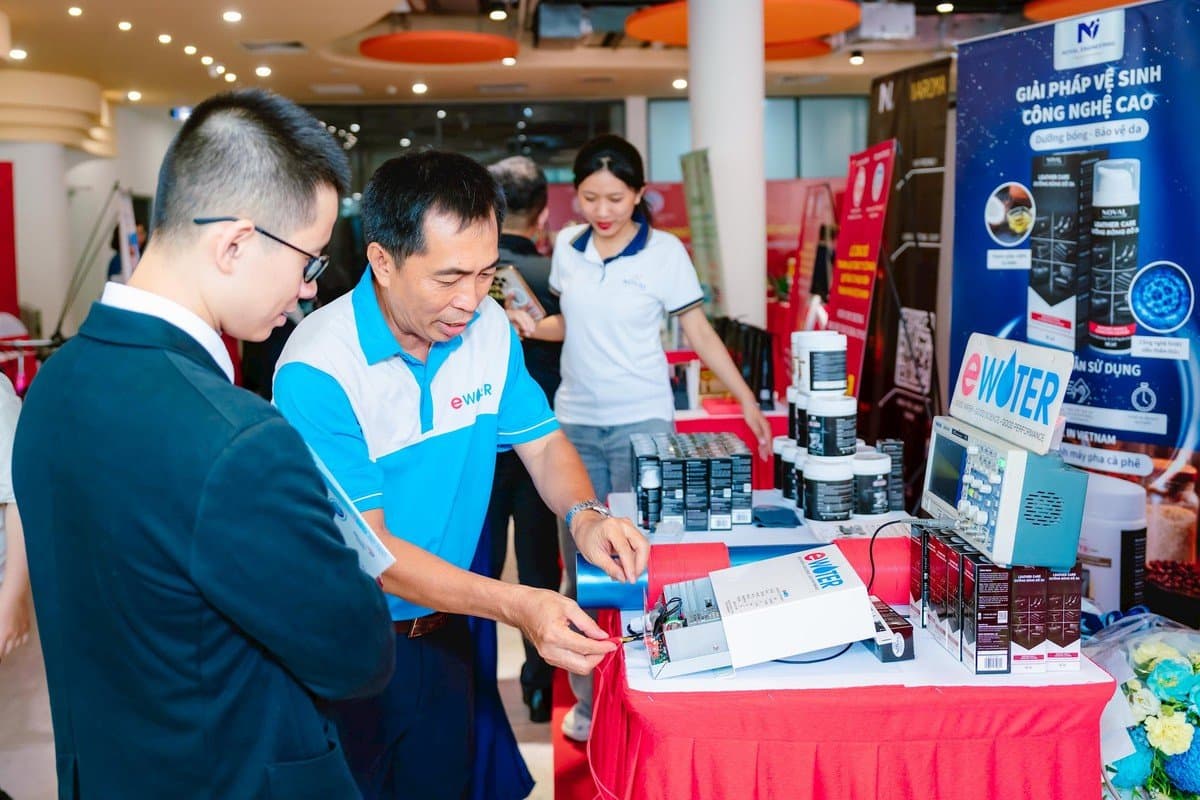


With a target of raising its total charter capital to at least VND 5,000 billion by 2035, the Ho Chi Minh City Venture Capital Fund is expected to create a new source of resources for the innovative startup ecosystem and support the growth of technology enterprises; thereby providing a boost for the economy's next growth phase and helping to realize the goal of turning the City into an innovation hub for the region.
Removing the capital bottleneck
Over the past decade, venture capital activity in Vietnam has made notable progress, yet its scale remains modest compared with other countries in the region. The national startup ecosystem currently comprises around 4,000 startups and a handful of "unicorns."
However, the bulk of this capital still comes from foreign funds and institutions, as domestic venture capital funds remain limited both in number and in financial capacity.
As the locality with the largest innovative startup ecosystem in the country, Ho Chi Minh City is home to nearly 50% of Vietnam's startups and the birthplace of three Vietnamese technology "unicorns."
During the 2021-2025 period, the City rolled out numerous programs to strengthen the ecosystem's capacity and connect domestic and international resources. Nevertheless, the market has still lacked local venture capital funds operating on market principles to play the role of "seed capital" and lead the flow of social capital.
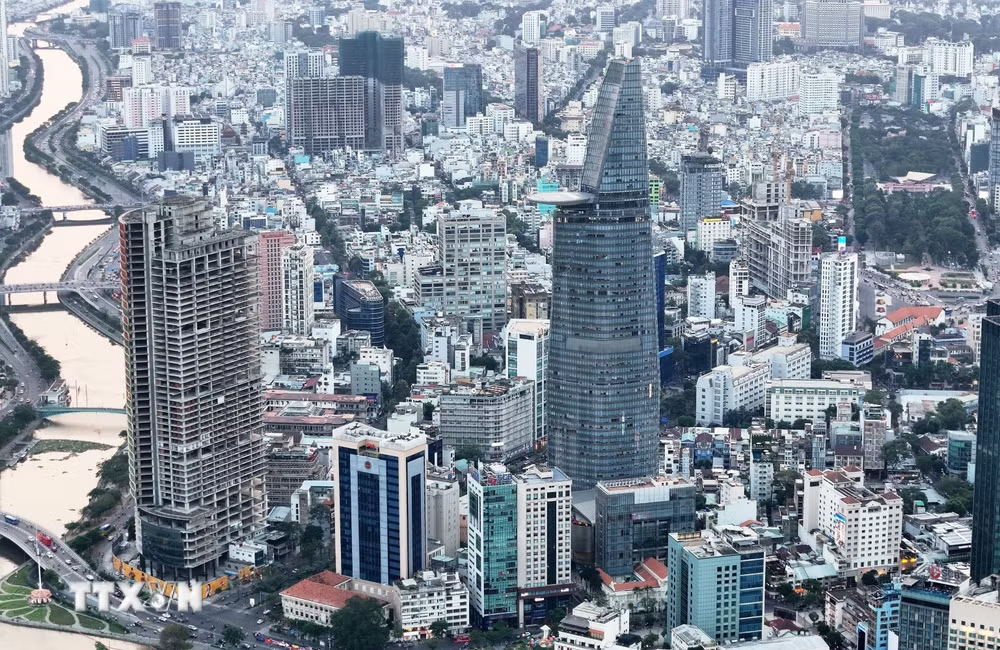
According to experts, the very nature of innovative entrepreneurship is high risk but with breakthrough value. In the past, the principle of "capital preservation" applied to the state budget created a significant psychological barrier for both public-sector managers and enterprises using state capital when it came to investing in this field.
The Government's Decree No. 264/2025/ND-CP on the national venture capital fund and local venture capital funds has removed this bottleneck, creating a legal basis for state capital to be allowed to "take risks" and accompany innovative startups.
The Ho Chi Minh City Venture Capital Fund Joint Stock Company was launched on April 17, 2026, on the legal basis of the Government's Decree No. 264 and a decision of the City's People's Committee. This is the first time the City has deployed a venture capital fund model initiated by the State that also mobilizes additional capital from enterprises.
The Fund has an initial charter capital of VND 500 billion, of which the City budget contributes VND 200 billion, accounting for 40%; the remainder is mobilized from private investors, enterprises and financial institutions.
This structure reflects close public-private cooperation, in which budget capital plays the role of getting things started and building market confidence, while social resources play the key role in scaling up the Fund over the long term.
Under its roadmap to 2035, the City aims to raise the Fund's total charter capital to at least VND 5,000 billion, on the principle that mobilized social resources will account for at least 60%.
The Fund focuses its investment on innovative startups, science and technology enterprises, and digital technology industry enterprises with rapid growth potential.
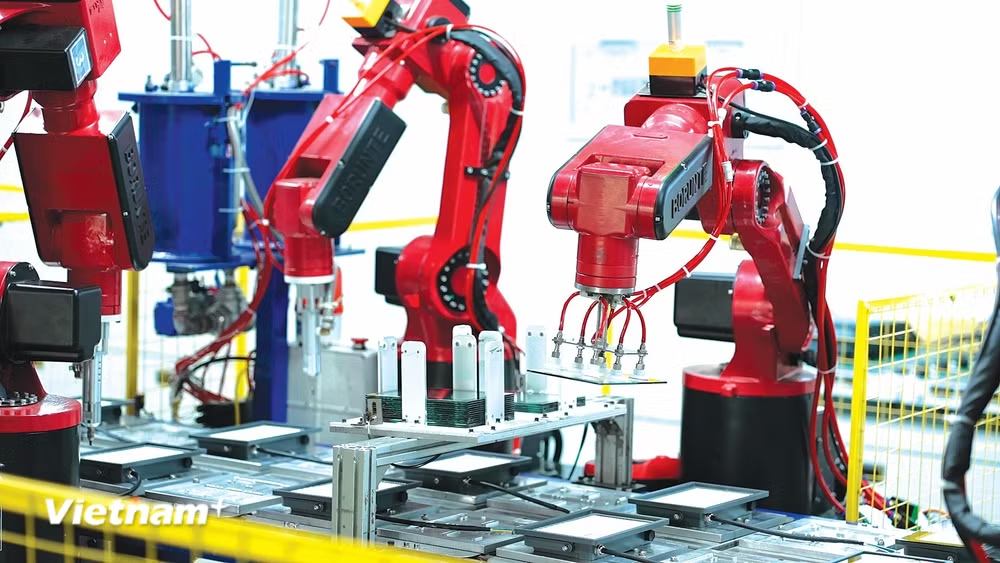
The priority fields are strategic core technologies such as artificial intelligence, big data, semiconductor microchip technology, biotechnology, green technology, automation and robotics…; along with digital economy, circular economy and digital transformation solutions aligned with the City's sustainable development orientation.
During the 2026-2035 period, the Fund plans to invest in 50 to 150 innovative startups and high-tech science and technology enterprises; support the commercialization of at least 50 products and technologies; and incubate a minimum of five large-scale technology enterprises.
Lam Dinh Thang, Director of the Ho Chi Minh City Department of Science and Technology, said the project to establish the Fund was carried out in a "lightning-fast" spirit, with a determination to create a breakthrough in unlocking capital for innovation.
Alongside the State, nine major corporations and investment funds took part in contributing founding capital to the Fund under a joint-stock enterprise model, namely the corporations: Sovico, Vingroup, Becamex, VinaCapital, Sun Wah, VNG, CT Group, Hoa Sen and FPT.
The Fund is organized under a modern governance model that clearly separates the ownership rights of the State and investors from the operational authority of the team of experts, in line with international practice. Investments are managed by an independent team of experts and assessed based on the commercial potential and profitability of projects, rather than being dependent on rigid procedures.
One of the breakthrough new features in the Fund's operation is the "controlled risk acceptance" mechanism. The Fund may accept an overall risk level of up to 50% of the state capital portion within an investment cycle, and investment performance will be assessed across the portfolio as a whole rather than by each individual project.
This mechanism allows state capital to truly play the role of "seed capital," daring to take risks alongside enterprises.
In addition, a "liability exemption" mechanism is applied to protect the organizations and individuals managing and operating the fund against objective market risks, provided they have complied with transparent procedures, thereby helping to remove any hesitation about accompanying startups.
A "magnet" attracting venture capital
The Fund is expected to play a leading role and mobilize social resources for the innovation ecosystem, creating conditions for the emergence of enterprises capable of competing internationally.
Hoang Duc Trung - Deputy Chief Executive Officer of VinaCapital's technology investment fund and Director of the Ho Chi Minh City Venture Capital Fund - said the scale of VND 500 billion in the first year and the target of VND 5,000 billion after 10 years are not merely financial figures but reflect the City's confidence in the development of the Fund as well as in the city's technological profile.
According to Trung, the Fund will play the role of "seed capital" leading the market, steering capital flows into strategic fields that require a long horizon, with the expectation that every dong of investment capital will act as a "magnet" attracting at least three to five additional dong from private and international investment funds.
The Fund focuses on selecting the most outstanding "seeds," particularly at the Series A and B funding rounds - the stages at which Vietnamese startups are most in need of capital to break through in scale. Beyond providing capital, the Fund also supports enterprises in governance, market connections and experience sharing, contributing to enhancing the competitiveness of startups.
The Fund is expected to begin accepting applications for investment consideration from early in the third quarter of 2026; it will also launch a contest to design its brand identity in the coming May. Immediately after the launch, the Fund received numerous proposals for promising startup projects from startup support organizations.
Nguyen Manh Cuong, Vice Chairman of the Ho Chi Minh City People's Committee, assessed that the launch of the City's Venture Capital Fund is an important step, affirming the City's commitment to accompanying the innovation system and the innovative startup ecosystem.
The participation of corporations, investment funds and technology "unicorns" as founding shareholders of the Fund is expected by City leaders to bring international-standard governance thinking, an extensive market network and a deep understanding of the innovative startup ecosystem.
Through this, together with the City, these enterprises will form a domestic venture capital market, sharing benefits and risks to nurture the technology enterprises of the future.
"The Department of Science and Technology, the Department of Finance and other relevant departments and agencies should continue to pay close attention, provide guidance, and promptly resolve any problems that arise as the Fund goes into actual operation. Together we will build a healthy innovative startup investment ecosystem, so that Ho Chi Minh City becomes an innovation hub, a place that attracts domestic and international innovative entrepreneurs to operate, invest and raise capital," Nguyen Manh Cuong, Vice Chairman of the Ho Chi Minh City People's Committee, urged.