

Dragon Capital: Vietnam's stock market has moved beyond the 'potential' stage
Dragon Capital believes that Vietnam has entered the stage of substantive development of a mature economy.
Dragon Capital believes that Vietnam has entered the stage of substantive development of a mature economy.
Vietnam is not merely a "future potential" market - Dragon Capital, one of the longest-operating foreign investment funds in Vietnam, has just made a notable assessment.
This assessment shows that international investors' view of Vietnam is gradually changing. Rather than being seen as a promising story still lying ahead, Vietnam is now viewed as an economy that has entered a profound transformation phase, with existing foundations in production capacity, domestic capital accumulation and institutional reform.
The stock market's move from a frontier market up to an emerging market therefore carries far greater significance than a technical change on the index classification table.
It is a sign reflecting structural shifts in the economy, while also opening up the possibility of more strongly attracting capital from global institutional investors.
Historical parallels and structural transformation momentum
Bustling cities with crowds of people and tourists, enterprises continuously expanding operations, new works appearing every day. All create the image of an economy transforming very quickly.
From coastal fishing villages gradually becoming modern industrial parks, to old residential areas giving way to high-rise buildings, Vietnam evokes the development journey that South Korea, Taiwan or China went through a few decades ago.
Vietnam seems to be recreating the familiar development model of Asia's coastal economies, but with its own distinctive pace and scale.
According to published data, Vietnam's GDP per capita is now equivalent to South Korea's in the early 1990s, the period before that economy broke out strongly and surpassed many European countries.
The similarity does not lie in figures alone. Both countries possess coastal locations favorable for trade, have a high degree of integration into global supply chains, and maintain balanced relations with both the United States and China. More importantly, both went through strong post-war reconstruction step by step.
Meanwhile, Vietnam's economic structure has also changed significantly. Agriculture no longer plays the leading role in growth as before. Industrial production is becoming the main driver of the economy, benefiting from the trend of multinational corporations diversifying their supply chains outside China.
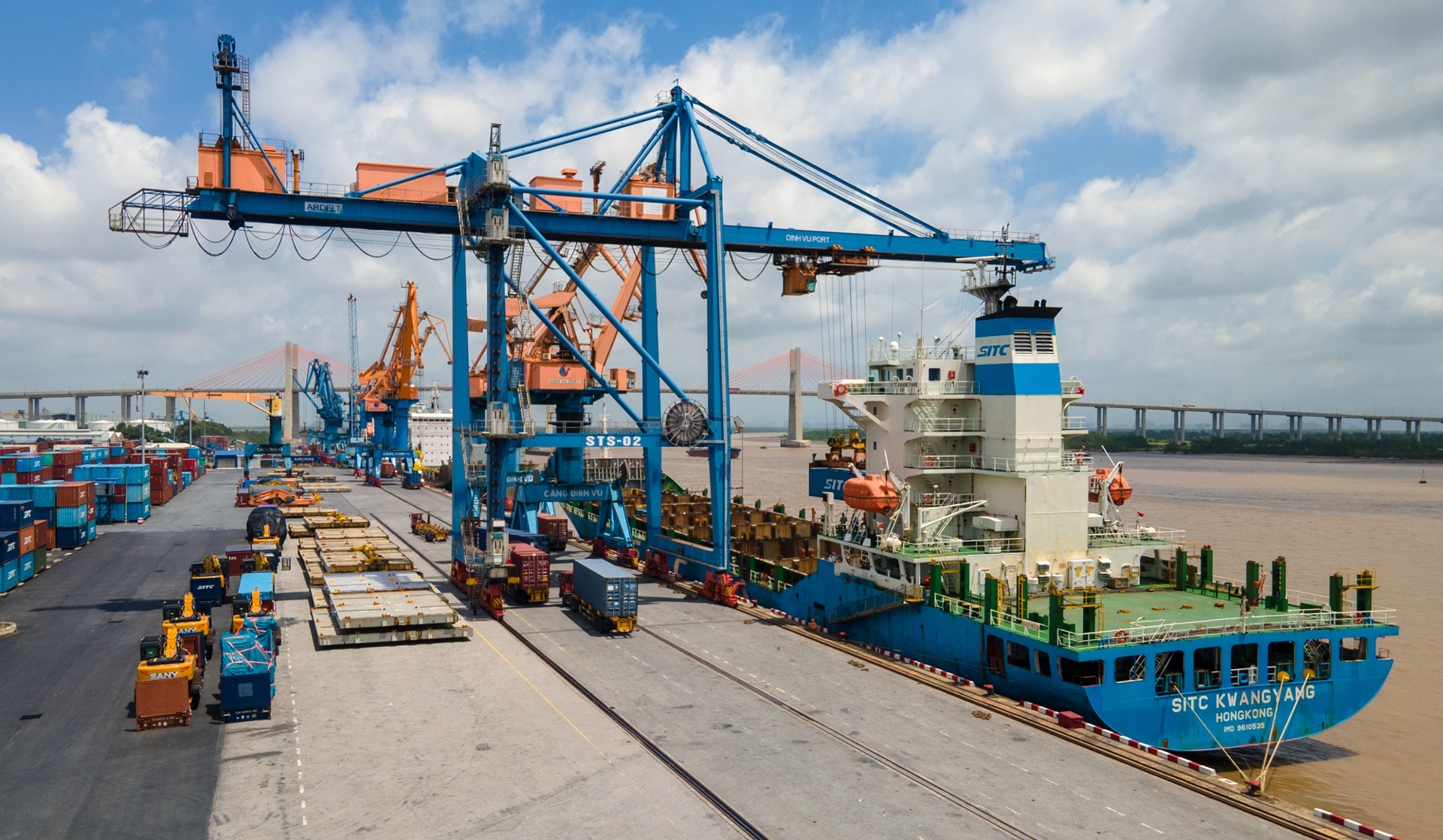
Vietnam's economy is increasingly viewed by many international investment funds as a market of substantive growth rather than merely a "potential story." Photo: HA
With a stable political environment, an open trade policy and competitive labor costs, Vietnam increasingly stands out as an attractive destination for FDI flows.
This capital not only creates more jobs but also drives construction and the strong development of domestic service industries. Thanks to this, GDP growth has been maintained at around 7% per year, a notable figure amid a still-volatile global economy.
Behind the growth rate are fairly solid macroeconomic foundations. Government debt is currently only about 30% of GDP, the literacy rate reaches 96%, while the golden population structure, with two workers for each dependent, continues to create a long-term competitive advantage.
These factors did not appear by chance but are the result of a process of domestic capital accumulation and reform spanning many years.
This is precisely what leads many international investors to believe that Vietnam is building genuine production capacity, rather than stopping at theoretical potential. Macroeconomic indicators therefore become more convincing when reflected directly through enterprise operations and people's daily lives.
Real challenges on the journey to accelerate
That said, any fast-growing economy comes with its own challenges, and Vietnam is no exception to that rule.
The first pressure comes from infrastructure, especially energy. Electricity demand is rising faster than domestic supply capacity, forcing Vietnam to import more fuel and face the risk of cyclical power shortages.
This is not merely a technical issue but also directly affects long-term investment appeal. Manufacturing plants need a stable power supply to maintain supply chains, and any disruption could erode the confidence of international partners.
Alongside this are geopolitical challenges. Maintaining a balance between the United States and China requires great diplomatic finesse. Any change in international relations could affect trade and investment flows into Vietnam.
Domestically, State intervention in some sectors still exists, at times creating dissatisfaction within the business community and society. These factors show that the growth path has never been a straight line, but always contains bottlenecks that need to be untangled over time.
However, that very volatility is what makes Vietnam more attractive in the eyes of many professional investors. A genuine emerging market always comes with risk, but at the same time opens up the possibility of high returns for those who clearly understand the cyclical nature of the economy.
Dragon Capital believes that the current challenges themselves are a sign that Vietnam has stepped out of the "potential" stage to enter a stage of real development, with the complex problems of a maturing economy.
Opportunities on the stock market
From an investment perspective, the stock market remains the most direct way to participate in Vietnam's growth story.
The market's scale is still fairly small compared with major financial centers. Vietnam's total stock market capitalization is about 270 billion pounds, while the London market is about 2.7 trillion pounds.
Nevertheless, over the past more than 10 years, the market has still recorded an average return of about 14% per year, showing a relatively effective ability to convert economic growth into corporate profits.
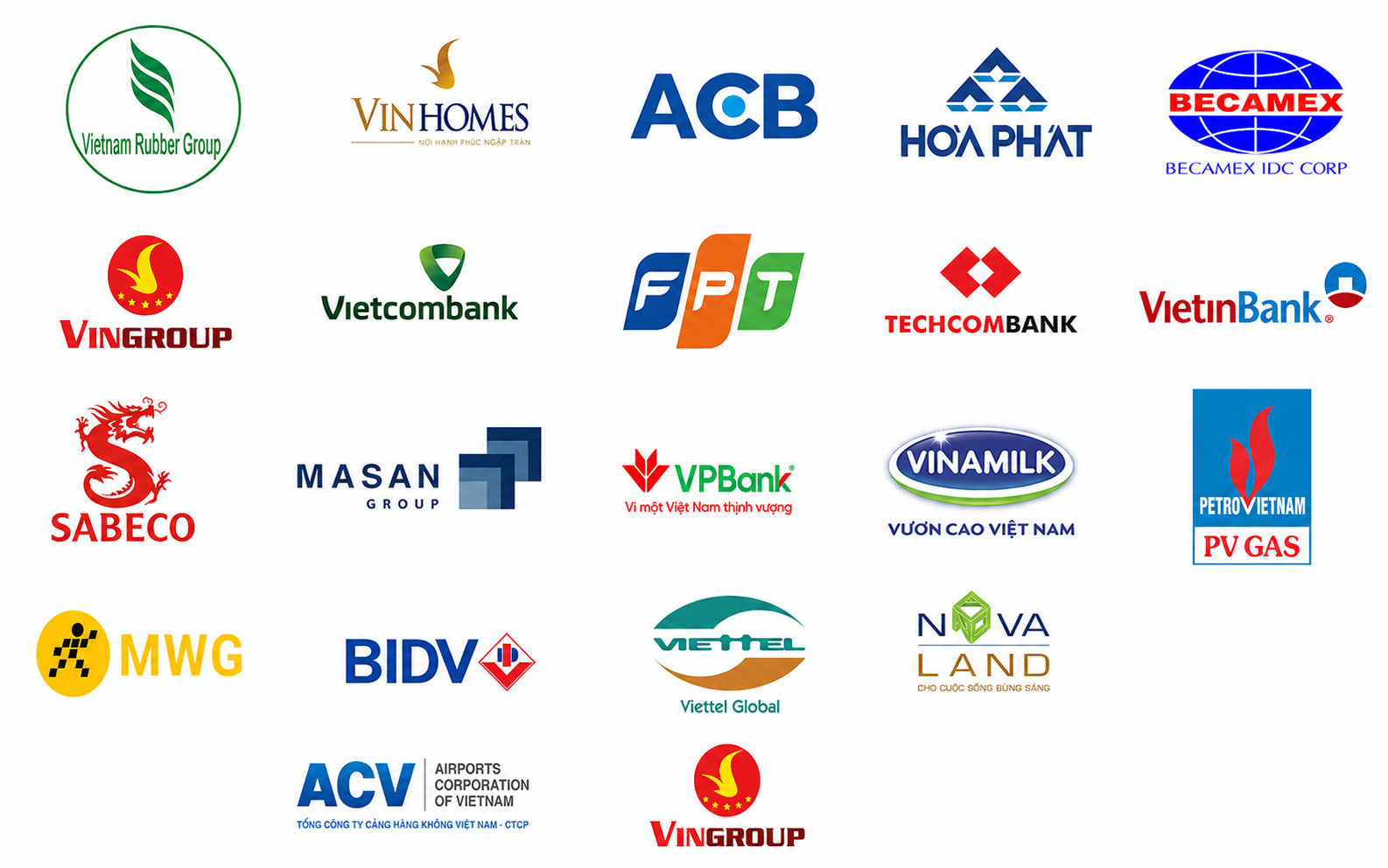
Money tends to concentrate in industry-leading enterprises.
Money currently concentrates mainly in industry-leading enterprises. Vingroup stands out with an ecosystem spanning real estate, retail, healthcare and education. Meanwhile, Hoa Phat benefits from industrialization and construction demand.
The top banking group, such as BIDV, VPBank, Techcombank and MB, still plays a central role in providing credit to the economy.
In addition to individual stocks, ETFs are also becoming a more popular choice for international investors thanks to their ability to quickly access the large-cap group.
One of the factors the market is currently watching is the possibility of FTSE Russell upgrading Vietnam to emerging market status. If this happens, capital from passive investment funds could increase significantly, supporting liquidity and the valuation level.
Of course, the Vietnamese market still comes with high volatility due to the strong influence of individual investor sentiment, along with factors such as the exchange rate or the policy environment.
However, along with the reform process and an economic foundation that is gradually strengthening, Vietnam is increasingly viewed by many international investment funds as a market of substantive growth rather than merely a "potential story."
Nguồn: TheLeader — theleader.vn. Bài viết được đăng lại phục vụ mục đích chia sẻ kiến thức cho cộng đồng founder và nhà đầu tư trong hệ sinh thái HCM VIF.
Category & tags
Related news
 Ecosystem
Venture capital will be a new asset class
Mr. Hoang Duc Trung believes that, with the State taking the lead and large organizations and enterprises joining forces to spread the momentum, venture capital will fulfil its role as an engine of growth and innovation
 Finance & Banking05/2026
The success of a public-private venture fund is not measured by the number of unicorns
With an initial size of VND 500 billion, how will the government's “seed capital” from the public-private venture fund catalyze the flow of financing into startups?
 Finance & Banking18/05/2026
Ho Chi Minh City sets up venture capital fund: 'Seed capital' for Vietnamese tech
For the first time, Ho Chi Minh City has a venture capital fund operating under a joint-stock company model with the participation of the State and major private corporations.