

Dang Thanh Tam: ‘Vietnam already has FDI eagles – when will it have eagles of capital flows?’
According to the chairman of KBC, Vietnam needs to enhance the management and governance capacity of both the public and private sectors in order to open its doors to international capital flows.
According to the chairman of KBC, Vietnam needs to enhance the management and governance capacity of both the public and private sectors in order to open its doors to international capital flows.
A new race for the economy
When speaking of Vietnam’s success on its journey of economic integration, foreign direct investment (FDI) flows have always been one of the most prominent stories.
From the first manufacturing plants decades ago, Vietnam today has become an important link in the global supply chain, with the presence of many of the world’s leading technology corporations.
The figures for the first half of 2026 continued to reflect this trend, with registered FDI reaching nearly USD35 billion, almost equal to the total registered capital for the entire year of 2025.
Of this, the processing and manufacturing sector still played the leading role with more than USD10 billion in newly registered capital. That is the fruit of a long process of improving the investment environment and gradually building Vietnam’s position on the global manufacturing map.
But if Vietnam has already become a destination for FDI “eagles,” then what will be the goal of the next stage of development?
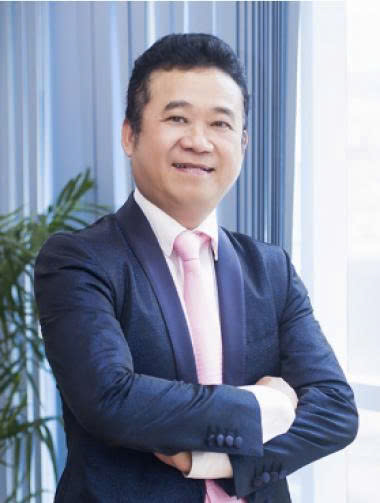
Mr. Tam argues that it must rely on improving the efficiency of capital use. Photo: KBC
Speaking with TheLEADER, Mr. Dang Thanh Tam, Chairman of Kinh Bac Corporation (KBC), said that the total registered FDI capital Vietnam has attracted has reached about USD400 billion, a very large figure relative to the size of the economy’s GDP. Meanwhile, the total assets managed by investment funds in Vietnam currently stand at only about USD32 billion.
Even under the assumption that all of this capital is foreign, the scale would only be equivalent to about 7% of total registered FDI. That shows that there is still very large room for indirect investment flows.
“We often talk about attracting ‘eagles.’ Vietnam has attracted ‘eagles’ in FDI, such as Samsung with more than USD20 billion and expected to rise to USD30 billion, LG with more than USD10 billion and possibly rising to USD15 billion, or Foxconn with projects serving Apple’s supply chain.
So why can’t we attract ‘eagles’ in the field of indirect investment?” Mr. Tam raised the question.
According to the KBC leader, this also shows that competition for capital among economies is entering a new stage.
After the race to attract manufacturing plants, many countries are now aiming to become destinations for global financial capital flows. These are investment funds on the scale of hundreds of billions of USD, capable of participating in infrastructure, high-tech and strategic industry projects.
According to Mr. Tam, large capital flows are tending to reduce investment in “old” economies such as Europe and to seek out new destinations. Vietnam has every opportunity to receive these capital flows if it can meet the necessary conditions.
Enhancing capital absorption capacity
One of Mr. Dang Thanh Tam’s consistent views is that Vietnam is not yet able to absorb the “mega” capital flows from international investment funds.
In his view, the issue today does not lie in investors being unwilling to come to Vietnam, but rather in the fact that the economy is not truly ready in terms of mechanisms and capital absorption capacity.
From the perspective of a business leader, the distance from investment intention to when capital is actually disbursed is still quite far.
Accessing international capital sources, issuing international bonds or carrying out procedures related to cross-border capital raising remains a complex and costly process for many Vietnamese enterprises.
Mr. Tam argued that the question is how to both open the door to international capital flows and control the risks. To do that, Vietnam needs to enhance the management capacity and governance capacity of both the public and private sectors.
In particular, the requirement for transparency was repeatedly mentioned by him as a prerequisite for attracting international investment capital.
Transparency must be ensured consistently, from the stock market, listed enterprises and securities companies through to the entire capital-market system.
Transparency, under this approach, is not merely a legal requirement. It is also the foundation for building investor confidence in a capital market.
When information is fully disclosed, policies are consistent and the system operates fairly, the ability to raise long-term capital flows will also improve.
From another angle, Mr. Tam argued that the transaction costs of capital flows are also an issue that needs to be viewed more fully.
The cost of issuing international bonds can amount to tens of millions of USD for a single issuance dossier, not to mention the time and related procedures. If these costs are not reduced, even leading enterprises such as KBC itself will face many difficulties when they need to raise international capital, and will also consider returning to the domestic capital market.
Looking more broadly, this is not simply the story of a single enterprise. An economy’s capacity to absorb international capital is determined by the quality of its institutions, the effectiveness of governance and how smooth the process of capital circulation is.
“Eagles” will come when the economy is upgraded
A notable point in Mr. Dang Thanh Tam’s remarks is that he does not view high growth as being synonymous with having to raise more capital.
“Growth cannot rely solely on pumping in more capital but must rely on improving the efficiency of capital use,” he emphasized.
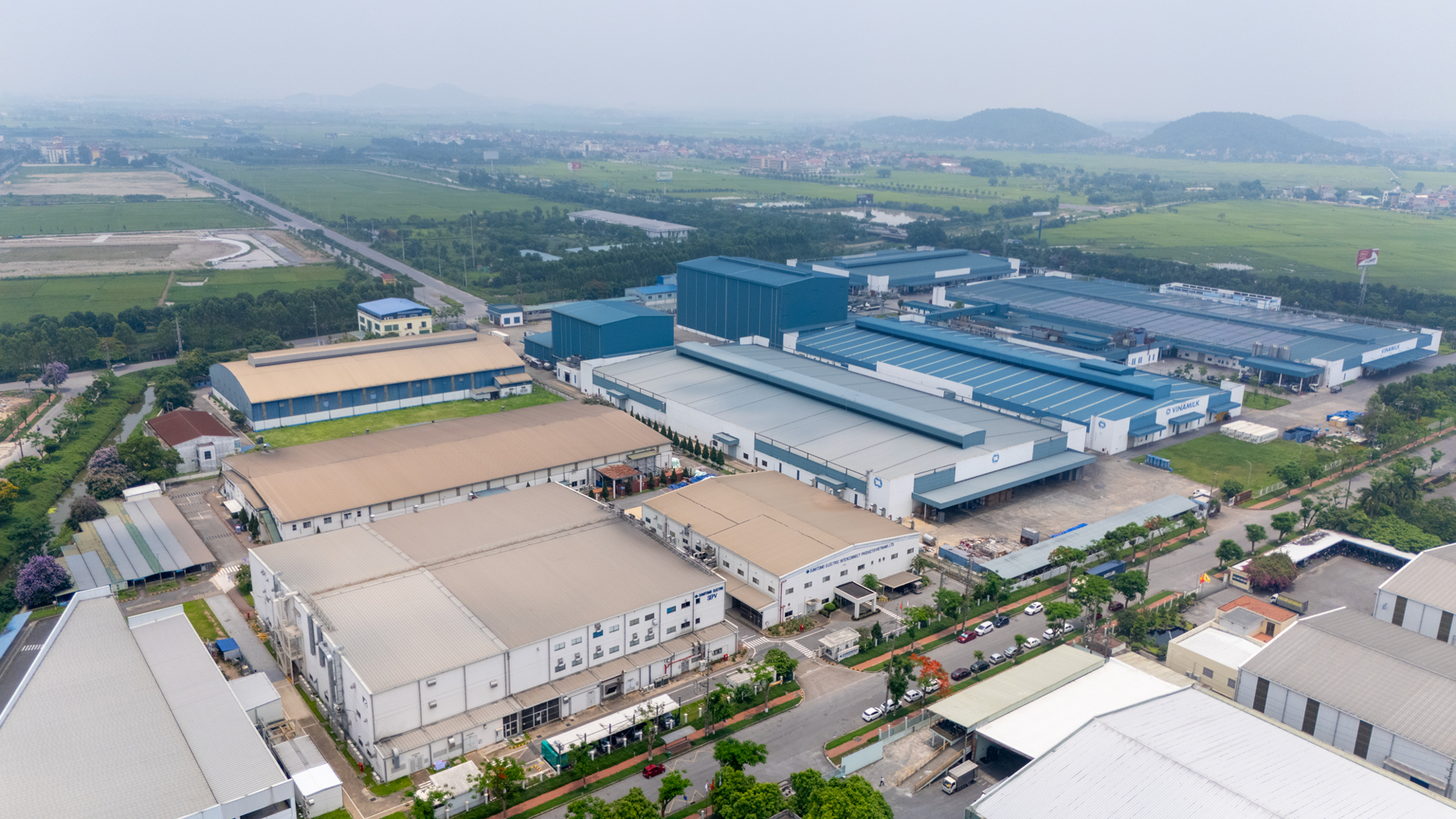
The “eagles” have poured tens of trillions of dong of investment capital into industrial parks in Vietnam. Photo: HA
Whereas in the past the challenge was mainly how to raise more capital, in the next stage the important question may be how to create more value per dong of investment capital.
According to Mr. Tam, in order to restructure capital sources, the economy must first be restructured. This includes diversifying export markets, raising the added value of products, improving institutions and enhancing the competitiveness of Vietnamese enterprises.
The KBC leader also devoted much attention to new fields such as AI Factory, AI Data Center, international financial centers and high-tech industries. In his view, these are fields capable of generating large international revenue streams and reflecting the quality of the economy’s development in the future.
More importantly, international capital flows will only truly arrive when investors see long-term development prospects for enterprises and for the economy as a whole.
He argued that when the economy is restructured in a systematic way, the confidence of both domestic and foreign investors will increase. At that point, capital will find its own way to Vietnam without the need to go out and court it.
Perhaps that is also the answer to the question, “When will Vietnam have its eagles of capital flows?”
As the saying goes, ‘good wine needs no bush.’ If we have a good investment environment, good products and good international relations, investors will find their own way to us.
Large-scale capital flows always seek stability, transparency and the ability to create value over the long term. They do not follow short-term incentive policies but choose to accompany economies whose investment-environment quality and competitiveness are increasingly enhanced.
After nearly four decades of opening up, Vietnam has come a long way in attracting FDI “eagles.” The race of the next stage may take on a different face.
It is a race to upgrade capital absorption capacity, improve institutions and build the confidence needed to become a destination for large-scale international capital flows. When the economy is strong enough, as Mr. Dang Thanh Tam put it, capital will naturally flow into Vietnam.
Source: TheLeader — theleader.vn. The article is republished for the purpose of sharing knowledge with the community of founders and investors in the HCM VIF ecosystem.
Category & tags
Related news
 Ecosystem
Venture capital will be a new asset class
Mr. Hoang Duc Trung believes that, with the State taking the lead and large organizations and enterprises joining forces to spread the momentum, venture capital will fulfil its role as an engine of growth and innovation
 Finance & Banking05/2026
The success of a public-private venture fund is not measured by the number of unicorns
With an initial size of VND 500 billion, how will the government's “seed capital” from the public-private venture fund catalyze the flow of financing into startups?
 Finance & Banking18/05/2026
Ho Chi Minh City sets up venture capital fund: 'Seed capital' for Vietnamese tech
For the first time, Ho Chi Minh City has a venture capital fund operating under a joint-stock company model with the participation of the State and major private corporations.