

Core technology needs a 'trustworthy enough environment' to attract big capital
Establishing a venture capital mechanism led by State capital is setting an unprecedented precedent in Vietnam's startup ecosystem.
In a context where the traditional growth model has gradually hit its ceiling, Ho Chi Minh City is choosing a path that takes science and technology as its new growth engine. The birth of the Ho Chi Minh City Venture Capital Fund under a public-private partnership model is therefore not merely about opening one more channel to channel capital, but also marks an important shift in governance thinking.
It is a mindset that dares to accept controlled risk in exchange for innovation, that dares to create a transparent, disciplined yet sufficiently open playing field to nurture technology companies capable of breaking through on a global scale.
In other words, the city is proactively "sowing the seeds" today for tomorrow's technology "unicorns".
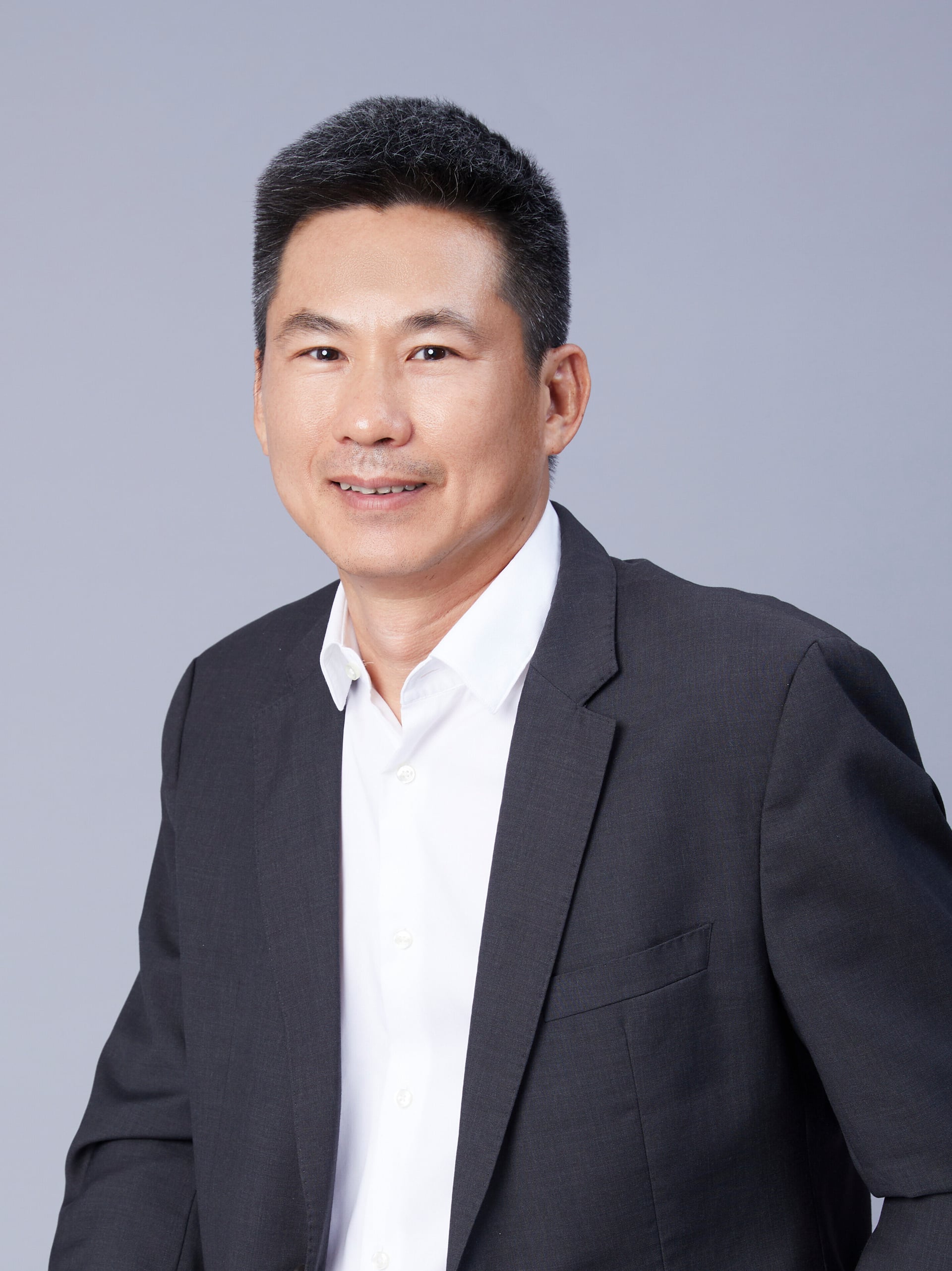
In a conversation with TheLEADER, Mr. Hoang Duc Trung, Deputy CEO of VinaCapital Ventures and concurrently Director of the newly established Ho Chi Minh City Venture Capital Fund, spoke frankly about the "missing links" in the startup ecosystem, as well as his expectations for the rise of a new generation of "deep-tech" (core technology) startups in Vietnam.
FROM STATE "SEED CAPITAL" TO THE CORE-TECHNOLOGY MARKET
Sir, the Ho Chi Minh City Venture Capital Fund was born at a time when the city is eager to renew its growth model. From the perspective of a seasoned investor, what is the top priority for the ecosystem to truly transform?
Mr. Hoang Duc Trung: In my view, the greatest priority right now is not to pump in more capital, but to build an environment trustworthy enough for long-term capital to flow confidently and sustainably into innovation. That trust does not lie in glittering headline commitments, but is determined by the quality of the policy framework and the maturity of the financial infrastructure.
When non-market risks, especially legal risk, are narrowed, investors become willing to step into fields that inherently carry a high degree of uncertainty. To achieve this, the ecosystem must operate according to sound market logic and have a clear division of roles: the State plays the role of enabler and leader, investors maintain long-term capital discipline, and startups need to be supported in shortening the journey to commercializing their products.
Only when each link operates in sync can innovation become a genuine growth engine of the economy, instead of stopping at attractive but lightweight slogans.
What is special about this fund is that State capital plays the role of "seed capital". How will this mechanism change the flow of capital into Vietnamese startups compared with before?
Mr. Hoang Duc Trung: The "seed capital" mechanism under the public-private model is a notable step forward, because it changes how the market perceives risk with respect to venture capital in Vietnam. When the State participates as a partner and accepts sharing risk according to market principles, private capital, especially international capital, will have more confidence to enter the game earlier and more forcefully.
The public-private partnership (PPP) venture capital fund model, with State capital playing the role of "seed capital", can create a fundamental change for the flow of capital into Vietnamese startups along three directions: proactively leading private resources, sharing risk on the basis of assessing the performance of the whole portfolio rather than scrutinizing each individual project, and prioritizing funding for technologies with breakthrough potential rather than merely chasing short-term gains.
This is also a major impetus in management thinking, as the State no longer stops at the role of administrative support, but directly accompanies businesses by accepting risk alongside them. When the fund invests in a startup, it is not only a story of capital, but also an endorsement of the policy environment, the controlled-testing (sandbox) mechanism, the legal corridor and long-term development orientation.
It is precisely this accompaniment that sharply reduces the psychological barrier and the perceived level of risk for private investors, thereby activating a ripple effect that draws more capital flows into the innovation ecosystem.
The fund has determined to focus on "core technologies" such as AI, semiconductors, biotech, green energy, and so on. In your view, is Vietnam truly ready for this "big game"?
Mr. Hoang Duc Trung: We have passed the nascent stage and are at the point of acceleration. Vietnam has an abundant engineering workforce, competitive costs and a dynamic startup ecosystem. In applied AI and digital transformation, we have already established a certain position.
However, in the genuine deep-tech areas such as semiconductors or biotech (biotechnology), we are still building the foundation as we run. The biggest barrier remains the lack of long-term capital, thin applied-research capacity and a lagging legal framework.
Therefore, the right strategy at present is not to spread ourselves thin, but to focus on the segments where we have a clear competitive advantage, leveraging the "controlled risk acceptance" mechanism to go deep into the global value chain.
You often mention the "bottlenecks" in the linkage between research institutes and businesses. So which is the weakest "link" at present?
Mr. Hoang Duc Trung: The biggest bottleneck is commercialization. We do not lack good research at universities, but the rate of bringing it to market is very low because we lack professional "intermediary links" such as intellectual property asset valuation organizations or genuine technology transfer centers.
In addition, the linkage between academia and business remains "out of phase". Businesses are wary of risk, while scientists sometimes do not stay close to practical needs. This leads to an ecosystem lacking businesses that rise from core technology, and consisting mainly of ready-made business models.
To untangle this, there needs to be a mechanism for spin-off businesses (startups spun out of universities) to develop more favorably in terms of law and public assets.
A "MAGNET" FOR CAPITAL AND THE SERIES A, B GAP
The fund sets a target that every dong of State capital must attract an additional 3 to 5 dong of private capital. To do this, what must the fund do to become a "magnet" in the eyes of foreign investors?
Mr. Hoang Duc Trung: In my view, to become a "capital magnet", the core element is that the fund must be operated according to sound market logic, with clear investment discipline, a transparent decision-making process and governance standards approaching international practice. Only when investors see a professional operating mechanism will they be willing to place their trust in long-term capital.
In reality, the public-private model is creating a special advantage by combining the flexibility, speed and governance capacity of the private sector with the enabling, orienting and policy-support role of the State. This is a structure that helps the fund be fast enough to seize opportunities and solid enough to minimize systemic risk. In addition, the presence of reputable financial institutions together with experienced investors will significantly enhance the fund's credibility in the eyes of the international investment community.
When capital is deployed based on data, in-depth market analysis, a rigorous due-diligence process and methodical risk management, the fund will build long-term trust. Once trust is established, the fund can attract not only capital in the first round, but can also draw many co-investors into subsequent growth rounds.

Why did the fund choose to focus on the Series A and B rounds - the stage many call the "valley of death" for startups?
Mr. Hoang Duc Trung: In reality, the early (seed) stage is quite vibrant, and the later (late stage) still has large capital, but the acceleration stage (Series A, B) is a "low point". Vietnam is lacking funds capable of leading this round.
But the problem is not only a shortage of money, it is also a shortage of startups "ripe" enough to absorb large capital. Many teams have not proven their ability to scale sustainably or have not met governance standards. The fund's task is not only to inject capital, but to accompany businesses in raising their governance so that they are strong enough to "grow big".
This fund's advantage is the presence of large corporations. Is this "ecosystem" factor a magic wand for startups?
Mr. Hoang Duc Trung: In my view, it is not a magic wand but it is a key advantage. The participation of large corporations gives startups immediate access to markets, infrastructure and customer data - things that money sometimes cannot buy. For investors, this is an extremely effective "risk-reduction" mechanism. When a startup has real output from large corporations, its likelihood of success and its appeal increase manifold.
INVESTMENT TRENDS: DIGITAL HEALTHCARE AND THE LONG GAME
Among the technology fields, healthcare is receiving great interest. What opportunities do you see for Vietnamese startups in this area?
Mr. Hoang Duc Trung: The medical technology (Medtech) field in Vietnam is standing before a golden opportunity, driven by hospital overload pressure and the rise of the middle class. AI in diagnostic imaging, Telehealth (remote healthcare) and patient data management are very fertile ground.
AI helps improve accuracy at a time when high-quality doctors are still in short supply. However, I believe that a sustainable advantage belongs only to startups that are not merely good at programming, but that also deeply understand medical operating processes and legal constraints in Vietnam. Healthcare digital transformation toward the "smart hospital" is enormous room for units providing long-term technology infrastructure.
After the "hot" post-Covid period, many healthcare startups are having to restructure. How do you assess this "revaluation"?
Mr. Hoang Duc Trung: This is a necessary shakeout. The market has become less deluded about growth at all costs and has shifted to prioritizing real efficiency. Over the next 3-5 years, "hybrid care" models (combining online and offline) and O2O (Online to Offline) will prevail.
In addition, chronic disease management models, specialized healthcare or B2B Healthtech that helps hospitals optimize operations will attract capital strongly. As cost pressure rises, healthcare facilities will prioritize solutions that help them save resources and automate processes.
From an investor's perspective, what is the metric or signal showing that a digital healthcare model has passed the "pilot" stage to become a model that can "scale"?
Mr. Hoang Duc Trung: When they no longer sell an "idea" but sell "results". A model that has passed the pilot stage must prove: how much treatment quality has improved, how much money it saves the hospital, and importantly, that solution must be easy to replicate across hundreds of other facilities without encountering technical barriers or excessive operating costs.
For deep-tech companies that have no revenue yet but own core technology, how will the fund respond?
Mr. Hoang Duc Trung: In reality, venture capital in core technology is a game of patience. We do not rule out startups without revenue if their technology and team are truly outstanding. However, we do not "bet" to the extreme. The fund will maintain a balanced portfolio: some startups with clear cash flow to ensure stability, and some breakthrough deep-tech projects for the future.
Looking ahead 5 to 10 years, what mark do you hope the fund will leave on Ho Chi Minh City and the country?
Mr. Hoang Duc Trung: I hope the biggest mark will not be how many deals or how much money was disbursed, but the shaping of a new way of operating for the market.
The fund will be a transparent launchpad, where bold ideas and long-term capital meet. If we can build trust and standardize the way capital flows into technology, we will create a sustainable, substantive innovation ecosystem strong enough to take Vietnam deeper into the world technology map.
Thank you for the conversation!
Source: TheLeader — theleader.vn. This article is republished to share knowledge with the founder and investor community in the HCM VIF ecosystem.
Category & tags
Related news
 Ecosystem
Venture capital will be a new asset class
Mr. Hoang Duc Trung believes that, with the State taking the lead and large organizations and enterprises joining forces to spread the momentum, venture capital will fulfil its role as an engine of growth and innovation
 Finance & Banking05/2026
The success of a public-private venture fund is not measured by the number of unicorns
With an initial size of VND 500 billion, how will the government's “seed capital” from the public-private venture fund catalyze the flow of financing into startups?
 Finance & Banking18/05/2026
Ho Chi Minh City sets up venture capital fund: 'Seed capital' for Vietnamese tech
For the first time, Ho Chi Minh City has a venture capital fund operating under a joint-stock company model with the participation of the State and major private corporations.