

Beacon Advisory Deputy Chairman: 'Institutional Boosts Will Pave the Way for the Capital Market'
Expert Nguyen Van Dat argues that this is an opportunity for securities firms to shift from the traditional brokerage model to digital finance platforms.
Expert Nguyen Van Dat argues that this is an opportunity for securities firms to shift from the traditional brokerage model to digital finance platforms.
Amid a positive rise in securities stocks following the June 15 consultation meeting on amending the Securities Law, the market is expecting new policy changes to create momentum for the industry and the capital market.
Along with expectations of an upgrade in September 2026, the question is how the new legal framework will substantively affect the market structure, the operations of securities firms and the industry’s long-term growth prospects.

Dat expects the new draft law to create an additional “layer of protection” for investors. Photo: Provided
Against this backdrop, TheLEADER spoke with expert Nguyen Van Dat, CFA, ACCA, Deputy Chairman of the advisory firm Beacon Advisory, for a deeper perspective on the impacts of the draft amendment to the Securities Law and the prospects of a new cycle for Vietnam’s capital market.
A step forward in upgrading the capital market
The draft amendment to the Securities Law is seen as an important step in completing the legal framework and upgrading the market, while also supporting the goal of an upgrade in September 2026 by FTSE Russell and, further out, by MSCI.
In your view, which changes in the draft could have the greatest structural impact on Vietnam’s stock market?
Expert Nguyen Van Dat: This draft amendment to the Securities Law aims not only to complete the legal corridor but also to build a more modern, transparent and sustainably developing capital market.
The draft focuses on major policy groups such as continuing to simplify investment and business conditions, adding new mechanisms suited to market development, and promoting digital transformation in the securities sector.
Among them, two new points with major structural impact are the controlled testing mechanism (sandbox) in the securities sector and the bond-payment guarantee institution. These are new “boosts” that lay the foundation for the next development stage of the capital market, both encouraging innovation and strengthening investor-protection mechanisms.
In addition, the draft also focuses on digital transformation, electronic trading and the application of technology in the operations of market intermediaries. This aligns with the development trend of modern financial markets, where technology is becoming an important factor in expanding access and improving operational efficiency.
The draft adds a controlled testing mechanism (sandbox) and promotes electronic trading. How could this change the way the market operates? How can securities firms seize this opportunity to expand their business models?
Expert Nguyen Van Dat: Adding a controlled testing mechanism (sandbox) and promoting electronic trading is not only a matter of technology but also an important step to modernize the stock market and approach international standards.
In essence, the sandbox allows the market to pilot new models, products or trading methods within a controlled scope, thereby assessing effectiveness and refining the legal framework before broad rollout.
This is an appropriate direction as the market develops rapidly with many new models such as digital trading, automation and new financial products that need a real testing environment.
At the same time, promoting electronic trading will help the market operate faster and more transparently and enhance processing capacity as trading volume, especially from international investors, increases.
This is also an important requirement in the process of raising market quality to international standards, when the technology system, operating processes and risk-management capacity must meet higher standards such as those of MSCI.
The sandbox and bond-payment guarantee are new “boosts” that both promote innovation and add a layer of protection for investors.
For securities firms, this is an opportunity to shift from the traditional brokerage model to a digital finance platform, through applying AI, personalizing products and developing investor-support services.
Over the past period, the regulator has also promoted the piloting of new models such as digital trading, intraday trading (T+0) and controlled short selling, taking preparatory steps for the next development stage of the market.
However, securities firms also need to enhance their technology capacity, data security and risk management. Future competitive advantage will belong to firms with a strong technology foundation and the ability to adapt quickly to market changes.
For the corporate bond market, adding a payment-guarantee mechanism is expected to help restore investor confidence. In your view, could this become an important step toward reactivating the long-term capital-raising channel for businesses?
Expert Nguyen Van Dat: Adding a payment-guarantee mechanism for corporate bonds is an important step in restructuring and recovering the bond market, because the core issue today is not only issuance volume but also investor confidence and the credit quality of issuers.
The essence of the payment-guarantee mechanism is to create an additional “layer of protection” for investors when an intermediary institution commits to fulfilling the payment obligation on behalf of the issuer in case the issuer fails to honor its commitments.
This helps reduce risk for investors and enhance the appeal of the corporate bond product.
Another important impact is that this mechanism can help improve the quality of businesses participating in the market.
To issue guaranteed bonds, businesses will have to meet stricter requirements on financial capacity, cash flow, capital-use plans and information transparency. This helps the market gradually screen out weak businesses and channel capital toward businesses with genuine operating capacity.
From a capital-market perspective, corporate bonds are an important medium- and long-term capital-raising channel beyond bank credit, especially for capital-intensive sectors such as real estate, infrastructure and industrial production. A developed bond market will help allocate capital more efficiently for the economy.
However, for the payment-guarantee mechanism to be effective, it is necessary to tightly control the financial capacity of the guarantor institution, while developing independent credit-rating agencies, improving the quality of information disclosure and market supervision.
If implemented in a synchronized manner, this mechanism can help restore confidence, reactivate the corporate bond market and help the economy gradually reduce its dependence on bank credit.
A new growth cycle
If the upgrade process goes smoothly, how could international capital flows change the size and quality of the market? Which sectors and groups of businesses are likely to benefit most clearly from this shift?
Expert Nguyen Van Dat: A market upgrade will be an important step in raising the standing of Vietnamese securities on the international financial map. However, the impact on foreign capital flows must be viewed by stage, rather than expecting a big change immediately.
In the early stage, passive capital flows such as ETFs may increase their presence in Vietnam, helping improve liquidity, but the scale may not necessarily create a big boost.
A longer-term impact comes from the ability to attract active investment funds, which depend on economic-growth prospects, business quality, valuations and specific investment stories.
Therefore, an upgrade can be seen as an “entry ticket” that helps Vietnam access global capital flows more deeply, but attracting large capital flows still requires continuing to improve the quality of listed companies, information transparency and creating more attractive investment opportunities.
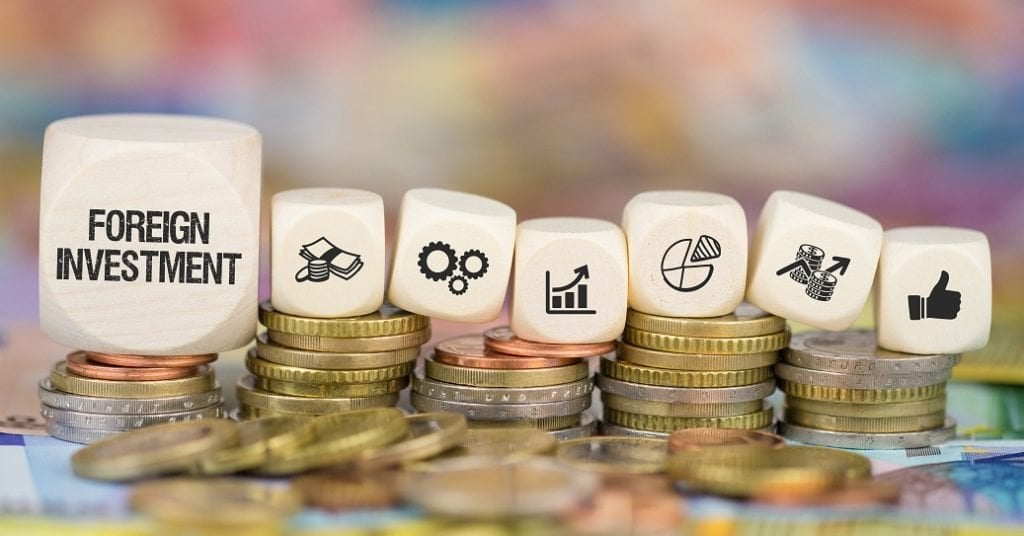
An upgrade can be seen as an “entry ticket” that helps Vietnam access global capital flows more deeply.
As for beneficiary sectors, large-cap businesses with high liquidity, good governance and that meet institutional-investor criteria will draw more attention, especially banks, securities firms, infrastructure and leading businesses.
The securities sector in particular may benefit as market liquidity improves, demand for financial services rises and new investment products develop.
However, the degree of benefit will vary, depending on each firm’s competitiveness, technology foundation, customer quality and ability to expand its ecosystem.
Securities stocks are attracting the attention of the cash flow amid expectations of market liquidity, new products and rising foreign capital. In your view, what factors are driving the securities sector in the current cycle? Is this a new growth cycle for securities firms?
Expert Nguyen Van Dat: The securities sector is on the cusp of a new growth cycle driven by a combination of three main factors: an expanding market size, policy changes and a shift toward a technology-based business model.
Expectations of an upgrade and the development of the capital market will lay the foundation for improved liquidity, thereby boosting core business lines such as brokerage, margin lending, custody and investment banking.
An upgrade can be seen as an “entry ticket” that helps Vietnam access global capital flows more deeply.
In addition, the securities sector is entering a new development stage as products and trading methods become increasingly diverse. Completing market infrastructure, promoting electronic trading and researching new products will open up more growth room, rather than depending only on the ups and downs of the index.
However, looking back at previous cycles, securities stocks tend to differentiate. In the 2020–2021 period, most firms benefited together as the market saw a liquidity boom.
In recent years, standout stocks have mainly come from firms with their own stories of expanding market share, growing their customer base or improving operational efficiency.
Therefore, as I have shared, the coming cycle for the securities sector will no longer be a story of “the whole industry rising together,” but rather differentiation based on the genuine competitiveness of each firm.
Thank you very much!
Source: TheLeader — theleader.vn. This article is republished to share knowledge with the community of founders and investors in the HCM VIF ecosystem.
Category & tags
Related news
 Ecosystem
Venture capital will be a new asset class
Mr. Hoang Duc Trung believes that, with the State taking the lead and large organizations and enterprises joining forces to spread the momentum, venture capital will fulfil its role as an engine of growth and innovation
 Finance & Banking05/2026
The success of a public-private venture fund is not measured by the number of unicorns
With an initial size of VND 500 billion, how will the government's “seed capital” from the public-private venture fund catalyze the flow of financing into startups?
 Finance & Banking18/05/2026
Ho Chi Minh City sets up venture capital fund: 'Seed capital' for Vietnamese tech
For the first time, Ho Chi Minh City has a venture capital fund operating under a joint-stock company model with the participation of the State and major private corporations.