

Licensing of digital asset exchanges has reached a pivotal stage
The SSC believes that how fast or slow the deployment of digital asset exchanges proceeds depends mainly on the internal strength of the organizations and enterprises participating in the pilot.
The State Securities Commission (SSC) believes that how fast or slow the deployment of digital asset exchanges proceeds depends mainly on the internal strength of the organizations and enterprises participating in the pilot.
A pivotal stage for digital asset exchanges
The process of putting the digital asset market into official operation is entering a decisive phase. The State Securities Commission (SSC) said it is actively advising the Ministry of Finance, while also seeking opinions from the State Bank and the Ministry of Public Security to review applications registering to pilot exchanges.
"As of now, we have issued official letters to 5 exchanges regarding the completion of procedures in phase one. These organizations have basically met all the valid requirements of Resolution 05-NQ/TW," said Mr. To Tran Hoa, Standing Deputy Head of the Crypto Asset Trading Market Management Board, SSC.
Nevertheless, the official emphasized that this is only the beginning of the entire review process. The real challenge for the exchanges lies in execution immediately after receiving the letter of approval.
Specifically, the exchanges will have to immediately set about building their information technology systems. This system must not only operate stably, but is also required to meet Level 4 information system safety standards.
In parallel, the resource question must also be proven with real figures, through completing the obligation to contribute charter capital of VND10,000 billion.
"This stage is very important and pivotal. Level 4 information system safety is a very high standard. To reach this level, exchanges must fulfill their commitments and demonstrate extremely great determination during the system-building process," Mr. Hoa analyzed.
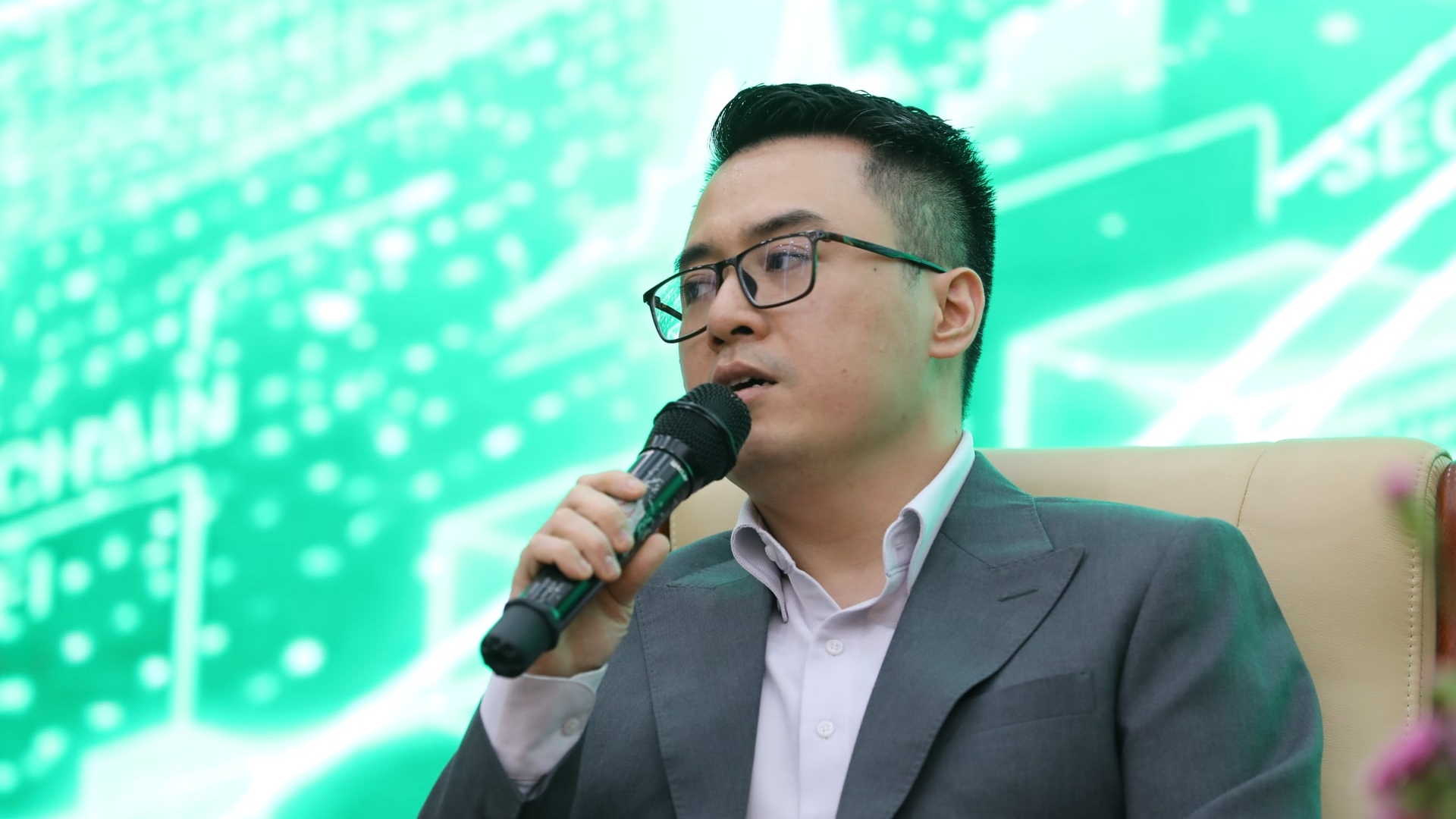
Mr. To Tran Hoa, Standing Deputy Head of the Crypto Asset Trading Market Management Board, SSC. Photo: SSC
According to him, how fast or slow the deployment of digital asset exchanges proceeds depends mainly on the internal strength of the organizations and enterprises participating in the pilot. The regulator only reviews and grants licenses in accordance with regulations when the first exchanges meet the requirements.
Highly appreciating the efforts of the regulators, Mr. Chris Chiew, senior advisor at the CAEX exchange, believes that Vietnam's proactive building of a legal framework for digital assets and crypto assets is already a major "turning point."
With experience deploying in many large markets, the expert said that the process of "opening up" to digital assets typically requires maximum caution in setting the limits of the features and services an exchange is permitted to provide.
According to him, domestic digital asset exchanges will have to thoroughly resolve the problem of protecting customer assets, building anti-money laundering mechanisms and complying with transparent supervisory standards.
"The change in the legal framework will open up great opportunities for Vietnam to promote innovation. Nevertheless, openness will always come with challenges regarding supervisory capacity. This requires close coordination among the parties for the market to develop healthily," Mr. Chris Chiew assessed.
Looking at the picture of the next 3-5 years, he expects the market to welcome a strong wave of participation from traditional financial institutions, especially amid the trend of tokenizing real-world assets. The appearance of large financial institutions will create a comprehensive ecosystem, with the emergence of specialized service providers.
Combining experience from international partners, the CAEX expert forecasts that Vietnam's digital asset market can attract liquidity and become an attractive destination on par with hubs such as Singapore or Hong Kong.
The human capital problem
The emergence of digital assets and crypto assets in Vietnam also raises requirements for human resources. Dr. Nguyen Minh Hang, Head of the Department of Banking and Finance Law at Hanoi Law University, believes that the dizzying change in asset formats is forcing training institutions to transform immediately. Human resources now require entirely different skills and mindsets.
"In the past, technology skills and financial analysis skills were two separate categories. But for the digital asset market, personnel are required to have an understanding of both fields," Ms. Hang shared.
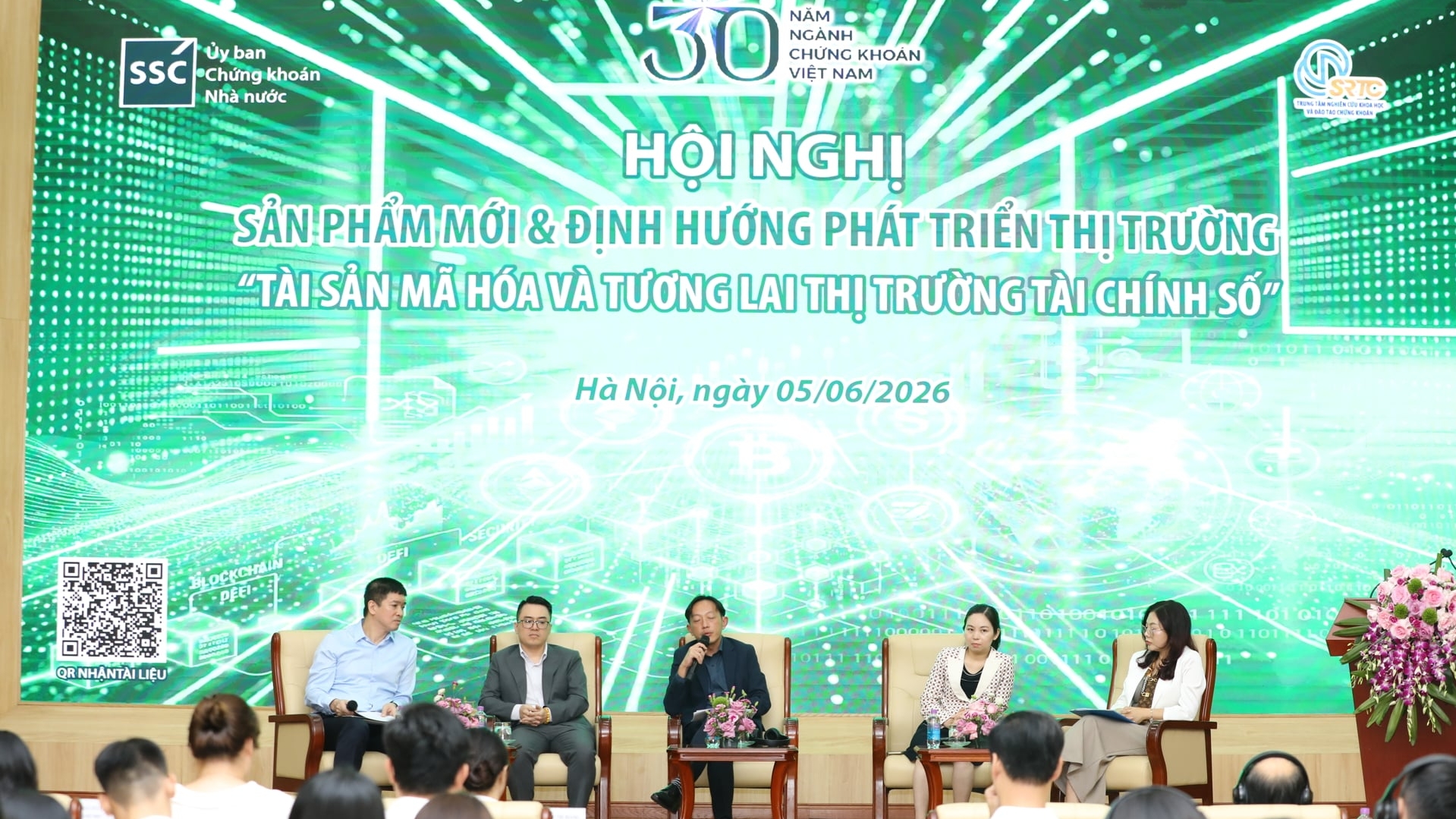
Enhancing professional ethics, as many experts emphasize, is a prerequisite for a "sensitive" market such as digital assets and crypto assets. Photo: SSC
According to the expert, in addition to a fintech foundation, personnel for the digital asset market must also be equipped with legal and compliance knowledge. Skills in security, risk management and the ability to implement processes such as customer identification or complaint resolution are mandatory conditions.
Even soft skills such as specialized English, or the ability to build and manage communities, have also become hard standards.
However, Ms. Hang also emphasized that the skill system is only the "tip," while mindset is the foundational factor. Instead of the traditional habit of relying on a trusted third party such as the Government or banks, the new generation of personnel must form a decentralized mindset. Every process and product must be based on the principle of transparency and continuous verification of information from multiple sources.
"We cannot keep a "static" curriculum when technology changes by the hour. The law-making process takes years, so training cannot simply follow hard laws," Ms. Hang shared.
The representative of Hanoi Law University stressed close coordination with enterprises in appraising products and advising on curricula. Above all, ethics and compliance must be a mandatory requirement for any personnel wishing to participate in the market.
Sharing the same view, Mr. To Tran Hoa believes there should be professional practice standards for the digital asset and crypto asset market. He acknowledged that Resolution 05 currently has no mandatory provision on this issue. But looking at international practice, many countries have begun building training and standardization programs to grant professional certificates.
"With the goal of launching the market professionally, we expect that in the coming period there will be studies and regulations related to standardizing practitioners," the SSC representative affirmed.
According to him, designing materials, curricula and granting certificates is not the responsibility of the state alone, but requires contributions from universities, academies and professional associations.
Enhancing professional ethics, as many experts emphasize, is a prerequisite for a "sensitive" market such as digital assets and crypto assets.
Source: TheLeader — theleader.vn. This article is republished to share knowledge with the community of founders and investors in the HCM VIF ecosystem.
Category & tags
Related news
 Ecosystem
Venture capital will be a new asset class
Mr. Hoang Duc Trung believes that, with the State taking the lead and large organizations and enterprises joining forces to spread the momentum, venture capital will fulfil its role as an engine of growth and innovation
 Finance & Banking05/2026
The success of a public-private venture fund is not measured by the number of unicorns
With an initial size of VND 500 billion, how will the government's “seed capital” from the public-private venture fund catalyze the flow of financing into startups?
 Finance & Banking18/05/2026
Ho Chi Minh City sets up venture capital fund: 'Seed capital' for Vietnamese tech
For the first time, Ho Chi Minh City has a venture capital fund operating under a joint-stock company model with the participation of the State and major private corporations.