

Digital asset exchanges to be licensed early in Q3/2026
With the first five valid applications, the Ministry of Finance expects to be able to license and operate digital asset and crypto asset trading exchanges as early as Q3.
With the first five valid applications, the Ministry of Finance expects to be able to license and operate digital asset and crypto asset trading exchanges as early as Q3.
Orientation of the digital asset market
"We believe that at the earliest, in Q3 there will be the first activities of an official crypto asset market in Vietnam, with service providers managed by state agencies to ensure safety and transparency for the market," Deputy Minister of Finance Nguyen Duc Chi said at a recent event.
The official pilot trading of the digital asset market means that the first businesses will be licensed to operate digital asset exchanges.
Currently, the regulator has identified five businesses with complete and valid applications, including: VIXEX, Vietnam Digital Asset JSC, CAEX (VPBank ecosystem), SCEX (formerly LPEX) and TCEX (Techcombank ecosystem).
According to the Deputy Minister, the digital asset market is a complex field that requires an urgently needed legal framework to protect the legitimate interests of participating entities. The Ministry of Finance has reported to the Government to issue Resolution No. 05 on piloting this market.
To prepare for official licensing, the Ministry of Finance requires the exchanges to continue supplementing their applications and rigorously reviewing conditions on capital, personnel and especially security infrastructure. The agency also asks businesses to remove unrelated lines of business to ensure safe operation and absolute risk control during the pilot phase.
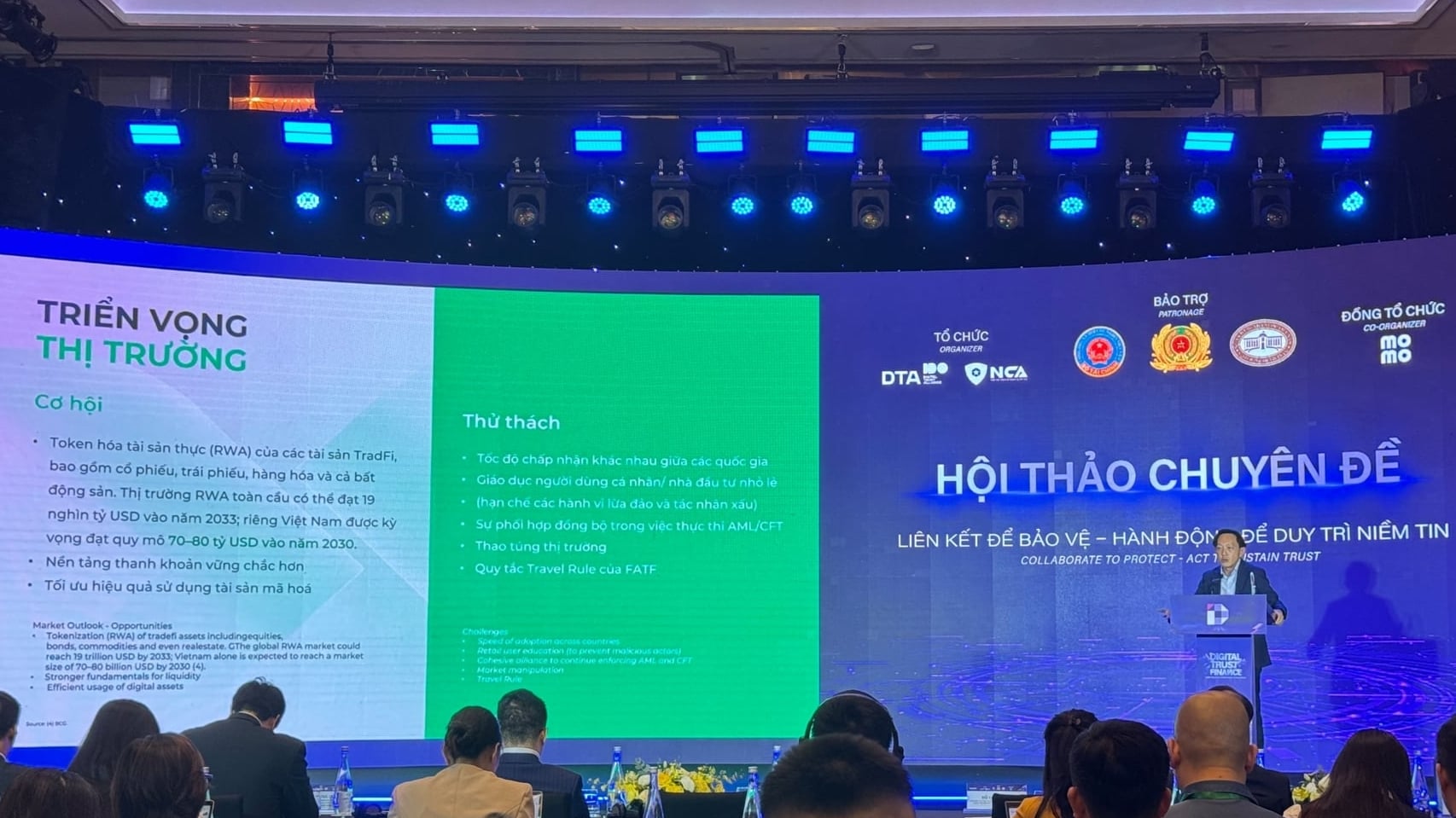
Explaining the market's appeal, Mr. To Tran Hoa, Standing Deputy Head of the Crypto Asset Trading Market Management Board at the SSC, said Vietnam's potential is enormous. According to Chainalysis reports, Vietnam has consistently ranked among the world's top countries in the number of users and the level of adoption of digital and crypto assets.
Notably, the user structure in Vietnam is undergoing a strong shift. Surveys show that most participants are young people in large cities, especially Ho Chi Minh City, which accounts for more than 50% of the share.
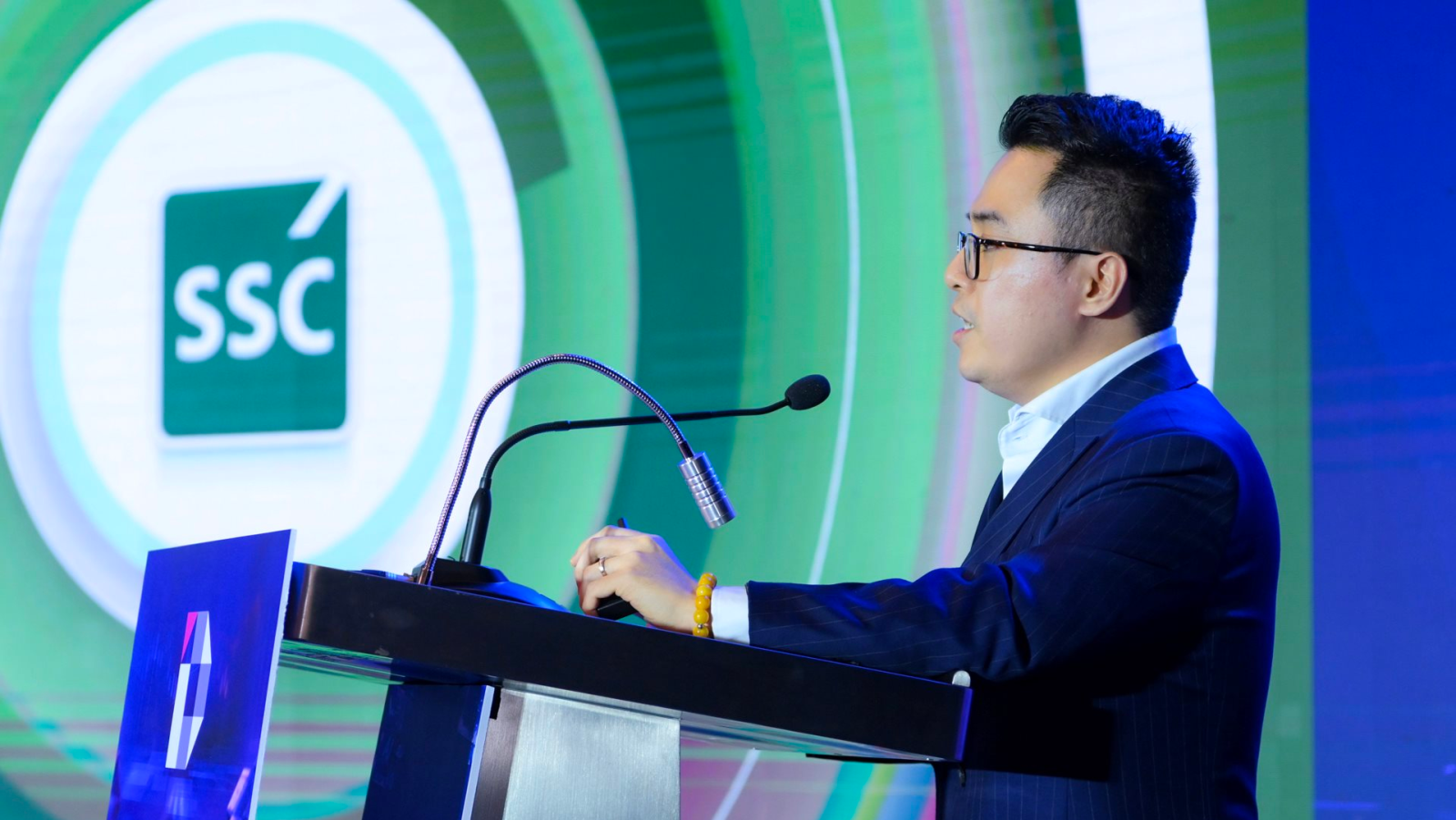
Mr. To Tran Hoa, Standing Deputy Head of the Crypto Asset Trading Market Management Board at the SSC. Photo: Organizer
This is a group that both understands technology and has financial knowledge. The trading scale is also an impressive figure, estimated to reach about USD220 billion in 2025. "This is a very promising figure, worth looking at the crypto asset market in the future," Mr. Hoa assessed.
The Investment Law also identifies crypto asset trading as a conditional business line. In particular, Resolution 05 clearly stipulates the rights and obligations of virtual asset service providers (VASPs) from issuance and offering to custody and proprietary trading.
Accordingly, the exchanges will have the right to select digital and crypto assets for listing and trading in line with international practice, but SSC leaders encourage caution, prioritizing assets with high liquidity and wide adoption to limit risk for the market.
One of the most important highlights is the tax mechanism. According to Circulars 32 and 41, Vietnamese organizations participating in the market will be subject to a common corporate income tax rate of 20%. For foreign individual investors, the tax rate is 0.1%, and the exchanges will pay it on their behalf to create maximum convenience for users.
The regulator requires the exchanges to publicly and transparently disclose all activities, from service fee schedules to contracts signed with third parties. When participating, investors must complete identity verification (KYC) as the account's rightful owner, linked to a bank account.
"The responsibility of service providers is to protect investors' assets while completely separating them from the business's assets to avoid misuse," Mr. Hoa emphasized.
In addition, compliance with anti-money laundering (AML) regulations according to FATF standards is a prerequisite. The regulator will also develop a coordination mechanism among three ministries - Public Security, Finance and the State Bank - to organize inter-agency inspection teams and closely supervise all market developments.
SSC leaders affirmed that the ultimate goal is to build a safe digital and crypto asset market through clear legal regulations.
From traditional assets to digital assets
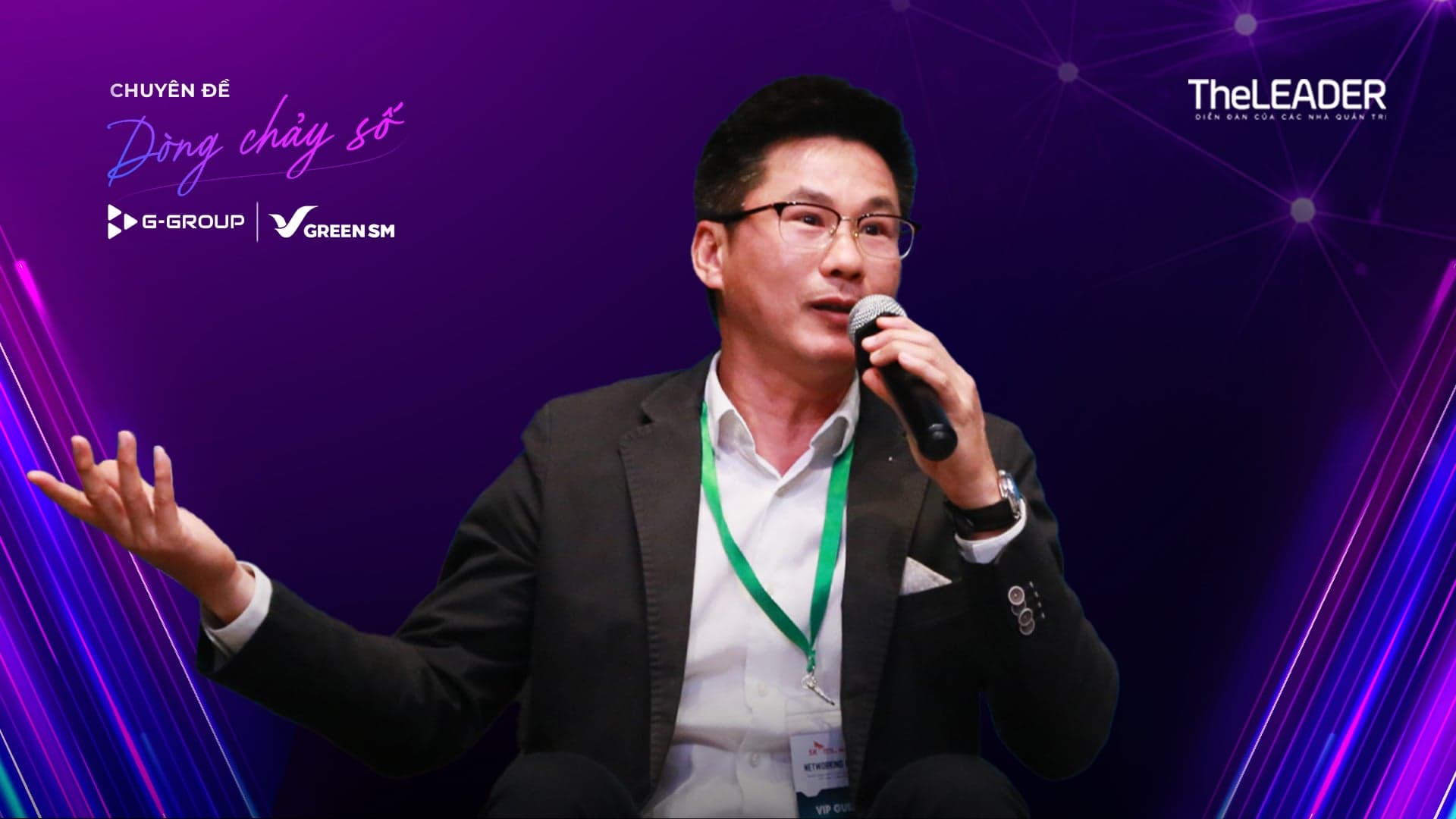
Mr. Chris Chiew, Senior Advisor at the CAEX exchange. Photo: Viet Hung
Mr. Chris Chiew, Senior Advisor at the CAEX exchange, who has 12 years of experience at Goldman Sachs and Binance, assessed that digital assets and traditional finance are finding common ground.
In Vietnam, the trading volume of digital assets is currently about USD220 billion, a significant figure compared with the USD1,600 billion of traditional assets. He called this a golden opportunity for Vietnam to become a "comprehensive destination" for the digital asset market in the Southeast Asia region.
According to the CAEX expert, blockchain technology is inherently ready, but what is currently lacking is user education and awareness. "Trust is built over time through consistent education and close coordination among regulators, the Government and financial institutions," Mr. Chris Chiew shared.
Risks such as money laundering, fraud or terrorist financing exist in both worlds, requiring a multi-layered risk-management model, including blockchain-specific risks.
The expert assessed that 2025 is seen as an important moment for the global digital asset industry. The event of BlackRock, the world's largest asset manager, launching a Bitcoin ETF and it becoming the fastest-growing ETF in history is evidence of recognition by major institutions. Corporations are increasingly inclined to hold large-cap digital assets on their balance sheets.
For CAEX, the key point is not which product - traditional assets or digital assets - will "win," but how these two worlds develop together.
According to him, bringing traditional assets onto the blockchain through the tokenization of real-world assets (RWA) will open up access for millions of investors, while providing abundant liquidity and reducing transaction costs.
However, this journey is not without challenges. The pace of adoption is the biggest barrier, as private companies and the Government need time to become familiar with issuing and managing RWAs.
User education is also a long-term focus. Not only young people, but also middle-aged people and offices need to be provided with correct knowledge to start everything transparently.
To solve this problem, Mr. Chris Chiew emphasized the importance of a cohesive alliance to enforce anti-money laundering (AML) standards and market surveillance. CAEX is committed to complying with the highest standards of integrity, proactively coordinating with regulators to develop a safe digital asset market.
Source: TheLeader — theleader.vn. This article is republished for the purpose of sharing knowledge with the community of founders and investors in the HCM VIF ecosystem.
Category & tags
Related news
 Ecosystem
Venture capital will be a new asset class
Mr. Hoang Duc Trung believes that, with the State taking the lead and large organizations and enterprises joining forces to spread the momentum, venture capital will fulfil its role as an engine of growth and innovation
 Finance & Banking05/2026
The success of a public-private venture fund is not measured by the number of unicorns
With an initial size of VND 500 billion, how will the government's “seed capital” from the public-private venture fund catalyze the flow of financing into startups?
 Finance & Banking18/05/2026
Ho Chi Minh City sets up venture capital fund: 'Seed capital' for Vietnamese tech
For the first time, Ho Chi Minh City has a venture capital fund operating under a joint-stock company model with the participation of the State and major private corporations.